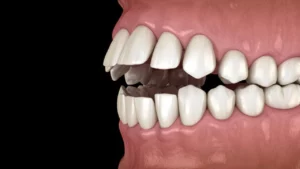
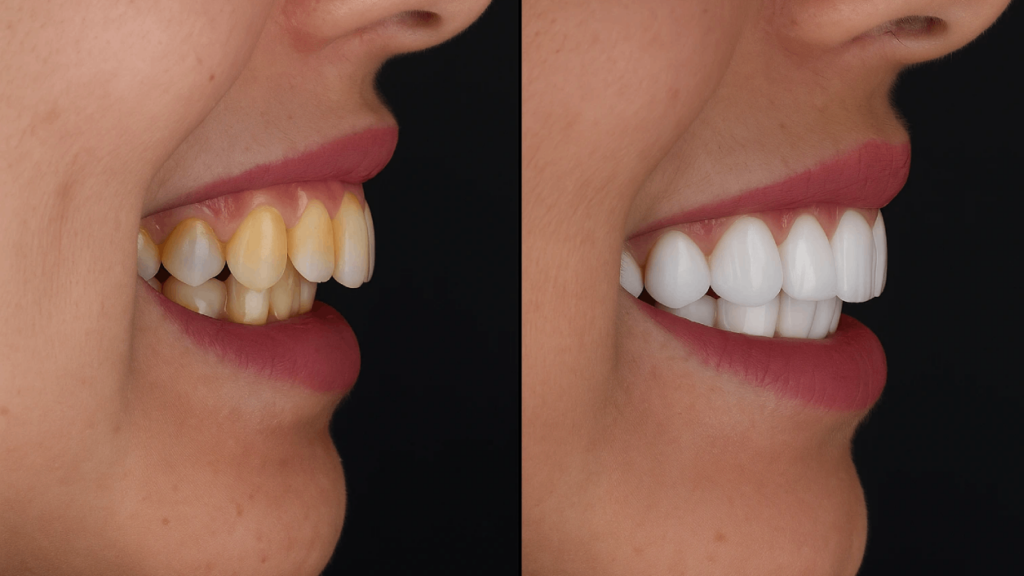
Teeth protrusion and jaw protrusion can sometimes look similar, especially when viewed from the side, but they are not the same condition. In some cases, the front teeth are tilted or positioned too far forward, while in others, the appearance is related to the underlying relationship between the upper and lower jaws. Some patients may also have a combination of both.
Understanding the difference between teeth protrusion and jaw protrusion is important because the underlying cause can significantly affect the treatment approach. Appearance alone is not always enough to determine whether the problem is dental, skeletal, or a combination of the two.
Table of Contents
What Is the Difference Between Teeth Protrusion and Jaw Protrusion?
The main difference lies in where the protrusion originates. Dental protrusion primarily involves the position and inclination of the teeth, whereas skeletal protrusion is associated with the relationship and position of the jawbones.
In simple terms, a person may have normally positioned jaws but front teeth that tilt forward and appear prominent. In another case, the teeth may be part of a broader skeletal discrepancy involving the relationship between the upper and lower jaws.
Dental and skeletal factors can also occur together, which is why looking at the teeth alone may not reveal the full cause of the protrusion.
| Feature | Teeth Protrusion | Jaw Protrusion |
| Main source | Position and inclination of the teeth | Skeletal relationship between the jaws |
| Front teeth | May be tilted or positioned forward | Position may be influenced by the underlying jaw relationship |
| Facial profile | Effect varies depending on severity | May have a more noticeable effect on the facial profile |
| Diagnosis | Dental, bite, and orthodontic assessment | Evaluation of the teeth, jaws, facial profile, and appropriate imaging |
| Treatment | Often focuses on orthodontic tooth movement | Depends on age, severity, and the underlying skeletal relationship |
What Is Dental Protrusion?
Dental protrusion occurs when the teeth, particularly the upper or lower front teeth, are positioned or inclined too far forward within the dental arch.
A person can therefore have protruding front teeth without the primary problem being the size or position of the jawbones themselves.
During an orthodontic assessment, the orthodontist evaluates the angle and position of the teeth, the amount of available space, the bite, and their relationship with the surrounding structures.
What Is Skeletal Protrusion?
Skeletal protrusion involves the relationship between the upper and lower jaws and their position within the facial structure rather than simply the angle of the teeth.
It is important not to assume that an apparently prominent upper jaw is always caused by an excessively large or forward-positioned maxilla. In some cases, the appearance may be influenced by the relative position of the lower jaw or by a more complex relationship between both jaws.
A comprehensive orthodontic evaluation is therefore needed to determine the true skeletal component of the problem.
What Causes Protruding Front Teeth?
Protruding front teeth can develop for several reasons, and the underlying cause is not the same for every patient.
Possible contributing factors include the inclination and position of the front teeth, differences between tooth size and available space, certain bite relationships, and genetic or developmental factors.
Some oral habits during childhood may also influence the position of the teeth and jaws, depending on the type of habit, how frequently it occurs, its intensity, and how long it continues during growth.
Several factors can also be present at the same time. For this reason, simply noticing that the front teeth stick out does not reveal why the protrusion developed.
What Causes Upper Jaw Protrusion?
Upper jaw protrusion may be associated with growth patterns, genetics, and the relationship between the upper and lower jaws.
An upper jaw that appears prominent does not necessarily mean that the upper jaw alone is positioned too far forward. In some patients, the appearance may partly result from a relatively retruded lower jaw or from a combination of skeletal and dental relationships.
A skeletal discrepancy can also occur together with forward-inclined teeth, creating both dental and skeletal components.
For this reason, upper jaw protrusion cannot be accurately diagnosed by looking in a mirror or assessing a side-profile photograph alone.
How Can I Tell Whether the Protrusion Comes From My Teeth or Jaw?
There are certain features that may suggest whether protrusion involves the teeth, the jaws, or both, but these observations should not be used for self-diagnosis.
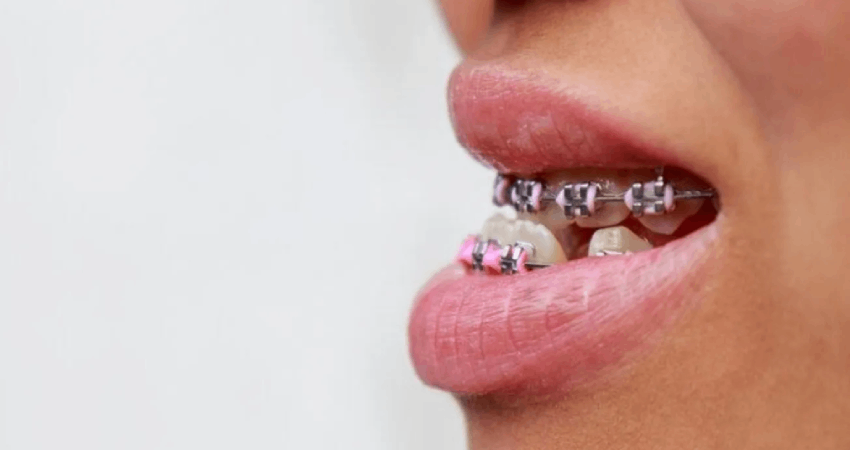
You may notice how far forward the front teeth appear, their inclination, the relationship between the upper and lower teeth, how comfortably the lips close, and the overall facial profile.
However, these signs frequently overlap. Prominent front teeth do not necessarily mean that the problem is purely dental, and a particular facial profile does not by itself confirm a skeletal jaw discrepancy.
The most reliable way to determine whether the protrusion is dental or skeletal is through an orthodontic assessment that evaluates the teeth, bite, jaw relationship, and facial proportions together.
How Are Dental and Skeletal Protrusion Diagnosed?
Diagnosis usually begins with a clinical examination of the teeth and bite. The orthodontist assesses the relationship between the upper and lower teeth as well as the position and inclination of the front teeth.
The relationship between the jaws and the patient’s facial profile is also evaluated because the aim is to determine whether the appearance of protrusion originates primarily from the teeth, the underlying jaw structure, or both.
Depending on the individual case, diagnostic records may include dental and facial photographs, X-rays, orthodontic measurements, and other records needed to evaluate the relationship between the teeth and jawbones.
This is why two people whose teeth look similar at first glance may receive different diagnoses: one may have primarily dental protrusion, while the other may have a significant skeletal component.
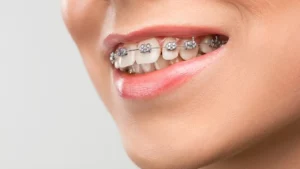
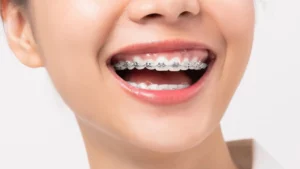
Can Braces Fix Protruding Teeth?
Yes. Orthodontic treatment can correct many cases of dental protrusion by changing the position and inclination of the teeth and improving their relationship with the rest of the bite.
The exact treatment approach depends on several factors, including the degree of protrusion, available space, crowding, jaw relationships, and the health of the teeth and surrounding tissues.
Depending on the case, treatment may involve fixed braces or clear aligners, along with appropriate orthodontic techniques to create space and move the teeth into their planned positions.
There is no single approach that works for every patient. Decisions about creating space, tooth extraction, or other treatment procedures should only be made after a complete orthodontic assessment.
Can Braces Fix Jaw Protrusion?
Whether braces can fix jaw protrusion depends on the patient’s age, the cause and severity of the skeletal discrepancy, and the relationship between the upper and lower jaws.
Braces and aligners primarily move teeth and improve their alignment and bite. In growing children and adolescents, certain orthodontic or orthopedic approaches may also be considered when the timing and type of jaw growth make them appropriate.
In adults whose facial growth is complete, moving the teeth does not necessarily change the underlying size or skeletal position of the jaws.
Some skeletal cases can still be managed orthodontically depending on the diagnosis and treatment goals. More pronounced skeletal discrepancies may require consideration of additional treatment, including a combination of orthodontics and orthognathic surgery when clinically appropriate.
Having jaw protrusion does not automatically mean that surgery is necessary, just as braces alone are not suitable for every skeletal case.
What Are the Treatment Options for Teeth and Jaw Protrusion?
Treatment depends on whether the protrusion is primarily dental, skeletal, or a combination of both. Identifying the source and severity of the problem should therefore come before choosing an orthodontic appliance or treatment method.
Treatment for Dental Protrusion
When the problem mainly involves the position of the teeth, orthodontic treatment may be used to move them into more appropriate positions and improve their inclination and relationship with the bite.
Fixed braces or clear aligners may be considered depending on the type and complexity of tooth movement required.
The choice should be based on the orthodontic diagnosis rather than appearance or preference alone.
Treatment During Growth
Timing can play an important role in certain jaw-related problems in children and adolescents because their facial structures are still developing.
An orthodontist can assess the patient’s growth pattern and jaw relationship to determine whether treatment during a particular stage of development may be beneficial and which approach is appropriate.
Treatment for Skeletal Protrusion in Adults
Once facial growth is complete, treatment options depend on the severity of the skeletal discrepancy, its effect on the bite and dental function, and the patient’s treatment goals.
Orthodontic treatment may be appropriate in selected cases. More significant skeletal discrepancies may require a combined approach involving orthodontics and orthognathic surgery.
The appropriate treatment cannot be determined solely from facial appearance or how prominent the front teeth seem.
Is the Protrusion Coming From Your Teeth or Jaw? Book a Consultation at Dr. Amir Zahrawi Clinic
Understanding the difference between teeth protrusion and jaw protrusion is the first step toward choosing an appropriate treatment plan. Similar-looking cases can have very different underlying causes.
A comprehensive orthodontic examination can determine whether the protrusion is primarily dental, skeletal, or a combination of both and help establish a treatment plan based on the individual patient’s needs.
Book a consultation at Dr. Amir Zahrawi Clinic for an assessment of your teeth, bite, and jaw relationship and to discuss the orthodontic treatment options that may be appropriate for your case