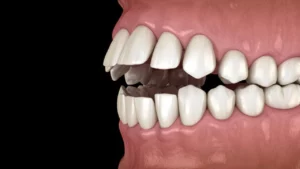
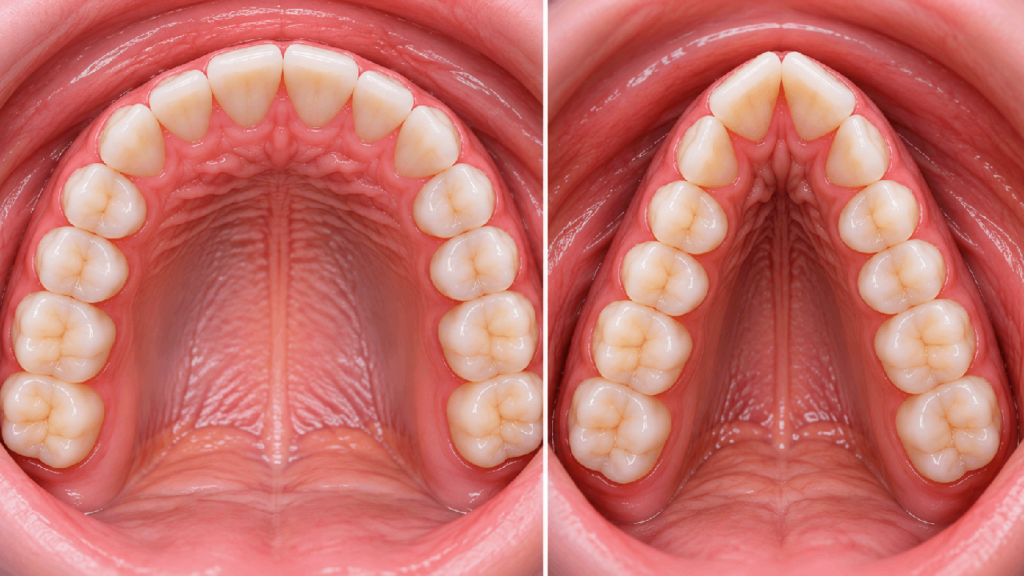
A narrow upper jaw occurs when the maxilla or upper dental arch is too narrow in relation to the lower jaw. This can affect tooth alignment and the way the upper and lower teeth come together, sometimes contributing to crowding, crossbite, or an imbalanced bite.
Maxillary constriction can occur in both children and adults, but treatment options vary depending on age, jaw development, and the severity of the condition. An accurate orthodontic assessment is therefore essential to determine whether the problem mainly involves the teeth, the jawbone, or a combination of both.
Table of Contents
What Is a Narrow Upper Jaw?
A narrow upper jaw, also known as maxillary constriction, describes a condition in which the width of the upper jaw or dental arch is insufficient to create a balanced relationship with the lower jaw.
This may affect the bite and reduce the amount of space available for the teeth to align properly.
However, dental crowding does not always mean that the upper jaw itself is too narrow. In some patients, limited space is primarily related to tooth size or position, while in others, the underlying jaw structure is the main factor.
For this reason, diagnosis usually involves evaluating the teeth, bite, jaw relationship, and any diagnostic records or imaging considered necessary by the orthodontist.

Symptoms of a Narrow Upper Jaw
The symptoms of a narrow upper jaw vary according to the degree of constriction and the type of bite problem present.
Possible signs include:
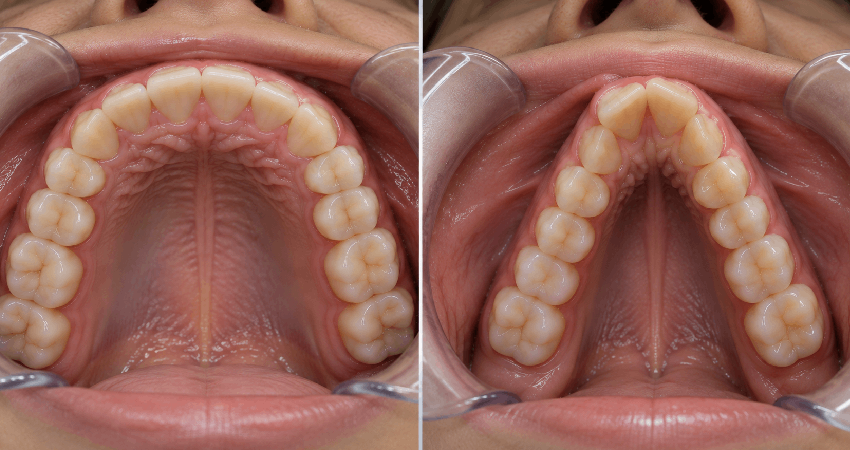
- Posterior crossbite, where some upper back teeth bite inside the lower teeth.
- Crowded or overlapping teeth.
- A visibly narrow upper dental arch.
- An uneven relationship between the upper and lower teeth.
- A functional shift of the lower jaw in some cases.
- Teeth erupting outside their ideal position because of limited space.
These signs alone do not confirm maxillary constriction, as similar symptoms may occur with other orthodontic conditions. A professional evaluation is needed to determine the underlying cause.
What Causes a Narrow Upper Jaw?
There is no single cause of maxillary constriction. Several developmental, genetic, and dental factors may contribute to the condition.
Genetics and Jaw Development
Genetics and facial growth patterns can influence the size and shape of the jaws. Some people may naturally develop a relatively narrow maxilla or upper dental arch compared with the lower jaw.
Oral Habits During Childhood
Certain persistent oral habits during childhood may influence dental and jaw development, particularly when they continue throughout important stages of growth.
However, the presence of an oral habit does not necessarily mean that a child will develop a narrow upper jaw. Its effects depend on several factors, including duration, frequency, and the child’s individual growth pattern.
Tooth Eruption and Limited Arch Space
Crowding and abnormal tooth eruption may occur when there is insufficient room within the dental arch.
It is important to distinguish between true skeletal maxillary constriction and dental crowding caused by the relationship between tooth size and the available space.
Narrow Upper Jaw in Children
Identifying a narrow upper jaw in children can be particularly important because the facial bones and jaws are still developing.
In suitable cases, this growth period may provide an opportunity to increase the width of the upper jaw or dental arch using an orthodontic expansion appliance.
Early treatment may be considered when there is a significant crossbite or maxillary constriction affecting the relationship between the upper and lower jaws.
The timing of treatment is not determined by age alone. The orthodontist considers the child’s stage of development, bite, severity of constriction, and overall jaw growth.
Not every child diagnosed with a narrow upper jaw requires immediate treatment. The appropriate timing depends on the individual case.
Narrow Upper Jaw in Adults
Treating a narrow upper jaw in adults may require a different approach because skeletal growth is largely complete.
Treatment depends on the severity of the constriction and whether the problem primarily involves tooth position, the dental arch, or the underlying jawbone.
Some adults may be treated with orthodontic techniques or expansion methods appropriate for mature patients. More pronounced skeletal constriction may require additional treatment approaches.
However, having a narrow upper jaw as an adult does not automatically mean that surgical treatment is necessary. The treatment plan depends on the individual anatomy, bite, and severity of the condition.
Treatment for a Narrow Upper Jaw
There is no single treatment that works for every patient. Narrow upper jaw treatment is selected after evaluating factors such as age, stage of jaw development, severity of constriction, tooth alignment, and bite.
Orthodontic Treatment
Orthodontic treatment may be appropriate when the problem mainly involves tooth position or the shape of the dental arch.
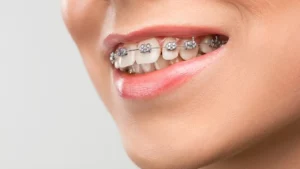
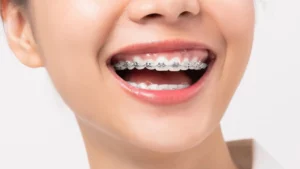
Braces or other orthodontic appliances can help align the teeth and improve their relationship within the arch. However, moving teeth and widening the underlying jawbone are not the same process.
When significant skeletal constriction is present, tooth movement alone may not provide the correction required.
Upper Jaw Expansion
Different types of expansion appliances can be used when increasing the width of the upper jaw or dental arch is considered appropriate.
The type of appliance and expansion technique depend on the patient’s age, skeletal development, severity of the constriction, and treatment goals.
Treatment for More Complex Cases
More significant skeletal constriction, particularly after jaw growth has been completed, may require additional treatment techniques alongside orthodontics.
The appropriate approach is determined after assessing the jaw relationship, degree of constriction, and overall treatment objectives.
Upper Jaw Expansion and Palatal Expansion
Upper jaw expansion, also called palatal expansion, is used to increase the width of the upper jaw or dental arch when clinically indicated.
Expansion may help improve the transverse relationship between the jaws, correct certain types of crossbite, and create additional space for better tooth alignment as part of an orthodontic treatment plan.
The technique used for expansion varies according to the patient’s age and skeletal maturity. An approach suitable for a growing child may differ considerably from the treatment used for an adult.
Treatment duration and the amount of expansion required also vary between patients, so there is no standard timeline that applies to every case.
When Is a Palatal Expander Used?
A palatal expander, sometimes called an upper jaw expansion appliance, is an orthodontic device designed to increase the width of the upper jaw or dental arch in selected cases.
It may be considered for patients with maxillary constriction, certain types of crossbite, or insufficient upper arch width that affects tooth alignment and bite.
Several types of expanders and expansion techniques are available. The appropriate option depends on the patient’s age, stage of jaw development, and the nature and severity of the constriction.
Expansion may also form one stage of a broader orthodontic treatment plan, with braces or other orthodontic appliances used during or after expansion to improve tooth alignment and bite.
Can Braces Alone Correct a Narrow Upper Jaw?
Whether braces alone are sufficient depends on the underlying cause of the problem.
When the issue primarily involves tooth position or mild dental arch constriction, orthodontic tooth movement may provide the necessary correction in selected cases.
However, when there is significant skeletal maxillary constriction, moving the teeth alone may not adequately address the underlying jaw-width discrepancy.
Distinguishing between dental and skeletal constriction is therefore an important part of orthodontic diagnosis and treatment planning.
Why Diagnosis Matters Before Upper Jaw Expansion
Crowded teeth or a narrow-looking dental arch do not automatically mean that a patient needs a palatal expander.
Before recommending expansion, the orthodontist evaluates the bite, width of the jaws, tooth positions, skeletal development, and severity of the constriction. Diagnostic records and imaging may also be used when clinically necessary.
This assessment helps determine whether the patient would benefit from upper jaw expansion, another form of orthodontic treatment, or a combination of different approaches.
Treating a Narrow Upper Jaw Starts with the Right Diagnosis
Treatment for a narrow upper jaw should be tailored to the patient’s age, jaw development, type of constriction, tooth alignment, and bite. The appropriate approach may involve orthodontic treatment, upper jaw expansion, or other techniques depending on the individual case.
At Dr. Amir Zahrawi’s Clinic, the teeth, bite, and relationship between the upper and lower jaws are carefully evaluated before developing an individualized treatment plan. If you have noticed dental crowding, an unusual bite, or signs of a narrow upper jaw, you can schedule a consultation to assess the condition and discuss the most appropriate treatment options.