Noticing a black line around a dental crown or discoloration near the gum line can be concerning, especially if the crown has been in place for several years. However, a dark margin does not necessarily mean that the tooth is decayed or that the crown has failed. It may be related to the type of crown, gum recession, or changes in the surrounding gum tissue.
Identifying where the discoloration comes from is therefore the first step. Depending on the cause, treatment may involve professional cleaning and gum care, monitoring the area, repairing the crown, or replacing it.
Table of Contents
Why Does a Black Line Appear Around a Dental Crown?
A dark or black line around a crown can develop for several reasons. The cause often depends on the crown material, the condition of the gums, the position of the discoloration, and how long the restoration has been in place.
Exposure of the Crown Margin
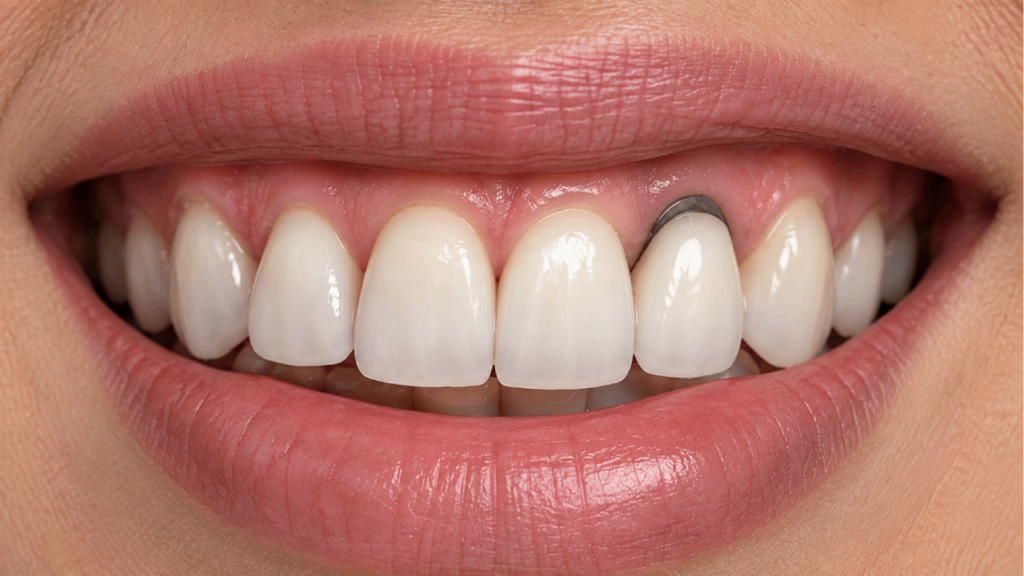
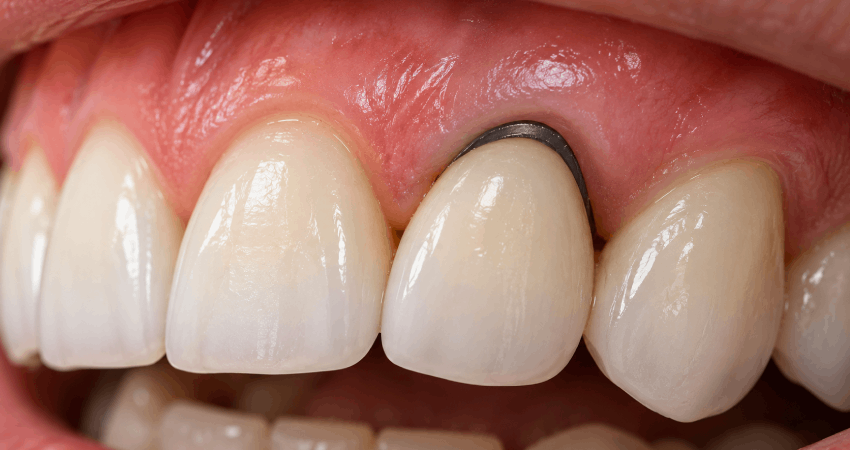
Some dental crowns have a metal substructure covered with tooth-colored material. Over time, gum recession may expose part of the crown margin that was previously hidden beneath the gum line.
When this happens, the metal edge may become visible as a gray or dark line along the gums. This can be particularly noticeable when the crown is placed on a front tooth.
A visible crown margin does not automatically mean that the crown is damaged. However, it should be evaluated if its appearance becomes bothersome or if other symptoms develop around the tooth.
Gum Recession or Changes in Gum Color
The crown itself is not always responsible for the dark appearance. Gum recession can expose part of the natural tooth or crown margin, creating a noticeable difference in color.
Changes in the surrounding gum tissue may also make the area appear darker. As a result, what looks like crown discoloration may actually originate from the gums or the area where the crown meets the gum line.
Problems With an Older Dental Crown
Dental crowns can undergo changes over time, particularly around their margins. An older crown may no longer fit the tooth and surrounding gum tissue as precisely as it once did.
Plaque may also accumulate around the crown margin, and in some cases there may be an underlying problem with the tooth itself. For this reason, new or worsening discoloration should be evaluated, particularly when it is accompanied by pain, gum inflammation, or other symptoms.

Is the Dark Color Coming From the Crown or the Gums?
It is not always possible to determine the source of a black line around a dental crown simply by looking at it at home, because several different conditions can produce a similar appearance.
If the crown contains a metal substructure and the gums have receded, the darker crown margin may become visible. In other cases, the discoloration may come from the gum tissue itself or from deposits that have accumulated around the edge of the crown.
Gum recession may also expose part of the natural tooth underneath the crown, creating a visible color difference between the restoration and the surrounding area.
A dental examination is therefore the most reliable way to determine whether the discoloration originates from the crown, the gums, or the underlying tooth.
Does a Black Line Around a Crown Mean Something Is Wrong?
Not necessarily. In some cases, the dark line is simply related to the crown material or gum recession that has exposed part of the crown margin, without indicating a problem with the tooth underneath.
However, a new or progressively darker margin should not be ignored, particularly if it occurs alongside symptoms such as:
- Tooth pain or sensitivity
- Bleeding or inflamed gums around the crown
- A persistent unpleasant taste or odor
- A loose or unstable crown
- A noticeable change in the appearance of the crown margin
These symptoms do not automatically mean that decay is present, but they are good reasons to have the tooth and crown examined by a dentist.
How Is Discoloration Around a Dental Crown Treated?
Treatment for a dark crown margin depends on its underlying cause. There is no single treatment that is appropriate for every case of crown margin discoloration or darkening around the gums.
Gum Treatment and Professional Cleaning
If the discoloration is associated with plaque buildup or inflammation of the tissues surrounding the crown, treatment may begin with professional cleaning and improved oral hygiene.
Keeping the crown margin and the spaces between the teeth clean is particularly important for maintaining healthy gums around dental restorations.
However, professional cleaning cannot remove a dark metal margin if the discoloration is caused by the crown’s underlying structure. In this situation, the appearance is related to the crown itself or to gum recession rather than surface staining.
Repairing or Replacing the Dental Crown
When the discoloration is related to the condition or fit of the crown, the dentist will first determine whether the problem can be managed without replacing the restoration.
In other cases, replacing the crown may be considered, particularly when the restoration no longer fits properly, has become damaged, or creates a significant cosmetic concern that cannot be corrected with a simpler approach.
Metal-free restorations, including certain types of zirconia crowns, may be considered when aesthetics are particularly important. However, the choice of crown material should be based on more than appearance alone. The position of the tooth, its condition, gum health, bite forces, and functional requirements all need to be considered.
When Should a Dental Crown Be Replaced?
A dark margin alone does not necessarily mean that a dental crown needs to be replaced. The crown may still be functioning properly even if gum recession has exposed part of its edge.
Crown replacement may be considered after examination when:
- The crown margins no longer fit the tooth properly.
- The crown is cracked or damaged.
- There is a problem with the tooth underneath the restoration.
- Gum recession has exposed a margin that significantly affects the appearance of the smile.
- There is a functional or cosmetic problem that cannot be corrected with a more conservative treatment.
The decision to replace a crown should therefore be based on an assessment of the crown, underlying tooth, and surrounding gums rather than on discoloration alone.
How Can You Prevent Discoloration Around Crown Margins?
Good oral hygiene can help maintain the health of the gums around dental crowns and make it easier to identify changes before they become more significant.
Brush your teeth twice a day and pay particular attention to the area where the crown meets the gum line. Cleaning between the teeth with the appropriate interdental tools can also help reduce plaque accumulation around crown margins.
Regular dental examinations are equally important because some problems affecting the edge of a crown may not be obvious at home.
Schedule a dental evaluation if you notice new discoloration around a crown, persistent gum inflammation or bleeding, tooth pain, or movement of the restoration.
Restore the Natural Appearance of Your Dental Crowns With Dr. Abeer Zandaqi
If you have noticed a black line around a dental crown or a change in the color of the surrounding gums, the first step is not necessarily to replace the crown. Instead, it is important to determine whether the discoloration comes from the crown margin, gum tissue, or another underlying issue.
Dr. Abeer Zandaqi can assess the crown, underlying tooth, and surrounding gums to identify the cause of the discoloration and recommend an appropriate treatment plan. Depending on the findings, treatment may involve improving gum health, addressing a problem with the existing restoration, or replacing the crown when clinically appropriate, while considering both function and aesthetics.
Book an appointment with Dr. Abeer Zandaqi to have your dental crown evaluated, determine the cause of the dark margin, and explore the appropriate options for restoring a natural, balanced appearance to your smile.