Table of Contents
What Is an Impacted Wisdom Tooth?
An impacted wisdom tooth is a third molar that does not fully erupt into the mouth as it should, and remains partially or completely trapped in the jawbone or under the gum. The tooth is present, but it does not appear in its normal position because something is blocking its path.
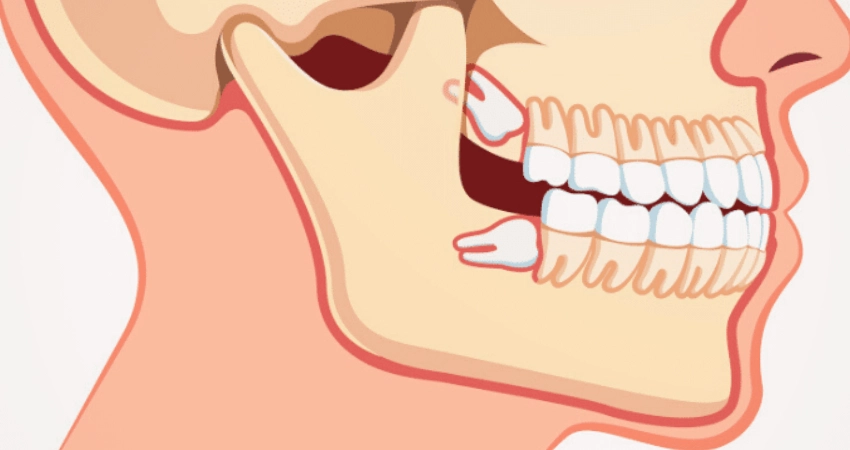
Wisdom teeth usually appear at the very back of the mouth between the ages of about 17 and 25, and are the last molars to erupt. When there is not enough space, or the tooth grows at an abnormal angle, it may become stuck and tilt forwards, backwards, or towards the neighbouring tooth. In this situation it is called an impacted wisdom tooth.
An impacted tooth may be:
- Completely impacted: it does not appear above the gum at all.
- Partially impacted: only a small part is visible, while the rest remains covered by gum or bone.
Not seeing a wisdom tooth does not always mean there is a problem. However, an impacted wisdom tooth can, over time, cause gum infections, pain, or pressure on adjacent teeth. That is why it should be evaluated by a dentist to decide whether simple monitoring is enough or active treatment is needed.

What Causes an Impacted Wisdom Tooth?
Wisdom tooth impaction usually results from a combination of factors related to jaw size, tooth position, timing of eruption, and genetics. Understanding these causes helps with early prevention and reducing complications as much as possible.
Lack of Space in the Jaw
One of the most common reasons for an impacted wisdom tooth is insufficient space at the back of the jaw for the tooth to erupt in a normal position. With changes in lifestyle and diet, many people have relatively smaller jaws, while the number of teeth remains the same.
When there is not enough space:
- The wisdom tooth tries to erupt into a very narrow area.
- It may push against the tooth in front of it or tilt onto it.
- Part of the tooth may stay covered by gum or bone, making it a partially or fully impacted tooth.
This pressure can cause pain, crowding of the front teeth, and make the area difficult to clean, which raises the risk of inflammation and infection.
Abnormal Direction of Tooth Growth
Sometimes the direction in which the wisdom tooth is growing is abnormal, even if there is reasonable space in the jaw. Instead of emerging straight and vertically, the tooth comes in at an angle.
Common abnormal positions include:
- Tilted forwards towards the tooth in front.
- Tilted backwards towards the angle of the jaw.
- Tilted sideways towards the cheek or tongue.
- Almost horizontal within the bone.
These positions can trap the tooth under bone or gum, prevent full eruption, and sometimes put pressure on the roots of neighbouring teeth or gradually wear them away. For this reason, careful assessment with X‑rays is essential before planning treatment.
Delayed Eruption of the Wisdom Tooth
Wisdom teeth usually erupt in late teenage years or early twenties. In some people, eruption is markedly delayed or stops halfway, leaving part of the tooth visible and part covered by gum.
This delay may be due to:
- Thick bone or gum tissue overlying the tooth.
- A small bony obstruction in the eruption path.
- Reduced natural eruptive force of the tooth.
A partially erupted wisdom tooth is more prone to:
- Inflammation of the overlying gum (pericoronitis).
- Trapping of food debris and bacteria in the pocket of gum above it.
- Recurrent pain during chewing or when the opposing tooth bites on the covering gum.
It is advisable to see a dentist if there is an unusually delayed eruption of a wisdom tooth or if you experience intermittent pain in the back of the jaw.
Genetic Factors and Jaw Development
Genetics play a clear role in the size and shape of the jaws and the way teeth are distributed, and therefore in the likelihood of wisdom tooth impaction. It is common to observe:
- Similar wisdom tooth problems among members of the same family.
- Relatively small jaws with a full set of teeth, which increases the risk of impaction.
Dietary changes over generations, with a move towards softer foods, have reduced the need for strong chewing forces and may affect jaw growth and size.
Although genetic factors cannot be changed, knowing about them helps to:
- Plan early preventive check‑ups with a dentist.
- Take X‑rays at an appropriate age to assess wisdom teeth before symptoms develop.
- Plan treatment in advance if there is a high chance that the wisdom teeth will become impacted and cause problems later on.
What Are the Symptoms of an Impacted Wisdom Tooth?
Symptoms of an impacted wisdom tooth range from very mild and hardly noticeable to severe and disruptive, affecting eating, speaking and sleep. In some people there are almost no symptoms and the problem is discovered only by chance on an X‑ray. Common symptoms include:
Pain at the Back of the Jaw
Pain is usually felt at the back of the upper or lower jaw on one side. It may present as:
- Intermittent pain that worsens when chewing or when pressure is applied to the area.
- Continuous pain that may radiate to the ear, head or neck on the same side.
The pain often increases when a small part of the tooth breaks through the gum while the rest remains impacted in the bone.
Swollen, Red Gum Around the Wisdom Tooth
Inflammation of the gum around an impacted wisdom tooth (pericoronitis) can cause:
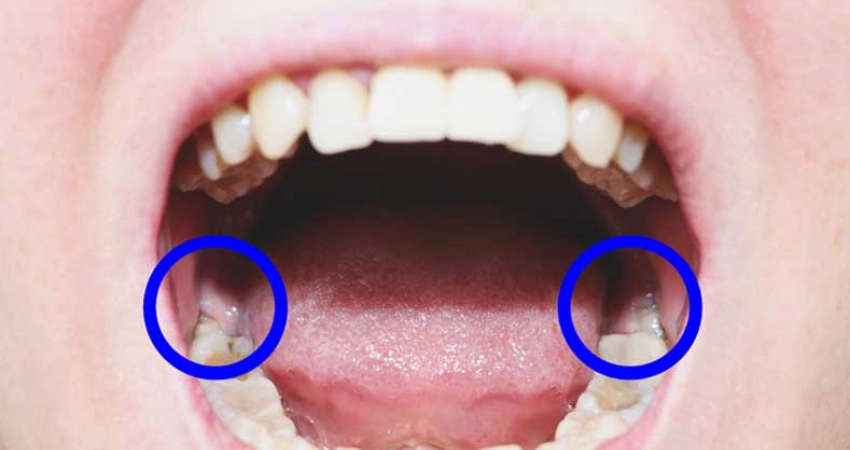
- Swelling of the gum behind the last visible tooth in the mouth.
- Redness and marked tenderness when the gum is touched or brushed.
- Occasional slight bleeding from the gum during eating or cleaning.
Difficulty Opening the Mouth or Chewing
As inflammation and pain increase, you may notice:
- Difficulty opening the mouth fully (jaw stiffness or trismus).
- Pain when chewing or when moving the jaw side to side.
This can interfere with the ability to eat normally.
Bad Breath or Unpleasant Taste
Because food and bacteria tend to collect around an impacted wisdom tooth under the gum flap, you may experience:
- Persistent bad breath that does not improve easily with brushing.
- A bitter or metallic taste in the mouth, especially on the affected side.
Headache or Referred Pain
In some cases, pain from an impacted wisdom tooth may spread and present as:
- Headache on the same side as the affected tooth.
- Pain in the ear, under the jaw, or in the jaw joint, making it difficult for the patient to identify the true source of discomfort.
General Symptoms in Severe Infections
If inflammation becomes more severe and is left untreated, additional symptoms may appear, such as:
- Mild fever or a general feeling of fatigue.
- Noticeable swelling of the cheek on the affected side.
- Pain when swallowing if the infection extends to surrounding tissues.
One or more of these symptoms does not automatically mean that an impacted wisdom tooth is the cause. It is important to see a dentist for an accurate assessment, to identify the real source of the pain and to plan appropriate treatment.
How Does the Dentist Diagnose an Impacted Wisdom Tooth?
Diagnosis of an impacted wisdom tooth combines your clinical complaints, a thorough oral examination, and imaging, especially dental X‑rays. The aim is to determine the exact position of the tooth and its effect on neighbouring teeth, bone and soft tissues before deciding on any treatment.
Clinical History and Oral Examination
The dentist will ask about the nature of your pain, how long it has been present, and what makes it better or worse. You may also be asked about difficulty chewing, problems opening your mouth, or persistent bad breath. The dentist then examines the back of the mouth and gums to look for:
- Redness or swelling of the gum overlying the wisdom tooth.
- A partially erupted tooth that is difficult to clean.
- Signs of infection, abscess formation, or ulceration.
- Shifting of adjacent teeth or an uncomfortable bite.
Dental X‑rays (Panoramic or 3D)
It is not possible to accurately confirm the diagnosis of an impacted wisdom tooth without imaging. The most commonly used are:
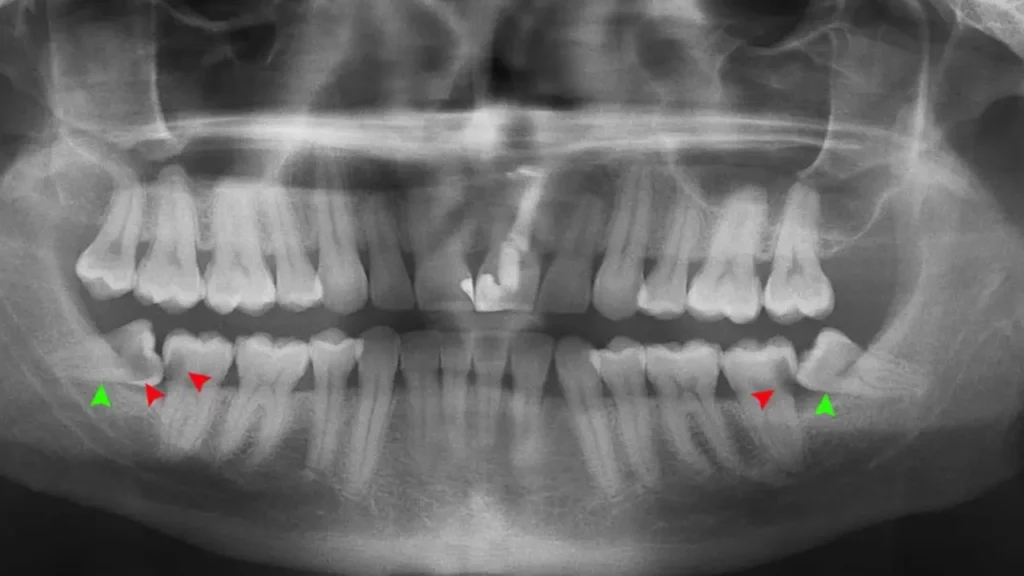
- Panoramic X‑ray: shows the entire jaw, the number of wisdom teeth, the direction of growth of each tooth, and its proximity to the lower nerve canal or maxillary sinus.
- 3D cone beam CT (CBCT), when needed: used in more complex cases to define the relationship between the tooth, nerves and bone in greater detail before surgery.
From these images, the dentist can determine whether the tooth is fully or partially impacted, the direction of impaction (forwards, backwards, horizontal, etc.), and whether there is any damage to the root of the adjacent tooth or cyst formation around the wisdom tooth.
Risk Assessment and Follow‑up Plan
After gathering all the information, the dentist evaluates:
- Whether the impacted wisdom tooth is currently causing problems or can be safely observed.
- The likely difficulty of surgical removal if needed and the necessary precautions.
This individual assessment is important, because management of impacted wisdom teeth varies from person to person depending on age, tooth position and general health. Decisions should be based on a specialist examination rather than on symptoms alone.
Does an Impacted Wisdom Tooth Always Need Treatment?
Not every impacted wisdom tooth needs to be removed immediately. The decision depends on the presence and severity of symptoms, the degree of impaction, the effect on neighbouring teeth and tissues, as well as the patient’s age and overall health.
In many cases, an impacted wisdom tooth is discovered incidentally on an X‑ray and is not causing pain or infection. In such situations, the dentist may recommend regular monitoring only, with periodic checks for any change in position or development of symptoms.
Removal or active treatment is more likely to be recommended when there is:
- Recurrent or persistent pain at the back of the jaw or head related to the tooth.
- Repeated gum infections around the tooth (pericoronitis).
- Decay in the wisdom tooth itself or in the adjacent tooth because cleaning is difficult.
- A cyst or lesion forming around the roots of the tooth on X‑ray.
- Pressure on neighbouring teeth or obvious crowding of the front teeth.
- Impact on the temporomandibular joint (TMJ) or difficulty opening the mouth.
On the other hand, if the impacted wisdom tooth:
- Is not causing pain or infection,
- Is at a safe distance from vital nerves and structures, and
- Appears stable on X‑rays and does not threaten adjacent teeth,
then the dentist may opt for periodic monitoring and meticulous oral hygiene, with instructions to seek care promptly if new symptoms appear.
Recommendations vary from one person to another. The opinion of a dentist or oral and maxillofacial surgeon is essential to decide whether your impacted wisdom tooth needs treatment now or can be postponed with careful follow‑up.
How Is an Impacted Wisdom Tooth Treated?
Treatment depends on symptom severity, the position of the tooth in the jaw, and its effect on neighbouring teeth and tissues. Sometimes simple conservative measures and regular check‑ups are sufficient. In other situations, surgical extraction is the safest long‑term option.
When Is Conservative Treatment Enough?
Conservative (non‑surgical) management may be appropriate when:
- The wisdom tooth is partially or completely covered by gum without severe pain or recurrent infections.
- The tooth is not exerting significant pressure on adjacent teeth or causing noticeable crowding.
- There are no signs of cysts or bone damage on X‑ray.
In such cases, the dentist may recommend:
- Thorough professional cleaning around the wisdom tooth area to reduce accumulation of food and bacteria.
- Use of an antiseptic mouthwash and, in some cases, a short course of antibiotics if there is mild infection.
- Appropriate pain relief medications when needed.
- Regular follow‑up visits and periodic X‑rays to ensure the situation is not deteriorating.
When Is Surgical Extraction the Better Option?
Surgical removal of the impacted wisdom tooth is often the preferred option when:
- Pain, swelling, or gum infections around the tooth are recurrent.
- The tooth causes significant crowding or shifting of the front teeth.
- X‑rays show a cyst, bone loss, or damage to the root of the neighbouring tooth.
- The wisdom tooth is severely broken down or decayed and cannot be restored.
- There are frequent headaches or jaw/ear pain linked to the abnormal position of the tooth.
The procedure is usually performed under local anaesthesia. In some special situations, intravenous sedation or general anaesthesia may be used. The surgeon plans the extraction based on X‑ray findings, and will discuss potential risks and the expected recovery time for your individual case. It is important to talk through these details with an oral and maxillofacial surgeon before making a final decision.
How Long Does Recovery Take After Impacted Wisdom Tooth Removal?
Recovery time after surgical removal of an impacted wisdom tooth varies from person to person. It depends on the complexity of the surgery, your general health, and how closely you follow your post‑operative instructions. Initial soft tissue healing usually takes about 7–10 days, while deeper bone healing continues for several weeks to a few months.
First 1–3 Days After Extraction
- Swelling and pain are typically at their peak during this period, which is normal after surgery.
- It is very important for the blood clot to remain in the socket to allow proper healing. Avoid vigorous rinsing and using straws during this time.
- Your dentist may prescribe painkillers and, when appropriate, antibiotics. Follow the prescribed doses carefully.
- An ice pack wrapped in a cloth can be applied to the cheek intermittently to help reduce swelling, unless your dentist advises otherwise.
Day 4 to End of Week 2
- Swelling and pain should gradually decrease. Most patients can return to light daily activities after 2–3 days, while still avoiding heavy physical exertion.
- You can usually start gentle rinsing with warm salt water as advised by your dentist to keep the area clean and support healing.
- If stitches were placed, your dentist may schedule an appointment to remove them after 7–10 days, unless dissolvable sutures were used.
After the First Two Weeks
- Bone healing under the gum continues for several weeks. You may occasionally feel a strange sensation or mild numbness that normally improves gradually in most cases.
- Any sudden severe pain, persistent bad breath, continuous bleeding, or swelling that worsens instead of improving should be reported to your dentist promptly. These signs may indicate infection or a dry socket (loss of the blood clot from the extraction site).
These time frames are approximate and may be shorter or longer depending on the complexity of your extraction, your general health, and how quickly your tissues heal. Regular follow‑up and carefully following your dentist’s instructions are key to a safe and smooth recovery.
How Can Dr. Ameer Ghayath Al-Zahrawi Help Diagnose and Treat an Impacted Wisdom Tooth?
Dr. Ameer Ghayath Al‑Zahrawi provides structured, evidence‑based care for impacted wisdom teeth, starting with accurate diagnosis, then creating an individual treatment plan, and finally offering follow‑up care to achieve the best possible outcome for each patient.
First, Dr. Al‑Zahrawi performs a thorough clinical examination of your mouth and gums, and asks about your symptoms, such as pain, difficulty chewing, or repeated gum infections around the wisdom tooth. He then usually requests a panoramic X‑ray (and 3D imaging if needed) to determine the position of the impacted tooth, the degree of impaction, and its proximity to nerves or the sinus.
Based on this information, he explains the treatment options most suitable for your case, whether that is conservative management with regular monitoring, or recommending surgical removal of the impacted wisdom tooth when there is recurrent pain, infection, or a negative effect on neighbouring teeth. He makes sure to describe the steps of the procedure, the type of anaesthesia, and the possible risks in clear and simple language, and answers your questions so you can feel informed and reassured.
After extraction, Dr. Al‑Zahrawi provides detailed instructions for caring for the surgical site, managing pain and swelling, and choosing appropriate foods in the first few days. He schedules follow‑up visits to confirm that healing is progressing properly and to address any issues early if they arise. Because every patient is different, an in‑person examination and direct consultation with a qualified dentist remain essential to choosing the most suitable way to manage your impacted wisdom tooth.