After root canal treatment, a tooth often needs to be properly restored to regain its shape and function and reduce the risk of future damage. However, this does not mean that every root canal-treated tooth automatically needs a dental crown.
The right choice of dental restoration after root canal treatment depends on several factors, including the location of the tooth, how much healthy tooth structure remains, the size of previous fillings, the presence of cracks or fractures, and the amount of pressure the tooth receives during biting and chewing.
In some cases, a filling or another conservative restoration may be sufficient. In others, a dental crown may provide more appropriate protection.
Table of Contents
Why Does a Tooth Need Restoration After Root Canal Treatment?
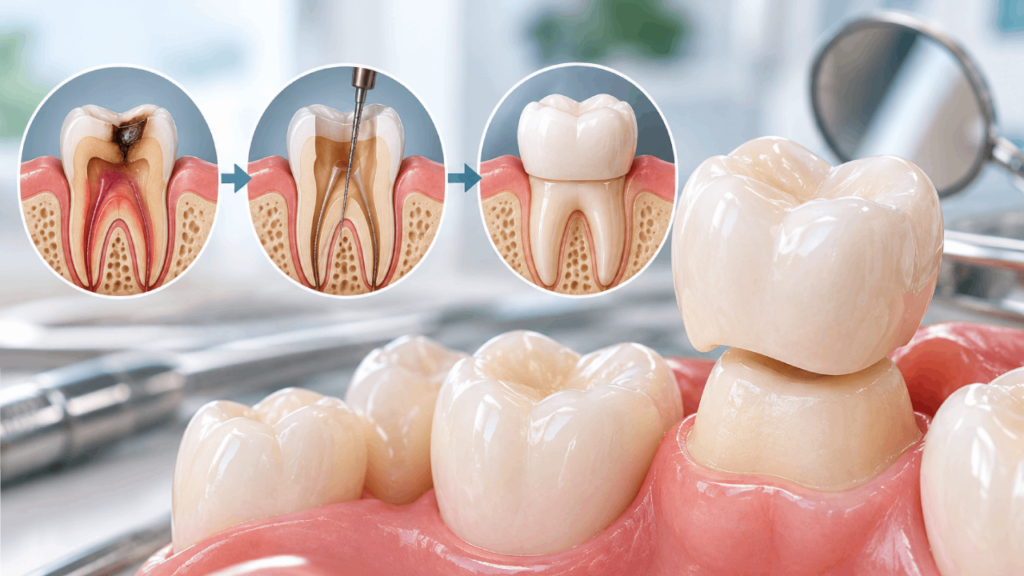
Root canal treatment is performed to remove infected or inflamed tissue from inside the tooth, clean and disinfect the root canals, and seal them to help preserve the natural tooth.
Once the root canal procedure is complete, the outer part of the tooth still needs to be restored. This is especially important when part of the tooth has already been lost because of decay, a large previous filling, a fracture, or the preparation required to access the root canals.
A suitable restoration helps rebuild the missing portion of the tooth, restore normal function, and provide an effective seal. It may also help protect teeth that have lost a significant amount of structure and are therefore more vulnerable to fracture.
The need for restoration is not simply the result of removing the dental pulp. Instead, it largely depends on how much healthy tooth structure remains after treatment.

Do All Teeth Need a Crown After Root Canal Treatment?
No. Not every tooth needs a crown after a root canal.
If enough healthy tooth structure remains, a filling or another conservative restoration may be sufficient to restore the tooth.
A crown may be recommended when a significant portion of the tooth has been lost, when there is a large existing filling, or when cracks or structural weakness increase the risk of fracture.
When deciding whether a crown is necessary, the dentist considers factors such as the tooth’s location, the amount of remaining healthy structure, previous restorations, existing cracks or fractures, and the forces placed on the tooth during chewing.
For this reason, there is no single restoration that is appropriate for every root canal-treated tooth.
When Is a Dental Crown Needed After a Root Canal?
A dental crown after root canal treatment may be recommended when the remaining tooth structure is not strong enough to withstand normal biting and chewing forces without additional protection.
A crown is more likely to be considered when extensive decay, a fracture, or a large previous filling has resulted in significant loss of tooth structure.
The decision can also differ depending on whether the treated tooth is located at the front or back of the mouth.
Crowns for Back Teeth After Root Canal Treatment
Premolars and molars are exposed to considerable chewing forces. Protecting their remaining structure can therefore be particularly important after root canal therapy.
When a back tooth has lost a substantial amount of its natural structure, a crown or another restoration that provides appropriate coverage may help distribute chewing forces and protect the remaining tooth.
However, this does not mean that every molar or premolar requires a crown after a root canal. The amount and condition of the remaining tooth structure still need to be evaluated individually.
Restoring Front Teeth After Root Canal Treatment
Front teeth experience different forces than molars and premolars, and appearance is often an additional consideration when choosing the appropriate restoration.
If a front tooth still has most of its natural structure, it may sometimes be restored conservatively without a full crown.
When the tooth is significantly weakened, fractured, or has lost a large portion of its structure, a crown may be considered to restore its appearance, strength, and function.
What Are the Options for Restoring a Tooth After a Root Canal?
There is no single approach to protecting a tooth after root canal treatment. The appropriate restoration depends on the location of the tooth, the amount of remaining structure, and its overall condition.
Fillings and Conservative Restorations
A filling may be appropriate when the tooth retains a good amount of healthy natural structure and does not require extensive coverage.
These restorations are used to seal the access area and rebuild the missing portion of the tooth so it can function normally again.
Depending on the extent of tooth loss, indirect restorations may also be considered. Whenever possible, the goal is generally to preserve as much healthy natural tooth structure as practical while providing sufficient strength and protection.
Dental Crowns After Root Canal Treatment
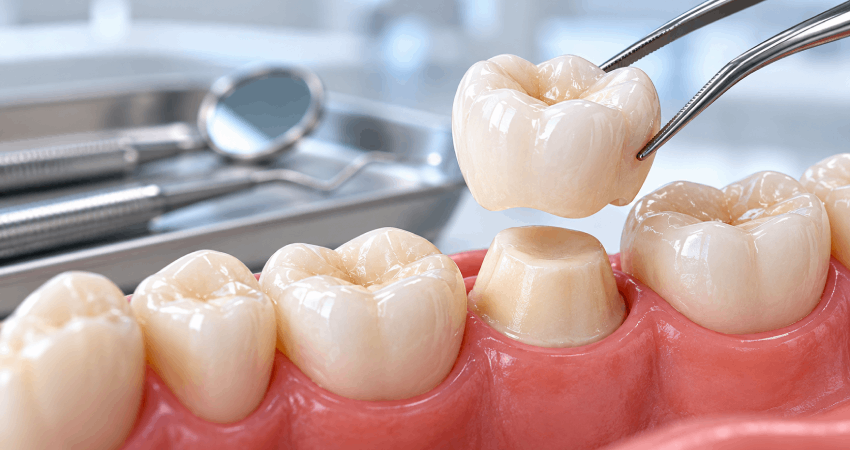
A dental crown covers the visible portion of a tooth and can provide additional protection when a filling alone is unlikely to offer sufficient structural support.
A crown after root canal treatment may therefore be recommended for teeth that have lost a substantial amount of their original structure or require greater protection against chewing forces.
Dental crowns are available in different materials. The appropriate option depends on factors such as the location of the tooth, functional requirements, aesthetic considerations, the condition of neighboring teeth, and the dentist’s clinical assessment.
When Should a Crown Be Placed After Root Canal Treatment?
The timing of the final restoration depends on the condition of the tooth and the overall treatment plan.
In some cases, the permanent restoration can be planned once root canal treatment is complete and the tooth is ready for restoration. In other cases, the dentist may recommend monitoring the tooth before placing the final crown, particularly when symptoms or other clinical factors require follow-up.
A temporary restoration may be used to protect the tooth until the permanent restoration can be completed.
It is generally important not to delay the final restoration unnecessarily, particularly when a tooth has lost a significant amount of its natural structure. Patients should also follow their dentist’s instructions regarding chewing and caring for the treated tooth until the final restoration is in place.
How to Care for a Tooth After Root Canal Treatment
Long-term care after root canal treatment involves more than treating the root canals themselves. Proper restoration and daily oral hygiene both play important roles in preserving the tooth.
Attend the recommended appointment for the final restoration and avoid placing excessive pressure on the tooth before treatment is complete if your dentist advises you to do so.
Continue brushing and flossing regularly, paying particular attention to the area around a crown or other restoration. A root canal-treated tooth still requires the same consistent oral hygiene as the rest of your teeth.
Regular dental checkups also allow the dentist to monitor both the tooth and its restoration. Contact your dentist if you notice new pain, swelling, a fracture, or movement or damage involving the crown or restoration.
Protect Your Tooth After Root Canal Treatment with Dr. Abeer Zandaqi
Choosing the appropriate restoration after root canal treatment starts with assessing how much healthy tooth structure remains, where the tooth is located, and its functional and aesthetic requirements.
Some teeth can be successfully restored with a filling or another conservative option, while others may benefit from the additional coverage and protection provided by a dental crown.
Dr. Abeer Zandaqi evaluates teeth after root canal treatment and recommends restorative and prosthetic options based on each patient’s individual needs, with an emphasis on preserving healthy natural tooth structure while restoring function and appearance.
Book an appointment with Dr. Abeer Zandaqi to have your root canal-treated tooth evaluated and determine the most appropriate restoration for protecting it over the long term.