What Is Laser Dental Implant Surgery and Why Do Patients Prefer It?
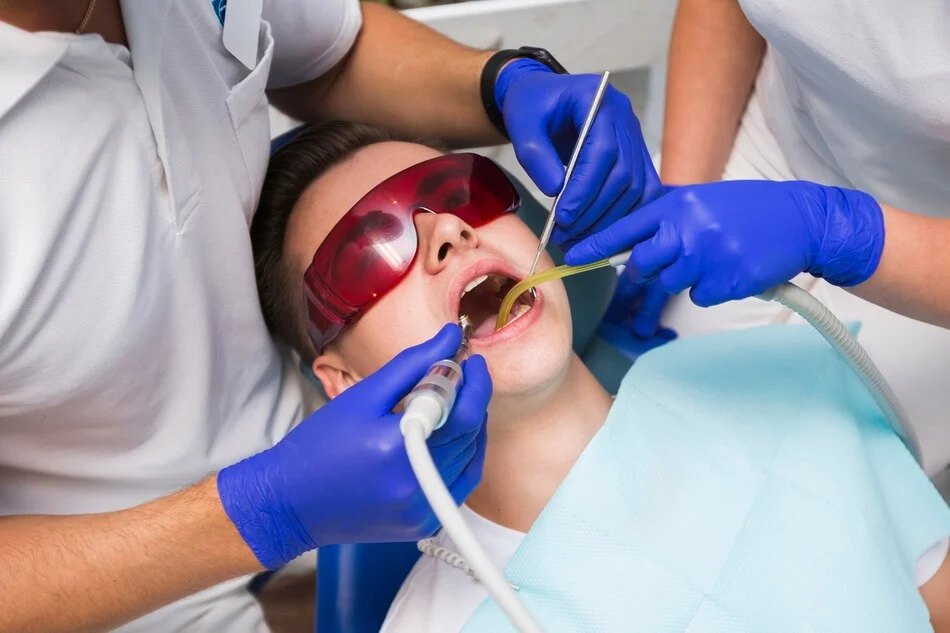
Laser dental implant surgery is a modern technique in implant dentistry that uses highly focused laser beams instead of a conventional surgical scalpel to open the gum tissue and prepare the implant site within the jawbone.
This approach helps minimize bleeding and swelling and speeds up soft‑tissue healing, making the implant procedure more comfortable and often less painful for many patients.
Patients are drawn to laser-assisted implants because they typically offer faster recovery, shorter time in the dental chair, and a lower risk of complications such as postoperative infection or severe pain.
Using laser technology also allows the dentist to position the implant with greater precision while preserving as much of the surrounding bone and soft tissue as possible. This, in turn, enhances implant stability and supports long‑term success.
For these reasons, laser dental implant surgery has become a preferred option for people seeking a fixed, long-lasting replacement for missing teeth, while avoiding many of the concerns associated with traditional surgery and achieving a natural-looking smile with minimal discomfort.
Types of Laser-Assisted Dental Implant Techniques
Laser-Assisted Flapless Dental Implants
Laser-assisted flapless dental implant placement (Flapless technique) is one of the most advanced methods of laser-guided implant dentistry. It allows implant placement without raising a mucoperiosteal flap or extensively exposing the underlying bone, as is done in conventional surgical approaches.
In this technique, the dentist uses a laser to create a precise opening in the gingiva directly over the implant site, then carefully inserts the implant fixture without the need for sutures and with minimal bleeding.
Flapless laser implant placement is an excellent option for patients with sufficient bone volume who wish to replace missing teeth with minimal postoperative swelling, pain, and downtime.
This approach is relatively quick, shortens chair time in the dental office, and reduces the risk of post‑operative complications, making it one of the most sought‑after laser implant techniques among patients looking for a comfortable solution that is both functional and esthetically pleasing.
Laser-Assisted Implants with Minimal Surgical Flap (Mini-Incision Technique)
Laser-assisted dental implants with a minimal surgical flap, also known as the mini-incision technique, are used when the clinician needs wider access to the bone or minor adjustment of the gingival tissues before implant placement.
In these cases, the dentist creates a very small incision in the gingiva using a laser, providing limited bone exposure with minimal bleeding and discomfort, followed by precise placement of the dental implant in the planned position.
This method offers a balance between patient comfort and surgical accuracy: it is less invasive than traditional open‑flap surgery, yet provides better visibility for the clinician in situations that require slight correction of bone contours or gingival levels.
The laser mini‑incision technique enhances osseointegration of the implant, helps reduce postoperative swelling and recovery time, and supports favorable esthetic outcomes for the gums and the smile.
Advantages and Disadvantages of Laser Dental Implants
Laser-assisted dental implants offer several significant advantages. This modern technique helps reduce pain and swelling during and after surgery thanks to the high precision in cutting and contouring gingival tissues with minimal bleeding. It also promotes faster wound healing and shortens recovery time compared with conventional surgical methods.
Using a dental laser during implant placement can minimize the need for large surgical incisions and sutures, providing a more comfortable experience for the patient and lowering the risk of infection and postoperative complications.
Laser dental implants are also a suitable option for patients who experience anxiety about surgical procedures, as they are most often performed under local anesthesia with less invasive steps, while still achieving high accuracy in positioning the implant fixture and preserving the surrounding bone and soft tissues.
However, there are some drawbacks to laser dental implants that patients should be aware of before deciding. One of the main disadvantages is the higher cost compared with traditional implant surgery, due to the high price of laser equipment and the need for specialized training for the clinician.
Laser-assisted implant placement is not ideal for all cases, particularly in situations of severe bone loss or when complex bone grafting procedures are required. In such cases, the dentist may need to resort to conventional surgical techniques or combine laser use with other surgical instruments.
The success of laser dental implants also depends heavily on the dentist’s experience and skill in using laser technology. Therefore, it is essential to choose a reputable clinic and a dentist who is specifically trained and experienced in laser dental implantology to achieve the best possible outcome.
Who Is a Candidate for Laser Dental Implants?
Laser-assisted dental implants are suitable for most people who have lost one or more teeth and want a fixed, natural-looking replacement, provided they enjoy generally good oral and systemic health.
Ideal candidates typically have sufficient jawbone volume or can undergo bone grafting if needed, and do not suffer from severe periodontal infections or poorly controlled systemic conditions such as uncontrolled diabetes or advanced osteoporosis.
This technique is particularly appealing for individuals who are anxious about conventional surgery and wish to minimize pain and bleeding, and to promote faster wound healing thanks to the precision of laser technology and the reduced need for sutures.
Laser dental implants are also a good option for former smokers who have quit and begun to adopt a healthier lifestyle, as well as for patients seeking a long-term functional and aesthetic solution that helps preserve facial structure and improves chewing efficiency and speech.
Before making a final decision, the implant dentist performs a comprehensive clinical examination, radiographic imaging, and an assessment of bone quality and gum health to confirm the patient’s suitability for laser dental implant surgery and to ensure that the expected outcomes are safe and predictable over the long term.
Pre‑operative preparation for laser dental implants
Required Examinations
Before undergoing laser dental implant surgery, your dentist will request a set of tests to ensure that your mouth and jawbone are suitable for the procedure.
The most important of these are panoramic X‑rays and 3D cone beam CT scans (CBCT), which are used to assess jawbone density, determine the distance from nerves and the maxillary sinuses, and accurately plan the position of the implant.
Your dentist may also order blood tests such as a complete blood count (CBC), blood glucose level, and coagulation profile to make sure there are no issues that could interfere with wound healing after laser implant placement.
In some cases, the health of the gums and neighboring teeth is evaluated to rule out any infections or caries that should be treated before implant surgery, since the success of laser dental implants largely depends on the integrity of the bone and surrounding soft tissues.
Pre‑procedure Instructions
Before laser dental implant surgery, patients are usually advised to stop smoking for an adequate period, as smoking impairs bone and gum healing and can negatively affect implant success.
If you are taking blood thinners or long‑term medications such as antihypertensives or diabetes medications, you must inform your dentist accurately and follow their instructions regarding whether to continue or temporarily discontinue certain drugs before the procedure.
You may be prescribed a prophylactic antibiotic before the laser implant procedure to reduce the risk of infection, and you will likely be instructed to avoid heavy meals for several hours prior to surgery.
It is also important to maintain excellent oral hygiene before the operation by brushing, flossing, and using an antiseptic mouthwash, since a clean oral environment promotes faster healing and reduces the risk of post‑operative inflammation after laser implant placement.
Laser Dental Implant Procedure: Step-by-Step
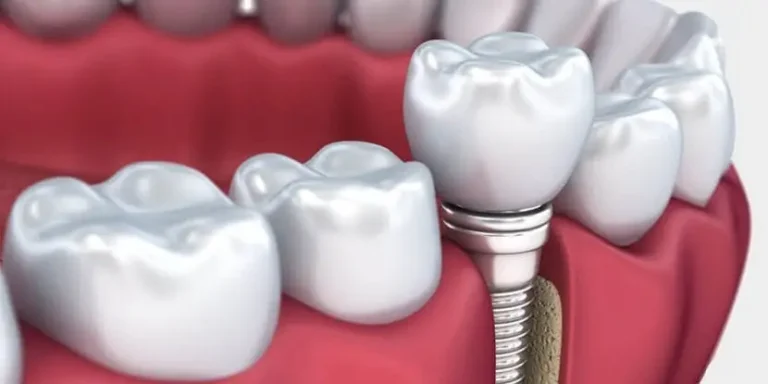
The laser dental implant process begins with a thorough clinical examination and a cone beam CT scan (CBCT) to assess jawbone density and determine the ideal position, angulation, and depth of each implant.
Based on these findings, the implantologist designs a digital treatment plan that specifies the number and exact location of the implants. This digital planning enhances precision and helps reduce the risk of complications.
On the day of surgery, local anesthesia is usually sufficient. Instead of using a traditional scalpel, the dentist creates a very small opening in the gum with a dental laser, which significantly minimizes bleeding, pain, and postoperative swelling.
The implant site is then prepared within the bone using specialized drills and instruments, followed by placement of the dental implant fixture (typically a titanium or zirconia screw) in the preplanned position with high accuracy.
After implant insertion, the laser is used again to disinfect the surrounding tissues and promote faster soft-tissue healing. Thanks to the precision of laser incisions, the procedure may require only minimal suturing or, in some cases, no sutures at all.
In selected cases, a temporary crown can be attached to the implant in the same visit (immediate loading). In other situations, a healing period of about 3–6 months is needed to allow osseointegration (the stable fusion of the implant with the jawbone) before placing the final restoration.
Finally, accurate impressions of the teeth and gums are taken to fabricate the definitive prosthetic crown, which is matched in color, shape, and size to the adjacent teeth for a natural appearance. The patient then receives detailed post-operative instructions on oral hygiene and maintenance after laser implant surgery to ensure long-term implant stability and preserve the aesthetic and functional results.
Case Assessment and Digital Planning
At the outset of laser-assisted dental implant placement, the dentist performs a comprehensive evaluation of the teeth, gums, and jawbone.
Cone Beam Computed Tomography (CBCT) and digital planning software are used to pinpoint the exact implant site, and to assess bone density and thickness in the jaw.
This digital planning process helps determine the optimal dimensions and design of the implant, as well as the ideal angulation and insertion depth, which minimizes errors and improves the overall success rate of laser-guided implant surgery.
The dentist also reviews the treatment plan and expected outcome with the patient to ensure the procedure aligns with the patient’s functional needs and aesthetic expectations.
Anesthesia and Site Preparation
Once planning is complete, the dentist administers local anesthesia to the implant site to keep the patient comfortable throughout the procedure.
Because laser-assisted dental implant surgery usually does not require a large surgical incision, site preparation tends to be less painful and more conservative to the surrounding soft tissues.
The area is thoroughly disinfected, and both the gingival tissues and underlying bone are prepared according to the digital plan, which helps reduce the risk of postoperative infection or complications.
Laser-Assisted Soft Tissue Management
At this stage of laser implant placement, a dental laser is used to make a highly precise incision in the gum instead of a conventional scalpel.
The laser allows the clinician to create a small access window in the gingiva while markedly reducing bleeding and promoting faster soft tissue healing.
It also assists in debriding any inflamed or compromised tissue around the planned implant site, creating a clean, biologically favorable environment for implant placement.
This approach typically leads to less swelling and discomfort after surgery and shortens the overall recovery period compared with traditional surgical techniques.
Implant Placement
After soft tissue and bone have been prepared with the aid of the laser, the dentist drills the osteotomy (implant socket) in the jawbone precisely according to the pre-established digital plan.
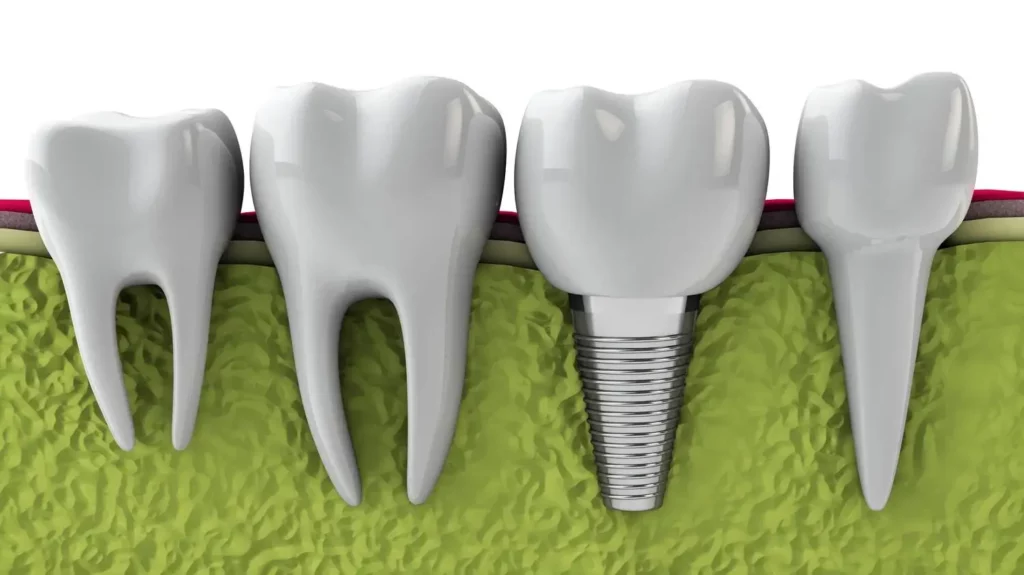
A titanium dental implant is then inserted into the bone so that it is firmly stabilized and can function as an artificial root for the future prosthetic tooth.
Success at this stage of laser-assisted implant treatment depends heavily on the accuracy of implant positioning and its congruence with the surrounding bone, which supports optimal osseointegration.
The implant may be covered temporarily and left undisturbed until osseointegration is complete, before moving on to abutment connection and crown placement.
Abutment Connection and Final Crown Placement
After the bone has healed and the implant has fully integrated, the final phase of laser implant therapy is the placement of the abutment and definitive crown.
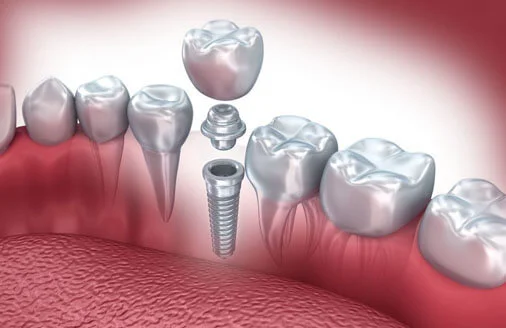
A specialized abutment is secured to the implant to serve as a connector between the implant body and the final prosthetic crown.
A custom ceramic or zirconia crown is then fabricated to match the shape and shade of the adjacent natural teeth and is firmly attached to the abutment.
This step restores chewing function and the natural appearance of the smile, completing the laser-assisted implant process with a long-lasting and stable result—provided that proper oral hygiene and regular dental check-ups are maintained.
Recovery Time and Outcomes After Laser Dental Implants
Recovery after laser-assisted dental implant surgery is typically shorter and more comfortable than with conventional techniques. Laser use helps minimize bleeding and swelling and promotes faster healing of the tissues surrounding the implant.
In most cases, patients can resume light daily activities within 24–48 hours, provided they follow the dentist’s instructions—such as avoiding strenuous physical effort in the first few days and adhering to prescribed mouth rinses and medications.
The process of osseointegration (the fusion of the implant with the jawbone) usually takes around 3 to 6 months. This phase is essential to achieve stable and long-lasting results with laser dental implants.
Once healing is complete and the final crown is placed, the patient enjoys a fixed tooth that closely mimics a natural tooth in appearance and function, significantly improving chewing efficiency, speech, and overall aesthetics.
The success and longevity of laser dental implants depend on the clinician’s expertise, the quality of the implant system, and the patient’s commitment to proper oral hygiene and regular follow-up visits. Together, these factors help maintain the implant for many years and potentially for a lifetime.
Post-Operative Care Instructions After Laser Dental Implant Surgery (optimized for search intent)
After completing laser dental implant placement, it is essential to follow post-operative care instructions to ensure rapid, stable osseointegration and to achieve the best functional and aesthetic outcome.
Avoid chewing on the implant side for the first 24–48 hours, and stick to soft, cool foods such as milk, yogurt, and lukewarm soup to reduce mechanical stress on the implant site.
It is strongly recommended to refrain completely from smoking and consuming alcoholic beverages, as both slow down the healing process and significantly increase the risk of implant failure.
Maintain good oral hygiene using a soft-bristled toothbrush, avoiding the surgical area during the first few days. Afterwards, you may gently clean around the implant, in addition to using an antiseptic mouthwash prescribed or recommended by your dentist.
If mild swelling or discomfort occurs after laser dental implant surgery, apply cold compresses externally and take the prescribed analgesics without exceeding the recommended dose.
Be careful not to touch the implant area with your tongue or fingers, and avoid vigorous rinsing on the first day so as not to disrupt the blood clot that protects the implant and supports healing.
Regular follow-up visits with your dentist after implant placement are crucial to assess implant stability, detect any early complications, and ensure the long-term success of laser dental implants.
By adhering to these simple yet important guidelines, you can accelerate recovery, minimize complications, and achieve the outcome most patients are looking for when searching for post-operative care instructions after laser dental implant surgery.
How to Choose the Best Dentist for Laser Dental Implants
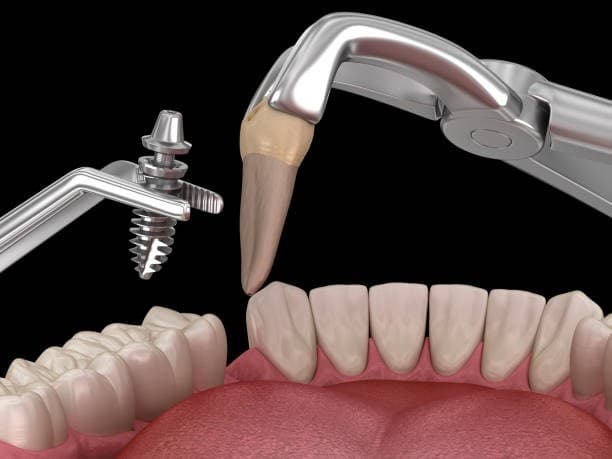
Choosing the right dentist for laser dental implants starts with looking for a practitioner who is specialized in implant dentistry and has a proven track record in using advanced laser technologies.
Make sure your dentist holds recognized certifications and has completed dedicated training courses in laser-assisted implant placement. It’s also important to ask about the number of implant cases they’ve performed with laser techniques and to review their clinical outcomes.
You should also select a dental clinic or center equipped with modern laser systems that are properly sterilized and maintained according to international standards, as the quality of the equipment has a direct impact on the precision of implant placement and the speed of soft tissue healing.
Review online ratings and patient testimonials, whether on search platforms or the clinic’s social media pages, and pay attention to before-and-after photos of laser implant cases when available.
Book an initial consultation and ask your dentist about the treatment plan, procedure duration, total cost of laser dental implants, and the expected recovery period. Notice how clearly they answer, and whether they take the time to explain potential risks and alternative treatment options.
Ideally, choose a dentist who performs a comprehensive assessment of your oral and periodontal health, and uses radiographic imaging and 3D cone-beam CT scans for precise implant planning before starting the laser-guided procedure. This approach helps ensure optimal functional and aesthetic results over the long term.
Book Your Consultation with Dr. Abeer Zendagi for Laser Dental Implants and Prosthodontics
If you’re looking for the best solutions in laser-assisted dental implants and fixed or removable dental prostheses to restore your smile with confidence and safety, you can now book a consultation with Dr. Abeer Zendagi, a specialist in implant dentistry and advanced laser techniques.
During your visit, Dr. Abeer will carry out a thorough assessment of your jawbone and gums, then design a personalized treatment plan that includes laser-assisted implant placement with minimal discomfort and faster healing, while selecting the most suitable type of dental prosthesis in terms of aesthetics, durability, and biocompatibility.
Your consultation will include a clear explanation of the cost of laser dental implants, the expected number of sessions, and the prosthetic options that best fit your case, in addition to answering all your questions about potential risks, recovery time, and post-implant care.
Booking a consultation with Dr. Abeer Zendagi is the first step towards a healthy, naturally looking smile, supported by a well-planned treatment approach based on the latest protocols in laser implantology and advanced dental prosthetics.