Table of Contents
Can a Broken Tooth Be Repaired Without a Crown?
Not every broken tooth automatically needs a dental crown. The best way to treat a broken tooth depends mainly on how big the fracture is, where it is located, whether the nerve has been affected, and the overall condition of the tooth.
For minor chips that affect only a small part of the enamel, the tooth can often be repaired with cosmetic bonding (tooth-colored filling) or simple reshaping of the sharp edges, without placing a crown. If the fracture is deeper, reaches the dentin, or has clearly weakened the structure of the tooth, a crown may become the better option to protect the tooth in the long term.
The main factors that determine whether a crown is needed include:
- The amount of tooth structure that has been lost.
- How well the remaining tooth can withstand chewing forces.
- The presence of pain or sensitivity suggesting the fracture is close to, or has reached, the nerve.
- The position of the tooth: front teeth are more aesthetic, while molars are exposed to stronger chewing forces.
Some cases can be managed with bonded fillings, light-cured composite fillings, or root canal treatment followed by a large buildup, without placing a crown immediately, as long as the remaining tooth is still strong enough. Because of all these variables, it is not possible to decide at home whether a broken tooth needs a crown or not. A clinical examination and dental X-rays are essential to determine the most appropriate treatment plan for each individual case.

What Are the Types of Tooth Fractures?
Understanding what type of fracture has affected the tooth helps your dentist choose the most suitable broken tooth treatment and determine whether a simple repair is enough or a stronger restoration, like a crown, is needed. Classification is based mainly on how deep the fracture is and which layers of the tooth it has reached.
- Superficial enamel fracture
- Fracture extending into the dentin
- Fracture reaching the pulp (nerve)
- Fracture extending into the root
Superficial enamel fracture
This is the simplest type of tooth fracture. It affects only the enamel, the hard outer layer of the tooth, without reaching the dentin or pulp.
It often appears as:
- A fine crack line on the surface of the tooth.
- A small chip at the biting edge or corner of the tooth.
- Mild wear or chipping after a minor trauma or biting something hard.
Symptoms are usually mild or absent. The person may notice only a change in appearance, a rough edge, or slight sensitivity. This type of fracture can often be managed with conservative and simple methods, especially if it is treated early before it becomes deeper.
Fracture extending into the dentin
In this type, the fracture starts in the enamel and continues into the dentin, the deeper and less hard layer of the tooth. Sensitivity tends to increase because dentin contains tiny tubules that transmit sensations toward the nerve.
Signs that may suggest this type of fracture include:
- Pain or tingling when drinking cold or hot beverages.
- Discomfort or pain when chewing or biting on the tooth.
- A clearly visible broken area, sometimes with a change in color around the fracture.
The more dentin that is exposed, the higher the chance of nerve irritation and worsening pain. At this stage, broken tooth treatment usually involves a restoration that covers and protects the exposed dentin and helps prevent bacteria from reaching the inner pulp, alongside a careful assessment of the nerve by the dentist.
Fracture reaching the pulp (nerve)
Here, the fracture is deep enough to expose the pulp (nerve and blood vessels) or come very close to it. This type is more medically serious, as it significantly increases the risk of pulp inflammation and complications if not treated promptly.
Symptoms that may accompany this kind of fracture include:
- Sudden, sharp pain immediately after the injury.
- Occasional slight bleeding from the center of the tooth.
- Ongoing or throbbing pain that worsens with hot and cold stimuli.
- Marked sensitivity when chewing or even when air touches the tooth.
In these situations, superficial bonding alone is usually not enough. The tooth often requires root canal treatment (cleaning and filling the root canals) followed by a strong restoration or coverage to protect it. The final decision depends on the dentist’s evaluation of the root and surrounding tissues.
Fracture extending into the root
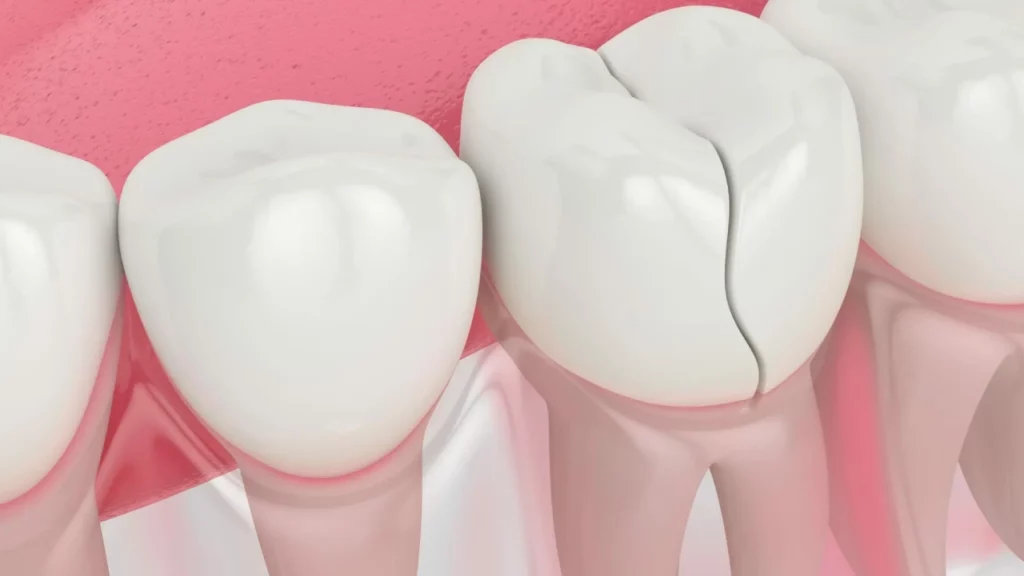
This is one of the most complex types of fractures. The crack or fracture line extends from the crown of the tooth down into the root. It may not be clearly visible to the naked eye and is often diagnosed through a clinical exam and X-rays.
Possible signs include:
- Pain when chewing, especially on a specific part of the tooth.
- A feeling of discomfort or slight mobility of the tooth in some cases.
- Recurrent swelling or abscess near the tooth.
- Pain that comes and goes and gradually worsens over time.
Treatment depends on the direction and depth of the fracture:
- If the fracture is limited to a small part of the root, in some cases the tooth may be saved with advanced procedures.
- If the fracture is vertical and deep, removing the tooth may be the safest option to prevent ongoing infection and pain.
This type of fracture is particularly important when discussing broken tooth treatment options, because the chances of saving the tooth are lower compared to superficial or moderate fractures, and it requires careful evaluation by a specialist.
When Can a Broken Tooth Be Repaired Without a Crown?
A broken tooth does not always mean you must have a crown. In some situations, a more conservative approach is enough, preserving as much natural tooth structure as possible. The decision to treat a broken tooth without a crown depends on the size, depth, and location of the fracture, as well as your bite forces and the general condition of the tooth.
A broken tooth can often be repaired without a crown in the following cases:
- The fracture is superficial and limited to enamel only, without causing severe sensitivity or pain.
- The broken portion is relatively small and the tooth has not lost a large part of its crown.
- The nerve has not been affected, and there are no signs such as deep, lingering pain with hot or cold.
- The tooth roots are strong and healthy, and the surrounding gums are in good condition.
- The tooth is not subjected to very strong forces, as can happen with some back teeth in people who grind or clench their teeth at night.
In these situations, the dentist may rely on cosmetic composite fillings (bonding), rebuilding the missing part with a tooth-colored material, or simply smoothing and polishing sharp edges. The exact method as part of your broken tooth treatment plan will vary from person to person, so a clinical exam and X-rays are always essential before deciding not to use a crown.
When Does a Tooth Need a Crown?
A dental crown is not necessary for every broken tooth, but in some cases it is the safest way to preserve the tooth over the long term. Choosing a crown depends on the size of the fracture, the condition of the nerve, the strength of the remaining tooth structure, and the functional role of that tooth in your mouth.
A crown is often recommended in the following situations:
When a large part of the tooth structure is missing
If the fracture is deep or large enough that a filling alone will not adequately reinforce the tooth, the tooth becomes weak and prone to breaking again. In this case, a crown is used to cover most or all of the visible tooth, distribute chewing forces, and reduce the risk of further fractures or filling failure.
After root canal treatment on a broken tooth
Teeth that have undergone root canal treatment are usually more brittle because they lose their internal nerve and blood supply, especially when the fracture was the original cause of nerve damage or death. After completing root canal treatment and building up the tooth, a crown is often recommended to protect the tooth from splitting or breaking under chewing forces, particularly for back molars.
When the fracture affects your bite or smile
If the broken tooth is one of the front teeth, or a tooth that bears heavy chewing pressure, and you need to restore shape, color, and strength at the same time, a crown may be the best option for both durability and appearance. A well-made crown can provide a natural shape and shade while reinforcing the remaining tooth walls.
In cases of multiple cracks or generalized weakness
Some teeth may not have one large obvious break but instead contain several fine cracks or old, large fillings that have left the tooth walls thin and weak. In these cases, placing a crown can be an important preventive step to protect the tooth from a more serious future fracture.
In all of these situations, the dentist evaluates the case clinically and with X-rays and weighs all available options. The treatment plan may differ from one person to another even if the fractures look similar. A face-to-face assessment with a qualified dentist is therefore essential to determine whether a crown is truly necessary or whether simpler solutions may be sufficient.
What Happens If a Broken Tooth Is Not Treated?
Leaving a broken tooth untreated is not just a cosmetic issue or a source of mild discomfort. Over time, it can turn into a painful, complex problem that is harder and more expensive to treat. The specific complications depend on the type and location of the fracture, but in general, the following may occur:
1. Increasing sensitivity and pain
When the fracture is relatively deep and approaches the dentin or nerve, you may start to experience:
- Pain when eating, especially with cold, hot, or sweet foods and drinks.
- Sharp pain when biting down or putting pressure on the tooth.
Over time, the pain may change from occasional to constant as the fracture gets closer to the nerve or involves it.
2. Pulp inflammation and abscess formation
Open cracks or deep fractures allow bacteria to enter the inner part of the tooth, which can lead to:
- Inflammation of the pulp (the nerve inside the tooth), causing severe pain that may wake you from sleep.
- Death of the nerve over time, sometimes leading to a temporary reduction in pain before an abscess forms at the root tip.
- Swelling of the gum or face, bad breath, and a throbbing sensation in the tooth.
At this stage, you will often need root canal treatment and possibly additional procedures depending on the condition of the bone and gums.
3. Further breakdown of the tooth and difficulty saving it
The longer broken tooth treatment is delayed, the greater the risk of:
- The fracture extending into the root.
- A larger part of the crown breaking off while chewing.
In such cases, it may become very difficult or impossible to restore the tooth, and the dentist may have no choice but to remove it and replace it with a dental implant or bridge. This is usually more complex and costly than repairing the fracture at an early stage.
4. Impact on neighboring teeth and chewing function
Loss or weakening of part of a tooth can lead to:
- Excessive load on neighboring teeth and opposing teeth in the other jaw.
- Slight movement or shifting of teeth and changes in your bite over time.
- Difficulty chewing on the affected side, which may cause you to favor one side, adding strain to your jaw joint and otherwise healthy teeth.
5. Gum problems and bad breath
Sharp or broken tooth edges can easily trap food debris and bacteria, which may cause:
- Localized gum inflammation around the broken tooth.
- Bleeding or swelling of the gums and difficulty cleaning the area properly.
- Unpleasant mouth odor due to bacterial buildup.
For all these reasons, it is advisable to see a dentist as soon as you notice any tooth fracture, even if it seems minor or painless. Early evaluation makes it easier to select the most suitable treatment and to prevent complications.
How to Care for a Tooth After It Has Been Repaired
Looking after the tooth once it has been repaired is a key part of successful broken tooth treatment and helps the result last as long as possible. Even the best fillings, veneers, or crowns can run into problems if they are not maintained properly. The following practical tips can help:
1. Daily oral care
- Brush at least twice a day with a soft-bristled toothbrush and fluoride toothpaste.
- Use floss or interdental brushes once a day to clean between teeth and around the treated area.
- Avoid aggressive brushing directly on the restored tooth margins to prevent wear of the filling or restoration edges.
2. Avoid habits that weaken teeth
- Do not use your teeth to open packages or cut hard objects such as thread or nails.
- Avoid chewing ice, very hard nuts, and hard candies, especially on the side that has been treated.
- If you grind or clench your teeth at night, discuss a custom night guard with your dentist to protect your restoration.
3. Regular dental checkups
- Have a dental checkup every 6 months, or as advised by your dentist, to detect any new cracks or early wear of the restoration.
- Contact your dentist promptly if you notice pain, marked sensitivity, or a new rough or broken area on the treated tooth.
- Remember that the lifespan of any treatment varies from person to person, depending on oral hygiene, the type of fracture, and the chosen procedure. Regular follow-up is essential to maintain the results of broken tooth treatment over the long term.
How Dr. Abeer Zandagi Helps You Choose the Best Treatment for a Broken Tooth
Dr. Abeer Zandagi’s role goes beyond simply fixing a broken tooth. Her focus is on choosing the treatment plan that is most appropriate for your situation, using the least invasive approach possible while preserving as much natural tooth structure as she can. The goal is to find a solution that balances appearance, function, longevity, and cost, tailored to each individual patient.
During your initial assessment visit, Dr. Abeer will:
- Perform a thorough clinical examination of the broken tooth, the surrounding gums, and neighboring teeth.
- Order appropriate X-rays (such as standard dental X-rays or CBCT when needed) to evaluate the root, nerve, and surrounding bone.
- Assess the strength of the remaining crown and determine whether the broken tooth can be treated without a crown or if a crown would be a safer option.
She then explains all available options clearly, which may include cosmetic bonding, veneers, partial or full crowns, and root canal treatment if required, outlining for each option:
- Its advantages and potential limitations.
- Typical durability and expected lifespan.
- How much natural tooth structure can be preserved.
- An approximate idea of cost and the number of visits needed.
Dr. Abeer helps you choose a treatment based on:
- The extent of the fracture and the strength of the remaining tooth.
- The location of the tooth (front, where appearance is critical, or back, where chewing forces are higher).
- Your age, habits (such as teeth grinding or nail biting), and oral hygiene practices.
- Your personal priorities in terms of appearance, durability, and budget.
With this collaborative approach, you receive not only broken tooth treatment but also a long-term plan to protect the repaired tooth and reduce the risk of future fractures as much as possible. To know what is truly best for your situation, an in-person examination with a qualified specialist such as Dr. Abeer Zandagi remains the most important step.