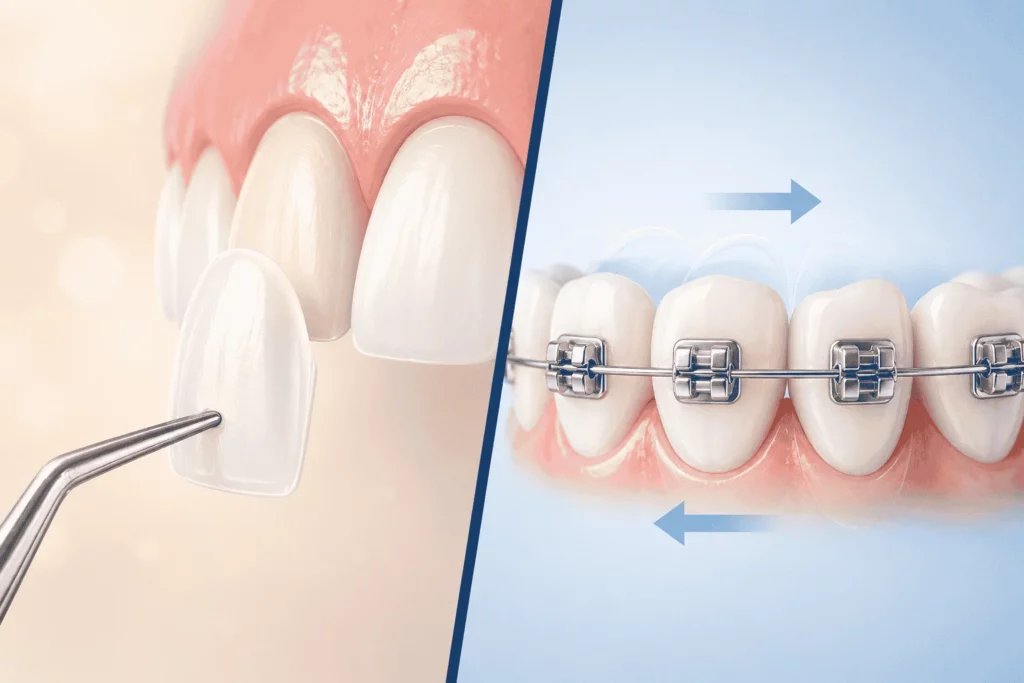
Does every patient need veneers after orthodontic treatment?
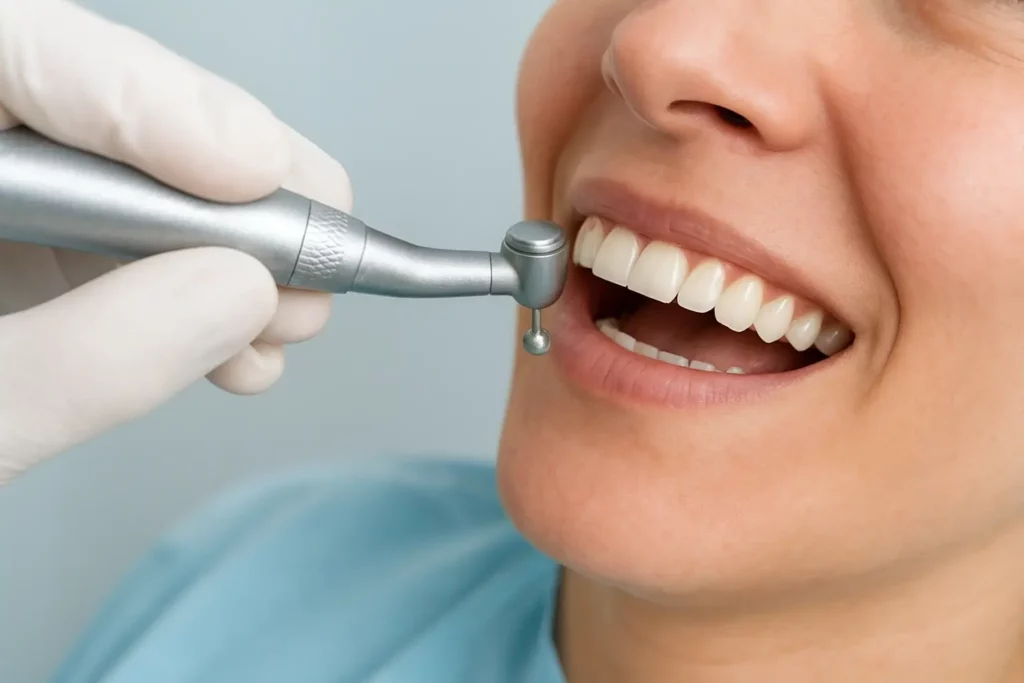
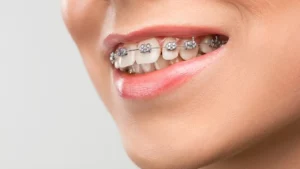
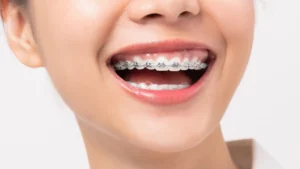
Not every patient needs veneers after braces or clear aligner therapy. The decision to place dental veneers depends on the final outcome of the orthodontic treatment and on the teeth themselves in terms of color, shape, and overall harmony with the smile.
In many cases, orthodontic treatment alone provides excellent alignment and a noticeable improvement in the smile’s appearance, without the need for any additional cosmetic procedures.
However, veneers may be recommended after orthodontics if certain aesthetic issues persist, such as:
- Deep, intrinsic discolorations that do not respond to whitening
- Noticeable discrepancies in tooth size or shape
- Fractures, worn edges, or minor residual gaps that cannot be fully closed with orthodontics alone
For this reason, the cosmetic dentist and the orthodontist usually assess the final result together and then decide whether the patient truly needs veneers after orthodontic treatment to enhance the final smile, or whether preserving the natural teeth without restorations is the healthier and more aesthetically appropriate option.
When Are Veneers After Orthodontic Treatment a Suitable Option?
Persistent discoloration unresponsive to bleaching
After completing orthodontic treatment, some patients are left with deep discolorations or white and dark spots that do not respond to conventional teeth-whitening sessions.
In such cases, post-orthodontic veneers are an excellent option to permanently mask these color defects and harmonize the shade of the front teeth.
Placing porcelain veneers makes it possible to achieve a bright, stable smile color without the need for repeated bleaching sessions, while preserving the ideal alignment achieved with braces or aligners.
This solution is particularly suitable for patients with congenital tooth discoloration, teeth that have darkened after root canal treatment, or color changes caused by certain medications taken during childhood.
Discrepancies in tooth shape or size
Orthodontic treatment may end with teeth in correct alignment, yet there can still be noticeable differences in the shape or size of some anterior teeth, such as undersized lateral incisors or small gaps that cannot be fully closed with orthodontics alone.
In these situations, veneers after orthodontic treatment offer an effective option to harmonize tooth lengths and shapes, resulting in a more balanced, aesthetically pleasing smile.
Veneers help reshape incisal edges, increase the apparent size of relatively small teeth, and close minor spaces in an attractive way, without compromising the orthodontic outcome.
Cracks or wear in the front teeth
Some patients reach the post-orthodontic stage with superficial cracks or wear on the edges of their front teeth due to previous habits such as bruxism (teeth grinding) or nail biting.
Here, veneers after orthodontics can be an appropriate choice not only to enhance the appearance, but also to protect the worn tooth surface and reduce sensitivity.
Porcelain veneers cover the cracked or eroded enamel layer, restoring the natural look of the teeth and improving their resistance to external factors.
This combination of orthodontics and veneers helps achieve a straight, attractive smile with stronger teeth that are less susceptible to further wear.
Refining smile details after achieving proper alignment
Even after achieving ideal tooth alignment with orthodontic treatment, some individuals may wish to refine finer aspects of their smile, such as the degree of whiteness, the contour of the incisal edges, or the harmony between the teeth, lips, and gums.
In these cases, veneers after orthodontics are a suitable option for those seeking a complete “Hollywood smile” that combines perfect alignment with optimal tooth color and shape.
Veneers allow adjustment of gummy smiles, smoothing of tooth edges, and unifying color and luster, providing an advanced aesthetic result that orthodontics alone cannot offer.
With a thorough evaluation by a cosmetic dentist, the results of orthodontic treatment can be complemented with veneers to achieve a harmonious, attractive smile that lasts in the long term.
Can Teeth Whitening Be Enough After Braces Instead of Veneers?
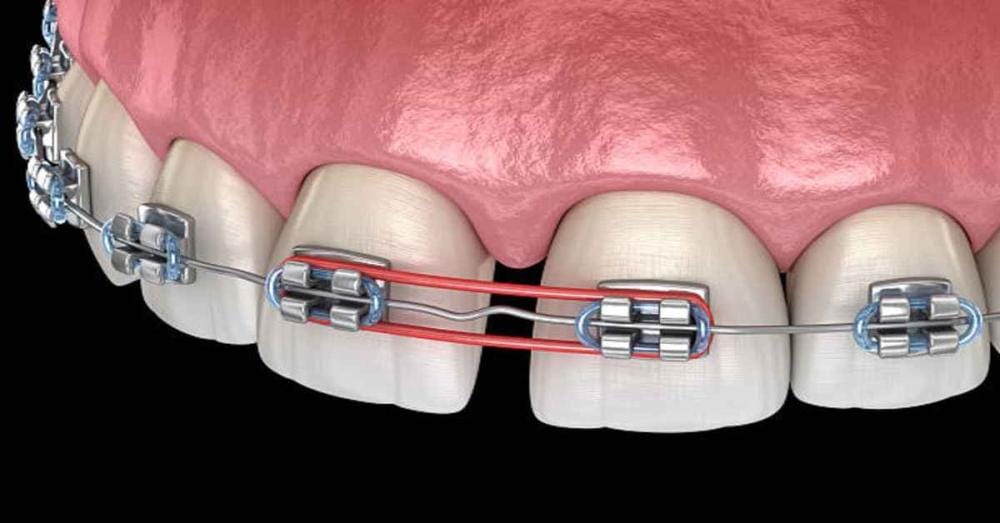
In many cases, professional teeth whitening after orthodontic treatment can be a sufficient alternative to veneers, especially when the teeth are well-aligned, have an acceptable shape, and are free from fractures or obvious deformities.
The dentist’s decision depends on the condition of the enamel, the shade of the teeth, and whether there are deep intrinsic stains. If discoloration is mild to moderate and mainly superficial, in-office teeth whitening may be enough to achieve a bright smile without resorting to porcelain veneers.
However, if noticeable aesthetic issues appear after braces—such as uneven tooth size, worn or thinned enamel, unwanted spaces, or severe discoloration that does not respond to bleaching—then post-orthodontic veneers may be the more suitable option for achieving a more precise, stable, and harmonious cosmetic result.
That’s why it’s always advisable to consult a cosmetic dentist to assess the color and shape of your teeth after braces and determine whether whitening alone is sufficient, or if placing veneers after orthodontic treatment will give you a more balanced and natural-looking smile.
When is the best time to get veneers after orthodontic treatment?
It’s generally recommended to wait about 3 to 6 months after completing orthodontic treatment before getting dental veneers. This allows the teeth to stabilize in their new positions and gives the dentist a clear picture of the final result.
During this period, your dentist will monitor the stability of your occlusion (how the upper and lower teeth come together) and address any minor tooth movement that may occur after braces or clear aligners are removed. This helps ensure that the veneers are designed to match the long-term position of your teeth and jaws.
In some cases, your dentist may advise a longer waiting period, especially if there were significant bite problems before treatment or if the orthodontic case was complex. This reduces the risk of having to adjust or replace the veneers later.
Ultimately, the ideal timing for veneers after orthodontic treatment depends on a thorough assessment by your dentist or orthodontist, taking into account tooth stability, gum health, and the overall esthetic outcome before proceeding with any additional cosmetic procedures.
Post-Orthodontic Veneers: Key Benefits and Clinical Considerations for Informed Decision-Making
Having veneers after completing orthodontic treatment is an advanced cosmetic step aimed at achieving a near-perfect smile once tooth alignment has been corrected.
Post-orthodontic veneers help enhance tooth color, shape, and size, and can close small residual gaps that may remain after tooth movement, resulting in a more harmonious and natural-looking smile.
One of the main advantages of veneers after braces or clear aligners is their ability to mask intrinsic tooth discoloration, minimize the appearance of minor wear or small fractures, and provide a smooth, glossy surface that is easier to clean and often boosts self-confidence when smiling.
However, there are important considerations that must be discussed with the dentist before proceeding with veneers after orthodontics. These include the potential need to remove a thin layer of enamel, ensuring the stability of orthodontic results through proper use of retainers, and selecting the appropriate type of veneer (porcelain/ceramic or composite) based on gingival health, enamel thickness, and the patient’s aesthetic expectations and desired longevity.
It is also essential to carefully evaluate gum health after debonding the orthodontic appliance and to rule out significant enamel loss or active caries. The success of post-orthodontic veneers relies on sound tooth structure and healthy gingiva, along with the patient’s commitment to meticulous oral hygiene and regular follow-up visits to maintain results over the long term.
Can veneers affect orthodontic results?
In general, veneers do not negatively affect orthodontic outcomes if they are planned at the right time and placed properly after orthodontic treatment is completed and the teeth have stabilized.
When veneers are placed after braces or clear aligner treatment, the dentist’s role is to make sure that:
- The occlusion (how the upper and lower teeth meet) is correct
- The number and thickness of veneers do not alter tooth position
- No abnormal or excessive pressure is placed on the teeth or bite
If veneers are done before orthodontic treatment, or without proper coordination between the orthodontist and cosmetic dentist, this may:
- Make it harder to move the teeth orthodontically
- Reduce the bond strength and stability of the veneers
- Slightly alter the expected aesthetic outcome
For this reason, it is generally recommended to:
- Complete orthodontic treatment first
- Then reassess the need for veneers to improve tooth color, shape, or to close minor gaps,
- All within a coordinated treatment plan between the orthodontist and cosmetic dentist, to ensure a straight, attractive smile without compromising the long‑term stability of the orthodontic results.
How does the dentist determine the need for veneers after orthodontic treatment?
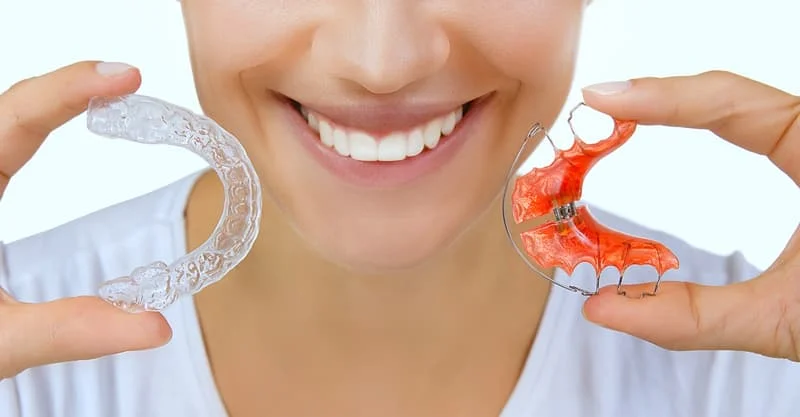
The decision to place veneers after orthodontic treatment starts with a comprehensive assessment of tooth shape, color, and overall smile harmony—not just how straight the teeth are.
The dentist looks for residual minor gaps, worn or chipped edges, and surface stains or hairline cracks that do not respond well to conventional teeth whitening.
They also evaluate how much the front teeth protrude, the ratio of tooth length to width, and how well the teeth align aesthetically with the lips and gums when the patient smiles.
In many cases, orthodontic treatment alone is sufficient. However, if certain cosmetic concerns remain—such as persistent aesthetic defects after braces, noticeable size discrepancies between the front teeth, or visible asymmetry that affects the appearance of the smile—the dentist may recommend veneers on the front teeth to refine the final result.
The decision also depends on the health of the enamel and gums. Dentists will only opt for veneers after orthodontic treatment if the teeth are structurally sound and free from decay and significant inflammation, to ensure that the cosmetic outcome is stable and long‑lasting.
Book a Consultation with Dr. Abeer Zindaqi to Find Out Whether You Really Need Veneers After Braces
If you’ve completed your orthodontic treatment but still aren’t fully satisfied with the shape or color of your teeth, booking a consultation with Dr. Abeer Zindaqi will help you determine whether you truly need veneers after braces, or if there are simpler options better suited to your case.
During the consultation, Dr. Abeer carefully assesses your final tooth alignment, enamel shade, and the size and shape of your teeth. She also examines the health of your gums and enamel to ensure that porcelain veneers can be placed safely without compromising tooth structure.
She will explain the difference between getting veneers post-orthodontics and other cosmetic procedures such as teeth whitening or minor enamel reshaping/contouring, and will clarify the expected treatment timeline, cost, and realistic outcomes based on your current oral condition and smile.
This specialized consultation enables you to make an informed clinical decision about veneers after braces, ensuring that any cosmetic treatment aligns with your real needs while safeguarding the long-term health of your teeth.