What Is a Fixed (Permanent) Retainer?
A fixed retainer is a thin wire, usually made of a safe metal such as stainless steel or titanium, that is bonded to the inner (lingual) surfaces of the front teeth with a special dental adhesive once orthodontic treatment is completed, in order to maintain the treatment results.
Its main role is to prevent teeth from shifting back to their original positions (relapse) by holding them in place continuously. For this reason, it is also referred to as a “fixed retainer” or “lingual/bonded retainer.”
The fixed retainer is typically placed on the upper jaw, lower jaw, or both, depending on the orthodontist’s treatment plan. It is virtually invisible from the outside and cannot be removed by the patient, which makes it a good long‑term option for maintaining tooth alignment after braces or clear aligners.
This type of retainer also helps distribute biting forces more evenly across the teeth and is considered an essential part of comprehensive orthodontic care to preserve a straight, stable smile for as long as possible.
Why Do Some Patients Need a Permanent Retainer?
Some patients need a permanent (fixed) retainer because their teeth are more likely to shift back to their original position after orthodontic treatment. This is especially true in cases of severe crowding, wide gaps between teeth, or bite problems involving the upper and lower jaws.
In such situations, a fixed retainer helps maintain the outcome and keep the teeth properly aligned over the long term. A thin wire is bonded to the back of the front teeth, preventing them from moving while remaining invisible when the patient smiles.
A permanent retainer is also recommended for patients with weak gums or jawbone, or for those who have previously not adhered to wearing a removable retainer as instructed. Relying on a fixed retainer significantly reduces the risk of relapse and helps preserve the results of orthodontic treatment, making it an important option for maintaining a harmonious smile after a demanding and lengthy course of care.
Can a Permanent Retainer Cause Problems Over Time?
Overall, a permanent (fixed) retainer is a safe and effective way to maintain orthodontic results. However, like any fixed appliance in the mouth, it can lead to certain issues over time if not properly cared for.
Food debris and dental plaque can accumulate around the retainer wire, which increases the risk of tooth decay, gingivitis, and bad breath if the area is not cleaned regularly using an appropriate toothbrush, dental floss, or interdental brushes.
The permanent retainer may also break or partially detach from one of the teeth due to excessive pressure or biting on hard foods. This can cause slight tooth movement or a feeling of discomfort.
In some rare cases, a fixed retainer can irritate the gums or promote increased tartar (calculus) buildup in that area, making more frequent professional dental cleanings necessary.
Therefore, the permanent retainer itself is not a direct cause of problems; most complications are related to poor oral hygiene or skipping regular check-ups. For this reason, it is recommended to visit your orthodontist regularly to ensure the retainer is intact and to monitor the long‑term health of your teeth and gums.
Calculus and Plaque Buildup Around Fixed Retainers
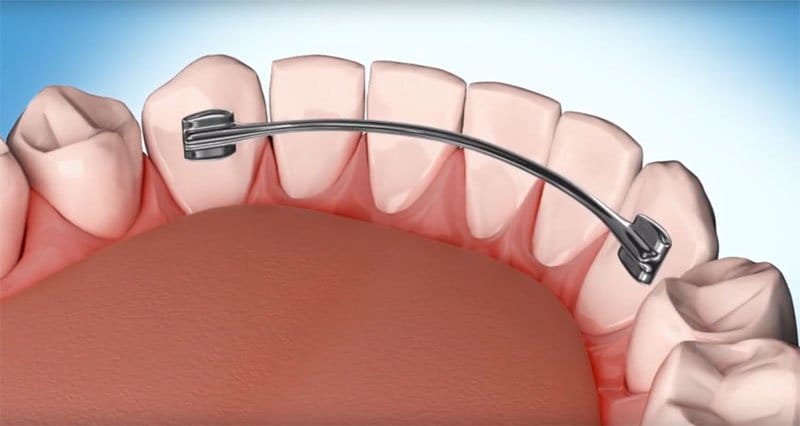
The accumulation of dental calculus (tartar) and plaque around fixed (bonded) retainers is one of the most common issues after completing orthodontic treatment. Food debris and bacteria readily collect around the wire and the bonding resin, accelerating plaque formation, which then mineralizes into hard tartar that cannot be removed with a regular toothbrush.
Over time, this can lead to gingivitis, bad breath, and decay affecting the teeth behind the fixed retainer if daily oral hygiene and regular dental check‑ups are neglected.
For this reason, dentists recommend using a soft‑bristled toothbrush, along with dental floss or interdental brushes specifically designed for cleaning around fixed retainers, in addition to periodic professional cleanings to remove plaque and tartar and to maintain tooth stability and long‑term gum health.
Does a fixed retainer affect gum and tooth health?
In normal circumstances, a fixed (bonded) retainer does not harm the gums or teeth. On the contrary, it helps maintain the alignment achieved after orthodontic treatment and prevents teeth from shifting back. Its effect, however, depends largely on daily care and proper oral hygiene.
Neglecting to clean around a fixed retainer can lead to the buildup of tartar and dental plaque around the wire and on the inner surfaces of the teeth. This increases the risk of gingivitis and tooth decay in this sensitive area.
For this reason, orthodontists recommend using a soft-bristled toothbrush, along with dental floss designed for fixed retainers or super floss, in addition to rinsing with a fluoride-containing mouthwash. Regular check‑ups with the dentist are also important to examine the retainer and professionally clean the surrounding area.
When these guidelines are followed, a fixed retainer is considered a safe and effective long‑term option, keeping the teeth straight without any significant negative impact on gum health or tooth enamel.
How to Care for a Permanent Retainer
To keep a permanent (fixed) retainer in optimal condition and maintain your orthodontic results over the long term, you need to follow a careful daily oral‑hygiene routine.
Brush your teeth twice a day using a soft‑bristled toothbrush and a fluoride toothpaste, paying special attention to the area around the wire bonded to the back of the teeth to remove food debris and dental plaque.
It is recommended to use orthodontic dental floss, floss with a threader, or small interdental brushes to clean around the permanent retainer and reach areas that a regular toothbrush cannot access.
Avoid biting on hard objects such as ice, pen tips, or hard nuts, as they can bend or partially detach the wire without you noticing, which may allow the teeth to start shifting again.
Make sure to visit your dentist or orthodontist at least every six months to check the stability of the permanent retainer and to have any tartar (calculus) around it professionally removed.
If you notice any pain, wire movement, or bothersome food buildup that is difficult to clean, schedule an appointment with your dentist promptly, and do not try to adjust the retainer yourself to avoid damaging your teeth or gums.
Advantages of a Fixed Retainer Compared to a Removable Retainer
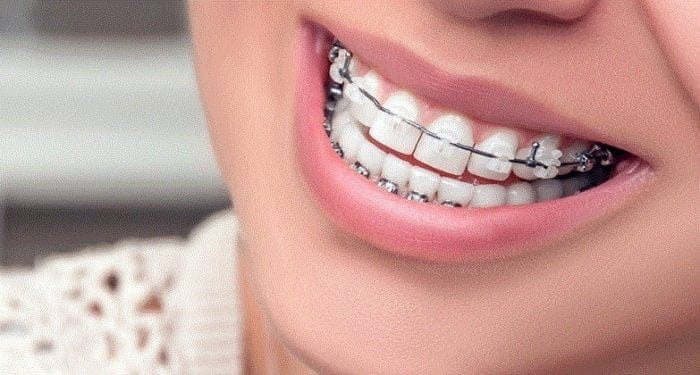
A fixed retainer offers several important advantages over a removable retainer, making it a preferred option for many orthodontists and patients after completing orthodontic treatment.
First, a fixed retainer provides continuous, round‑the‑clock stabilization of the teeth without the need to remember to insert or remove it. This significantly reduces the risk of teeth relapsing to their pre‑treatment positions.
Because it is bonded to the inner (lingual) surfaces of the teeth, a fixed retainer is virtually invisible and does not affect the appearance of the smile. This discreet positioning enhances the patient’s psychological comfort and confidence while speaking and smiling.
Another key advantage is that a fixed retainer does not rely on daily patient compliance in the way a removable retainer does, making it an excellent option for individuals who may forget to wear their appliance or are worried about misplacing it.
In addition, a fixed retainer allows patients to eat and speak normally without needing to remove the appliance. However, it does require meticulous oral hygiene, including careful brushing and the use of dental floss or interdental brushes around the bonded wire to prevent plaque and calculus buildup.
With these benefits, a fixed retainer provides a long‑term, effective solution for maintaining orthodontic results compared with a removable retainer, achieving a good balance between aesthetics and function.
Book a Consultation to Check Your Fixed Retainer with Dr. Amir Al-Zahrawi
Schedule a dedicated consultation with Dr. Amir Al‑Zahrawi to examine your fixed orthodontic retainer, ensure its stability after braces, and help maintain your treatment results for as long as possible.
During this visit, the dentist will carefully assess your fixed retainer to make sure it is properly bonded to the front teeth and check for any fractures, calculus (tartar) buildup, or gum inflammation around the bonded wire.
Dr. Amir Al‑Zahrawi will help you determine whether your teeth require any adjustment or if your fixed retainer needs repair or replacement, and will provide you with clear instructions on how to clean and care for your retainer to prevent tooth decay and plaque accumulation.
Booking a consultation to examine your fixed retainer is an essential step for anyone who has completed orthodontic treatment and wants to preserve a straight smile—especially if you notice any tooth movement or feel discomfort from the bonded wire.
You can contact Dr. Amir Al‑Zahrawi’s clinic to schedule a suitable appointment and undergo a comprehensive examination that ensures a secure, long‑lasting fixed retainer and a stable smile over the long term.