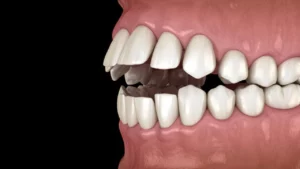
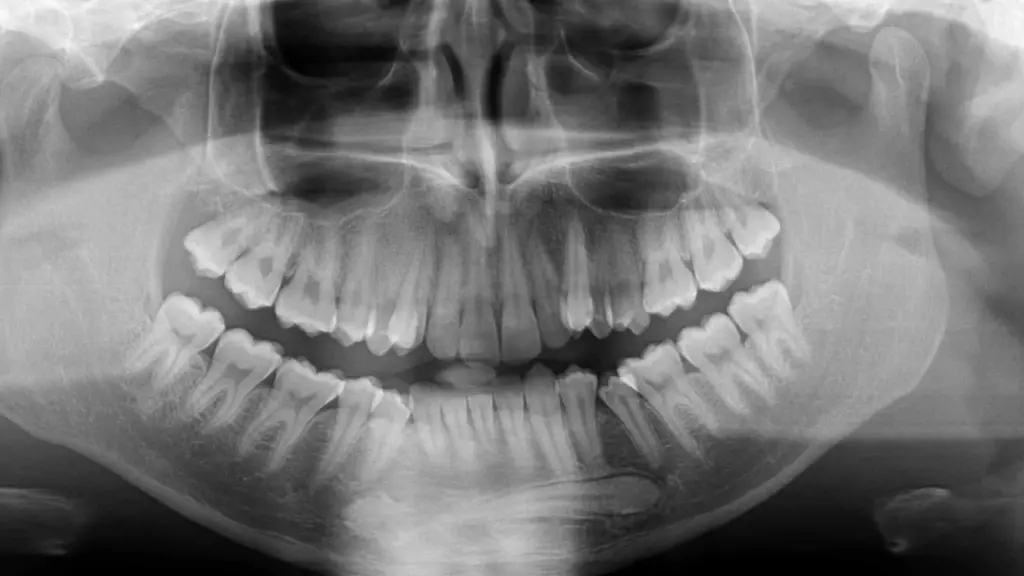
An impacted canine tooth is a permanent canine that develops inside the jaw but fails to erupt into its normal position. It may remain completely hidden beneath the gum and bone or emerge only partially.
Impacted canines do not always cause pain and are sometimes discovered during routine dental examinations or X-rays. However, depending on their position, they can affect neighboring teeth, alignment, and the surrounding bone.
Table of Contents
Treatment may involve monitoring, creating space with braces, surgical exposure followed by orthodontic traction, or extraction when preserving the tooth is not considered appropriate.
What Is an Impacted Canine Tooth?
A canine becomes impacted when it is present within the jaw but cannot follow its normal eruption path into the dental arch.
Impaction may be:
- Complete: The canine remains entirely beneath the gum or within the bone.
- Partial: Part of the tooth erupts while the remainder stays covered by gum or bone.
Canines contribute to smile aesthetics, chewing, and bite guidance. For this reason, a canine that does not erupt normally should be evaluated even when it causes no symptoms.
Diagnosis typically involves a clinical examination and panoramic X-ray. A three-dimensional CBCT scan may also be used when more detailed information about the tooth’s position and its relationship with neighboring roots is needed.

What Causes an Impacted Canine Tooth?
Canine impaction can result from several factors rather than a single cause.
Lack of Space and Dental Crowding
Insufficient space within the dental arch is an important cause. Because permanent canines erupt relatively late, neighboring teeth may already occupy the available space.
The canine may then remain within the bone or become displaced toward the palate or lip.
Abnormal Eruption Path
A canine may develop at an unfavorable angle or follow an abnormal path through the jaw.
It can become tilted, rotated, or positioned close to the roots of neighboring teeth instead of moving toward its intended position.
Problems Related to Baby Teeth
Primary teeth help guide permanent teeth into their correct positions.
A retained baby canine may interfere with eruption, while early loss of neighboring primary teeth can allow other teeth to move into the space intended for the permanent canine.
Genetic and Anatomical Factors
Family history, jaw size, tooth size, and anatomical variations may increase the likelihood of canine impaction.
Extra teeth or other physical obstacles may also interfere with the normal eruption path.
What Are the Symptoms of an Impacted Canine?
An impacted canine often causes no obvious symptoms, particularly when it remains completely inside the bone.
Possible signs include:
- Delayed eruption of the permanent canine.
- A baby canine remaining longer than expected.
- An unexplained gap where the permanent canine should be.
- Crowding or movement of neighboring teeth.
- A bulge or swelling in the gum.
- Occasional discomfort or pressure.
Symptoms alone cannot determine the exact position of the tooth. Imaging is therefore important for confirming the diagnosis and evaluating whether the canine is affecting neighboring roots.
Does Every Impacted Canine Need Treatment?
No. Not every impacted canine requires immediate orthodontic treatment or surgery.
Monitoring may be appropriate when the tooth is not causing symptoms, damaging neighboring teeth, or creating other complications.
Treatment is more likely to be recommended when:
- The canine affects the roots of neighboring teeth.
- Pain, swelling, or recurrent infection occurs.
- Tooth alignment or the bite is affected.
- A cyst or abnormal bone change develops.
- The tooth is positioned so that orthodontic traction offers a reasonable opportunity to preserve it.
The decision depends on the patient’s age, canine position, available space, bone condition, and surrounding teeth.
What Are the Treatment Options for an Impacted Canine?
The appropriate impacted canine treatment varies according to the position and severity of the impaction.
Monitoring
When the canine is not causing a problem or there is still a possibility of eruption, the dentist or orthodontist may monitor it through periodic examinations and X-rays.
Active treatment can be considered if its position changes or complications develop.
Creating Space With Braces
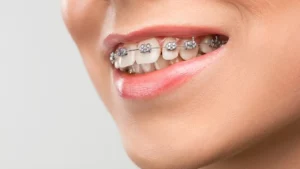
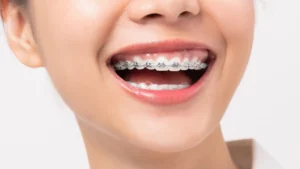
If crowding or insufficient space contributes to the impaction, orthodontic treatment may first be used to create enough room for the canine.
This may involve braces, movement of neighboring teeth, or other orthodontic techniques depending on the patient’s jaw and dental alignment.
Surgical Exposure and Orthodontic Traction
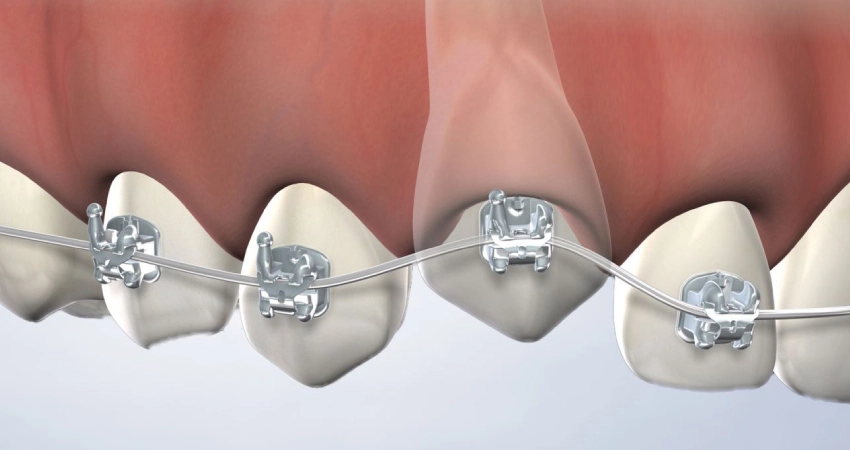
When the canine cannot erupt naturally but is positioned appropriately for preservation, surgical exposure combined with braces is commonly considered.
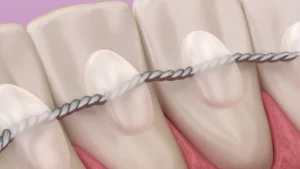
The oral surgeon creates a small opening in the gum to expose part of the canine crown. A small orthodontic attachment is then bonded to the tooth.
The orthodontist connects this attachment to the braces and applies gentle, controlled forces to gradually move the canine toward its correct position.
The process is deliberately gradual to protect the canine, neighboring roots, bone, and gum tissue.
Extraction of the Impacted Canine
Extraction may be considered when the canine is severely displaced, presents a significant risk to neighboring teeth, or cannot be moved predictably with orthodontic treatment.
If extraction is necessary, the resulting space may be managed with orthodontic treatment or replaced with an implant or bridge, depending on the individual case.
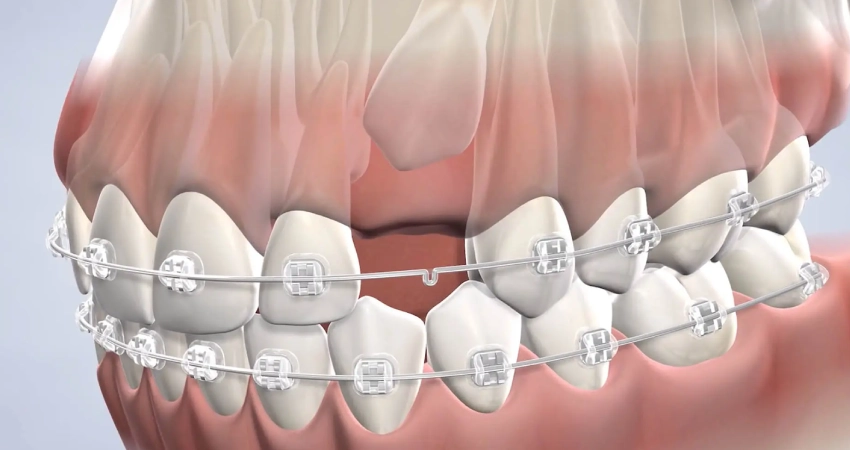
How Is an Impacted Canine Brought Down With Braces?
Treatment usually requires coordination between an orthodontist and oral surgeon.
First, panoramic imaging and sometimes CBCT are used to locate the tooth and evaluate its relationship with neighboring roots.
The orthodontist then creates sufficient space within the dental arch.
If the canine does not erupt naturally, the oral surgeon exposes part of the tooth and attaches a small orthodontic button or bracket.
After initial healing, the attachment is connected to the braces. Light forces are applied during regular orthodontic visits to gradually guide the canine through the bone and into the dental arch.
As the tooth emerges, its angle and position are adjusted until it aligns with the surrounding teeth and bite.
The goal is to preserve the natural canine whenever doing so is considered safe and achievable.
How Long Does Impacted Canine Treatment Take?
Treatment time varies considerably depending on the complexity of the case.
The source treatment plan estimates that moving an impacted canine into its proper position may take approximately 12 to 24 months, although treatment can be shorter or longer.
Factors affecting treatment time include:
- Patient age.
- Depth and direction of impaction.
- Distance the tooth needs to move.
- Amount of available space.
- Condition of the surrounding bone and gums.
- Patient adherence to orthodontic appointments and oral hygiene.
Some of this time may also involve aligning other teeth and creating sufficient space before traction begins.
What Happens If an Impacted Canine Is Left Untreated?
Not every untreated impacted canine develops complications. Some can remain stable and simply require monitoring.
However, possible problems include:
- Root resorption or damage to neighboring teeth.
- Movement or misalignment of adjacent teeth.
- Development of a cyst around the impacted tooth.
- Changes in the bite or dental arch.
- A visible gap or aesthetic concern.
- Greater treatment difficulty later in life.
This is why an impacted canine should not simply be ignored, even when it does not hurt.
Regular clinical and radiographic monitoring allows the dentist or orthodontist to identify changes before they become more difficult to manage.
Assess Your Impacted Canine With Dr. Amir Ghayath Al-Zahrawi
Choosing the appropriate treatment for an impacted canine begins with determining its exact position, available space, and relationship with surrounding teeth.
At Dr. Amir Ghayath Al-Zahrawi’s clinic, assessment may include clinical examination, panoramic imaging, and CBCT when required to determine whether the canine can be guided into position with orthodontic treatment, requires surgical exposure, or should be managed with another approach.
If you suspect that you or your child has an impacted canine tooth, you can schedule a consultation to assess the tooth and determine the appropriate treatment based on age, tooth position, available space, and the condition of the surrounding teeth.