Being told that you may need a tooth extraction before braces can be concerning. However, removing teeth is not a routine requirement for orthodontic treatment and is not recommended simply to make teeth easier to straighten.
The purpose of extraction is usually to create space when the dental arch cannot safely accommodate all the teeth or when significant protrusion needs to be corrected.
Table of Contents
Many patients can have braces without extractions. The decision depends on the severity of crowding, available space, tooth position, bite, jaw relationship, facial profile, and age.
Why Are Teeth Sometimes Removed Before Braces?
Orthodontic treatment requires enough space to move teeth into appropriate positions within the dental arch.
When the teeth are relatively large compared with the available jaw space, severe crowding can occur. Similarly, significantly protruding front teeth may require additional space so they can be moved backward.
In selected cases, extraction can help:
- Create space for crowded teeth.
- Reduce excessive front tooth protrusion.
- Improve the relationship between upper and lower teeth.
- Establish a more balanced bite.
- Allow teeth to move without pushing them beyond appropriate bone limits.
However, crowding alone does not automatically mean teeth need to be removed. Orthodontists consider extraction alongside several non-extraction approaches.

When Is Tooth Extraction Before Braces Necessary?
Extraction is generally considered when the orthodontist determines that an appropriate and stable result cannot be achieved safely while keeping all the teeth.
Severe Crowding and Lack of Space
Severe crowding is one of the most common reasons for orthodontic extraction.
It occurs when there is not enough space within the dental arch for all teeth to align properly. Teeth may overlap, rotate, or erupt outside their ideal positions.
Mild or moderate crowding can often be treated without extraction. When the shortage of space is significant, however, removing selected teeth may provide the room needed to align the remaining teeth.
Read More: Crowded Teeth: Causes and When Can They Be Treated With Clear Aligners?
Protruding Front Teeth
Extraction may also be considered when the front teeth protrude significantly.
Protrusion can affect smile appearance and may make it difficult to close the lips comfortably. In some cases, the orthodontist needs additional space to move the front teeth backward.
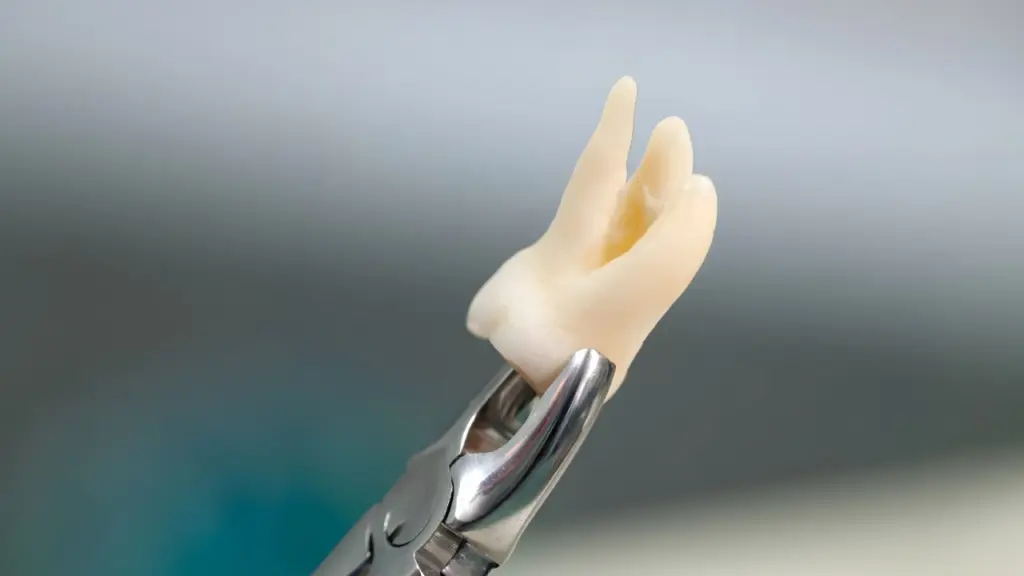
Selected teeth, commonly premolars in appropriate cases, may be removed so the resulting space can be used during orthodontic movement.
Whether extraction is appropriate depends on the cause of the protrusion, jaw relationship, facial profile, and amount of movement required.
Certain Bite Problems
Some bite problems involve an imbalance between tooth position and the relationship of the jaws.
Extraction may form part of treatment when there is significant crowding combined with a bite discrepancy or when the upper and lower dental arches cannot be coordinated appropriately without creating additional space.
Even in these cases, extraction is not automatically the first option. Other orthodontic or jaw-related treatments may also be considered.
Read About: Malocclusion and How It’s Treated
When Can Tooth Extraction Before Braces Be Avoided?
Many patients can undergo braces without tooth extraction, particularly when the space shortage is limited.
Non-extraction treatment may be possible when:
- Crowding is mild or moderate.
- The dental arch can be expanded appropriately.
- Front tooth protrusion is limited.
- Space can be redistributed between teeth.
- The patient is still growing and jaw development can be utilized.
- The bite can be corrected without removing permanent teeth.
The objective is not to avoid extraction at all costs. Instead, the orthodontist aims to preserve healthy teeth whenever a stable bite and balanced smile can be achieved safely without removing them.
How Can Space Be Created Without Tooth Extraction?
Several orthodontic techniques can create additional room for tooth movement.
Arch Expansion
In selected cases, orthodontic appliances can increase the width of the dental arch and create additional space.
Expansion is particularly useful in certain children and adolescents because their jaws are still developing, although its suitability depends on the individual jaw structure and treatment goals.
Interproximal Reduction
Interproximal reduction, or IPR, involves carefully removing a very small amount of enamel between selected teeth.
The small spaces created can be combined to provide enough room to correct mild crowding.
Because only limited amounts of enamel can safely be removed, IPR is generally used when relatively small amounts of space are needed.
Using Growth in Younger Patients
Children and adolescents may benefit from treatment that guides or utilizes jaw growth.
Early orthodontic intervention can sometimes improve the amount of space available for permanent teeth and reduce the likelihood of extraction later.
Orthodontic Tooth Movement
Braces, elastics, and temporary anchorage devices such as orthodontic mini-screws can sometimes be used to move teeth and redistribute available space.
Whether these approaches can replace extraction depends on how much space is required and the anatomical limits of the bone and gums.
How Does an Orthodontist Decide If Teeth Need to Be Removed?
The decision should not be based solely on how crowded the teeth look.
An orthodontist considers several factors, including:
- Severity of crowding.
- Amount of available and required space.
- Front tooth protrusion.
- Relationship between the teeth, lips, and facial profile.
- Upper and lower jaw relationship.
- Bite pattern.
- Condition of the teeth, gums, and supporting bone.
- Patient age and remaining growth.
- Missing or significantly damaged teeth.
- Possibility of creating space without extraction.
Panoramic and cephalometric X-rays may be used to evaluate tooth roots, jaw relationships, and facial proportions. Digital scans or dental models can also help calculate the amount of available space.
If the space shortage is relatively small, non-extraction methods may be sufficient. When substantially more space is required and other methods would compromise the bite, teeth, bone, or facial profile, extraction may be recommended.
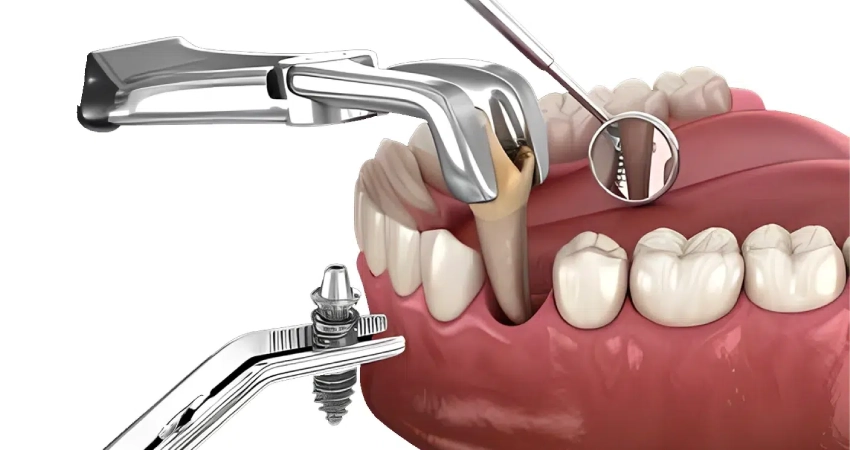
Which Teeth Are Usually Extracted Before Braces?
There is no single tooth that must always be removed before orthodontic treatment.
The choice depends on where space is needed, the condition of individual teeth, and how the orthodontist plans to move the remaining teeth.
Premolars are commonly considered in extraction-based orthodontic plans because of their position between the front and back teeth. The spaces they create can be used to correct crowding or retract protruding front teeth.
If one tooth is already significantly damaged or has a poorer long-term prognosis than the others, its condition may also influence the treatment plan.
Wisdom teeth, meanwhile, are not automatically substitutes for premolar extraction because their position and role in orthodontic space management are different.
Does Tooth Extraction Before Braces Change Your Face?
Orthodontic treatment can affect tooth position and lip support, which is why facial appearance is considered before extraction is recommended.
In patients with significantly protruding teeth and lips, creating space and moving the teeth backward may improve the facial profile.
The degree of change varies considerably according to the original tooth position, jaw structure, amount of orthodontic movement, and soft tissues.
Therefore, it is not accurate to assume that tooth extraction will produce the same facial changes in every patient. The expected effect on the profile should be assessed during treatment planning.
When Do Braces Start After Tooth Extraction?
There is no universal waiting period between extraction and orthodontic treatment.
According to the original treatment guidance, braces may begin or continue approximately 1 to 4 weeks after extraction in many cases. The exact timing depends on the number and location of extracted teeth, whether the procedure was simple or surgical, healing, and the orthodontic plan.
In some cases, braces or parts of the orthodontic appliance are placed before the teeth are extracted.
The orthodontist determines the appropriate timing based on healing and the tooth movements planned.
Read More About: Tips for Maintaining Your Orthodontic Results After Treatment
Do You Need Tooth Extraction Before Braces? Get Assessed by Dr. Amir Ghayyath Al-Zahrawi
Determining whether teeth should be removed before braces requires more than looking at the amount of visible crowding.
At Dr. Ameer Ghayath Al-Zahrawi clinic, the teeth, bite, jaw relationship, available space, and facial profile are evaluated. Orthodontic imaging and digital analysis may also be used to determine whether extraction is necessary or whether space can be created using another approach.
If you have been advised to remove teeth before braces or want to know whether orthodontic treatment without extraction is possible, you can schedule a consultation to evaluate the available options before starting treatment.