
One of the most common questions before starting clear aligners is: How long do clear aligners take?
Treatment time varies depending on the condition of your teeth, but many cases take approximately 6 to 18 months. Mild alignment problems may require only a few months, while more complex crowding or bite problems can take longer.
Table of Contents
You also do not have to wait until treatment is complete to notice changes. Early tooth movement may become noticeable within several weeks, while more visible improvements usually develop over the following months.
Your orthodontist can provide a more accurate estimate after examining your teeth, bite, and jaw relationship and creating a digital treatment plan.
How Long Does Clear Aligner Treatment Usually Take?
Clear aligner treatment commonly takes around 6 to 18 months, although this is only a general estimate. Some mild cases can be completed sooner, while complex orthodontic problems may take as long as treatment with conventional braces.
The advantage of digital clear aligner planning is that your orthodontist can usually estimate the treatment duration before you begin.
Digital planning can show:
- The approximate number of aligners required.
- The sequence of planned tooth movements.
- The expected overall treatment period.
However, this timeline is not guaranteed. Teeth may respond differently than predicted, and additional aligners may sometimes be required to achieve the planned result.

When Do Clear Aligner Results Start to Show?
Many patients begin noticing early changes after approximately 4–6 weeks of consistent aligner wear.
These first changes are often subtle and may include:
- Slightly straighter front teeth.
- Reduced crowding.
- Smaller spaces between teeth.
- A change in how the teeth meet when biting.
More noticeable changes to the smile generally appear after several months.
The speed at which you see results depends on the original position of your teeth and the movements planned. Some changes occur at the root level or in the bite and may not immediately be visible in the mirror.
Your orthodontist therefore evaluates treatment progress during follow-up appointments rather than relying only on visible changes.
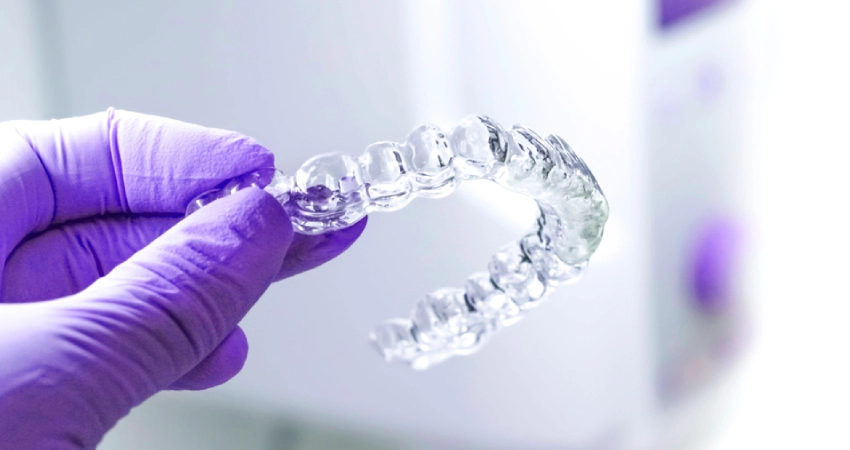
What Determines Clear Aligner Treatment Time?
Several factors determine whether your treatment takes a few months or more than a year.
Severity of Crowding or Spacing
Mild crowding or small gaps usually require fewer tooth movements and fewer aligners.
Moderate or severe crowding may require more space to be created before the teeth can move into their final positions. Larger gaps can also require additional treatment stages.
Bite problems occurring alongside crowding or spacing can further increase treatment complexity.
Type of Tooth Movement
Not all teeth move in the same way or at the same speed.
Moving a tooth slightly forward or backward may be relatively straightforward. Rotating certain teeth, controlling the roots, or moving teeth vertically can be more complex.
For this reason, two patients with apparently similar crooked teeth may have different treatment times depending on the exact movements required.
Number of Aligners
Each aligner represents one small stage of orthodontic movement.
A simple case may require relatively few aligners, while more complex treatment requires a longer sequence.
Some patients also need refinement aligners after completing their initial series. Refinements are additional trays used to improve tooth positions or fine-tune the bite when the initial series does not produce the complete planned result.
Daily Wear Time
Clear aligners only move teeth while you are wearing them.
Most systems typically require approximately 20–22 hours of daily wear. Wearing them significantly less than recommended can slow tooth movement and cause the teeth to fall behind the planned aligner sequence.
Aligners should generally be removed for eating and oral hygiene and returned to the mouth according to your orthodontist’s instructions.
Does Treatment Time Depend on How Complex the Case Is?
Yes. The complexity of the orthodontic problem has a significant effect on treatment duration.
Mild Cases
Mild cases may include small spaces, limited crowding, or minor misalignment of one or two teeth.
Because fewer movements are required, treatment can often be completed relatively quickly.
Moderate Cases
Moderate cases may involve noticeable crowding, several rotated teeth, multiple gaps, or mild bite problems.
These cases generally require more aligners and may involve several types of tooth movement. Refinement stages may also be needed toward the end.
Complex Cases
Severe crowding, significant tooth rotations, more substantial bite problems, or difficult jaw relationships can require longer treatment.
In some cases, clear aligners may be combined with orthodontic elastics or other techniques to achieve the required movements.
Very complex orthodontic problems may not be suitable for treatment with clear aligners alone. Your orthodontist may recommend fixed braces or a combined approach instead.
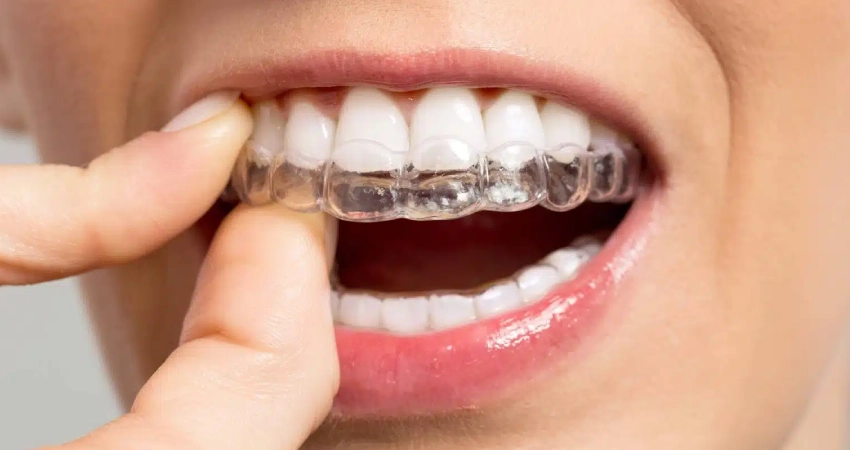
Why Can Clear Aligner Treatment Take Longer Than Expected?
The treatment duration given at your first appointment is an estimate based on the assumption that your teeth move according to the digital plan.
Several factors can extend that timeline.
One of the most common is not wearing the aligners for enough hours each day. If the teeth do not reach their planned position, the next aligner may not fit correctly.
Treatment can also be delayed by:
- Frequently missing or postponing follow-up appointments.
- Changing aligners later than instructed.
- Losing or damaging aligners.
- Some teeth moving more slowly than predicted.
- Needing additional refinement aligners.
- Changes to the treatment plan.
- Gum inflammation or dental problems that need treatment.
An extension does not necessarily mean the treatment has failed. Sometimes additional time is necessary to improve the bite or final tooth positions safely.
Can You Make Clear Aligners Work Faster?
You cannot safely force teeth to move faster than the surrounding bone and tissues can adapt. However, you can avoid unnecessary delays.
The most important steps are:
- Wear your aligners for the recommended number of hours.
- Change trays according to your orthodontist’s schedule.
- Attend follow-up appointments.
- Maintain good oral hygiene.
- Contact your orthodontist if an aligner is lost or damaged.
- Do not move to the next aligner earlier than instructed.
Trying to speed up treatment by changing trays prematurely can interfere with planned tooth movement rather than shorten treatment.
In selected cases, an orthodontist may also use elastics or other orthodontic aids to improve specific movements.
Are Clear Aligners Faster Than Braces?
Not necessarily.
Clear aligners can provide efficient treatment for many mild and moderate orthodontic problems, but they are not automatically faster than traditional braces.
The duration depends more on the type and complexity of tooth movement than on whether the appliance is removable or fixed.
A mild alignment problem may be corrected relatively quickly with clear aligners. A more complex bite problem may require a similar treatment period with aligners or braces, and certain cases may be better controlled with fixed appliances.
For this reason, treatment choice should be based on which method can predictably achieve the required tooth movements rather than which one appears faster.
What Happens After Your Last Clear Aligner?
Finishing your final aligner does not mean the teeth will automatically remain in their new positions.
After active orthodontic treatment, patients typically need a retainer to help maintain the result.
Teeth naturally have some tendency to move after orthodontic treatment, particularly during the period when the surrounding bone and tissues are adapting to their new positions.
Your orthodontist determines the type of retainer and how often it should be worn based on your individual case.
Following the retention plan is important for protecting the result achieved during months of clear aligner treatment.
Find Out Your Clear Aligner Treatment Time With Dr. Ameer Ghayyath Al-Zahrawi
General estimates can help you understand how long clear aligners take, but the actual duration depends on your teeth, bite, and required movements.
At Dr. Ameer Ghayyath Al-Zahrawi’s clinic, your teeth and bite are assessed, with digital scans and orthodontic imaging used when necessary to plan tooth movement and estimate the number of aligners required.
Your treatment plan can then provide a more realistic estimate of how long your clear aligner treatment may take and when you can expect to start seeing changes.
If you are considering clear aligners, you can schedule an orthodontic consultation to determine whether they are suitable for your case and receive an individualized estimate of your treatment time.