Table of Contents
What Is the Difference Between White Composite Fillings and Porcelain Inlays/Onlays?
When it comes to restoring decayed or broken teeth, many people wonder about the difference between a white composite filling and a porcelain inlay or onlay, and which option is better in terms of strength, appearance, and cost. Both treatments are designed to replace missing tooth structure, but they differ significantly in material, how they are made, and how they are used.
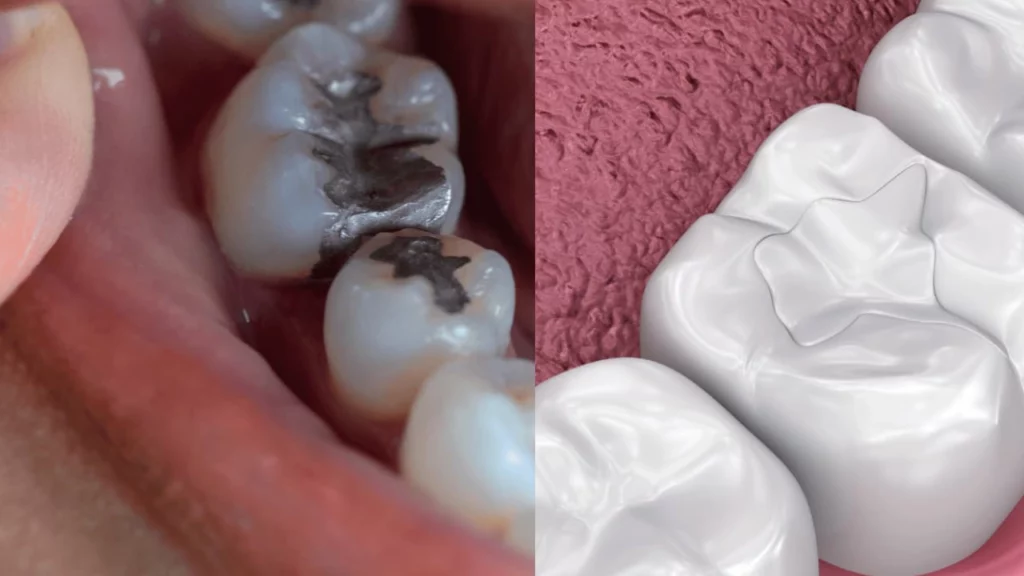
A white filling (also called a cosmetic filling or composite filling) is a tooth-colored plastic material reinforced with glass particles. It is placed directly in the mouth, usually in a single visit. The dentist prepares the tooth, fills the cavity with the composite material, shapes it, and then hardens it with a special curing light. Because everything is done directly in the mouth, this is called a direct restoration.
A porcelain inlay or onlay, on the other hand, is a ceramic restoration that is custom-made outside the mouth, either in a dental lab or with a special in-office milling device. The dentist takes an accurate impression or digital scan of the tooth after preparation, and the inlay/onlay is fabricated to fit precisely, then bonded to the tooth at a later visit. This makes it an indirect restoration, often chosen when a larger portion of the tooth is missing and higher long-term strength is required.
In simple terms:
- White composite fillings are usually ideal for small to medium cavities and can be completed quickly in one visit.
- Porcelain inlays/onlays are more like partial crowns, preferred when more strength, durability, and enhanced aesthetics are needed in areas that experience heavy chewing forces.
The most suitable option is determined by your dentist after carefully examining your specific situation.
When Is a White Composite Filling the Better Option?
White composite fillings are among the most commonly used restorations in modern dentistry because they combine attractive aesthetics with good functional performance in many everyday situations. However, they are not always the best solution for every tooth, so it is important to understand when a composite filling is likely to be a good choice compared with a porcelain restoration.

Best for Small to Medium Cavities and Quick Repairs
White composite fillings are usually preferred in the following situations:
- Small or moderate cavities in both front and back teeth.
- Minor chips along the edge of a tooth.
- Replacement of small, worn, or defective existing fillings, such as old amalgam (silver) fillings or damaged composites.
In these cases, composite can:
- Fill the cavity accurately and adapt closely to the prepared tooth surfaces.
- Chemically bond to the tooth structure, which can help support and reinforce the remaining tooth walls.
- Provide a natural appearance very close to the color and translucency of your own teeth.
Another advantage is convenience: the entire procedure is often completed in one appointment, and the chair time is relatively short. This makes composite fillings a practical option for people who want an effective, aesthetic restoration without the extra steps involved in lab work.
Conserving as Much Natural Tooth as Possible
Composite fillings also allow the dentist to be more conservative in preparing the tooth. Because the material bonds to the tooth, less healthy tooth structure usually needs to be removed compared with some other restorative options. This focus on preserving as much natural tooth as possible can be beneficial for the long-term health of the tooth.
However, the final decision between a white filling and a porcelain inlay/onlay depends on several factors, including the size and depth of the cavity, your bite forces, and the tooth’s position in the mouth. Your dentist evaluates these aspects through a clinical exam and X-rays before recommending the best option.
When Is a Porcelain Inlay/Onlay the Better Option?
Porcelain inlays and onlays are often considered a middle ground between a traditional filling and a full dental crown. They are typically chosen when a tooth needs a restoration that is stronger and more stable than a composite filling, but where it is still possible to preserve a significant amount of natural tooth structure instead of covering the entire tooth.
When a Large Portion of the Tooth Is Missing
If a tooth has extensive decay or has fractured in such a way that a large amount of hard tooth structure is lost, a standard composite filling may not provide enough long-term support. In such cases:
- A porcelain inlay or onlay is often preferred because it is fabricated with very precise dimensions and then firmly bonded to the tooth, offering increased rigidity and strength.
- It is especially recommended for molars and premolars (back teeth), which are exposed to strong chewing forces and need a material that is highly resistant to wear, fracture, and deformation.
- It can be a good option when the tooth is weakened but does not yet require full coverage with a crown. Inlays and onlays can help strengthen and protect the remaining tooth walls.
The decision between a larger composite filling and a porcelain inlay/onlay in these situations depends on the extent of damage, your bite forces, and habits such as teeth grinding or clenching (bruxism). Your dentist will assess your teeth clinically and with radiographs before recommending the most suitable type of restoration.
Comparison: White Composite Filling vs Porcelain Inlay/Onlay
To better understand the difference between a white composite filling and a porcelain inlay/onlay, it helps to compare them in terms of strength, aesthetics, longevity, treatment time, and relative cost. Keep in mind that the final choice should always be based on your dentist’s assessment of your specific tooth.
Strength and Durability
- White composite filling: Strong enough for many small to medium-sized cavities, especially when properly placed and maintained. However, composite is generally less resistant to heavy long-term chewing forces, particularly in large back teeth or in people with habits like grinding or clenching.
- Porcelain inlay/onlay: Typically more rigid and stable than composite, and better able to withstand high chewing forces over time. For this reason, porcelain inlays and onlays are often preferred in molars and in cases where a significant portion of the tooth is missing.
Aesthetic Appearance
- Both options are tooth-colored and can provide an attractive result.
- White composite fillings are shaped and polished directly in the mouth. Over time, they may show some discoloration or staining, depending on diet, oral hygiene, and habits such as smoking.
- Porcelain inlays/onlays are fabricated in a lab (or with digital systems) with high precision. They tend to have very stable color, a natural shine, and an appearance that closely mimics natural enamel.
Longevity and Performance Over Time
- White composite filling: Often needs repair, adjustment, or replacement after several years, depending on the size of the filling, oral hygiene, and chewing habits. Smaller fillings in low-stress areas usually last longer than large ones in high-stress areas.
- Porcelain inlay/onlay: Can last longer on average if it is carefully designed, properly bonded, and maintained with good oral hygiene and regular dental check-ups. No restoration is permanent, but porcelain can offer favorable long-term performance in suitable cases.
Treatment Procedure and Time
- White composite filling: Usually completed in a single visit. The dentist removes the decay or damaged portion, places the composite material in layers, shapes it, and cures it with a light. After shaping and polishing, you leave with the final restoration the same day.
- Porcelain inlay/onlay: Typically involves two steps: preparing the tooth and taking an impression or digital scan at the first visit, then bonding the custom-made restoration at the second visit. In some practices using advanced digital CAD/CAM systems, the process may be completed in one longer visit, but this depends on the technology available.
Relative Cost
- White composite filling: Generally less expensive than porcelain inlays/onlays because it is done directly in the mouth in one appointment and does not usually require lab work.
- Porcelain inlay/onlay: Typically more expensive due to the need for a dental lab or specialized milling equipment, higher material costs, and more detailed planning and fabrication. However, for some cases, the longer expected lifespan may make it a cost-effective choice over time.
In summary, the difference between a white composite filling and a porcelain inlay/onlay is not only about appearance. It also involves strength, the extent and location of tooth damage, budget, and your long-term treatment plan. Discussing all these factors with your dentist is essential before making a decision.
How Does the Dentist Choose the Right Type of Restoration?
The choice between a white composite filling and a porcelain inlay/onlay is not random. Your dentist relies on a set of clinical and functional criteria before recommending the option that best suits your tooth and your overall situation.
1. Size and Location of the Cavity or Fracture
- For small to medium defects affecting one or two surfaces of a tooth, a direct composite filling is often the preferred choice.
- When the damage is more extensive, involves the cusps (chewing tips) of the tooth, or compromises the overall shape and stability, a porcelain inlay or onlay may provide a safer and more supportive solution.
2. Remaining Tooth Strength
- Your dentist will evaluate the thickness and quality of the remaining tooth walls and how likely they are to crack or fracture under normal chewing forces.
- If the tooth structure is weak, a bonded porcelain inlay or onlay can act as a reinforcing “shell” that helps distribute forces and reduce the risk of future fractures.
3. Tooth Position and Chewing Function
- In front teeth and other areas where appearance is the main concern and the chewing forces are relatively lower, composite fillings usually provide excellent aesthetic results.
- In back teeth (molars and premolars), which bear the brunt of chewing forces, porcelain inlays/onlays may be more reliable over the long term, especially for larger restorations.
4. Patient Habits and General Oral Health
- Habits such as teeth grinding or clenching (bruxism), frequent chewing on hard foods or objects, and nail biting can influence the choice of material, often prompting the dentist to recommend stronger, more stable options.
- Your dentist will also consider gum health, the presence of dry mouth, and overall oral hygiene, as these factors affect the success and longevity of any restoration.
5. Aesthetic Priorities and Expectations
- Your expectations about the final appearance, shade matching with neighboring teeth, and how well the color needs to hold up over time are all important considerations.
- Both composite fillings and porcelain inlays/onlays can deliver excellent cosmetic results, but the choice may depend on how important long-term color stability and stain resistance are for you.
6. Time, Cost, and Number of Visits
- Composite fillings are usually completed in a single appointment, which suits patients who prefer a faster, more affordable solution.
- Porcelain inlays/onlays typically require at least two visits and involve additional lab work, so they tend to cost more. In suitable cases, however, their durability and stability can make them a worthwhile investment.
Ultimately, while understanding the theoretical difference between white composite fillings and porcelain inlays/onlays is helpful, the practical decision should be made after a clinical exam, X-rays, and an open discussion with your dentist about your priorities, budget, and the condition of your teeth. What is ideal for one person may not be the best choice for another.
How Dr. Abeer Zendaqi Helps You Choose the Best Restoration for Your Teeth
Dr. Abeer Zendaqi does not choose between a white composite filling and a porcelain inlay/onlay at random. Instead, she bases her recommendation on a careful, evidence-based evaluation of your individual case so that you receive a restoration that protects as much healthy tooth as possible while balancing aesthetics, function, and cost.
A typical visit starts with a conversation about your concerns, symptoms, and expectations. This is followed by a thorough clinical examination of your teeth and gums, and X-rays if needed, to assess:
- The size and depth of any decay.
- The amount of missing or weakened tooth structure.
- The condition of the tooth nerve (pulp) where relevant.
- Your bite and how your teeth come together.
Based on this assessment:
- Dr. Zendaqi explains the difference between a white composite filling and a porcelain inlay/onlay in clear, simple language, highlighting the advantages and limitations of each option for your specific tooth.
- She discusses practical points such as the expected lifespan of each type of restoration, how many visits are needed, approximate cost differences, and how well each option is likely to withstand future chewing forces.
- She helps you make an informed decision based on accurate medical information, without overpromising results or ignoring possible risks and limitations.
The final treatment plan is a joint decision between you and the dentist, with an emphasis on regular follow-up and good home care. The long-term success of any restoration — whether a white composite filling or a porcelain inlay/onlay — depends greatly on your daily oral hygiene and your commitment to routine check-ups and professional cleanings.
If you are unsure which option is right for you, an in-person examination and consultation with a qualified dentist is the most important first step.