What Causes Gaps Between Teeth?
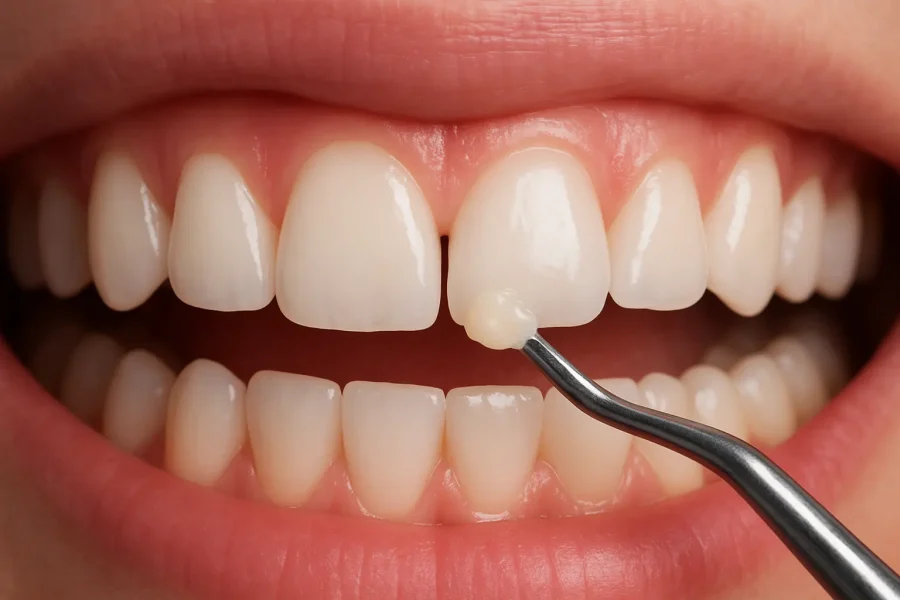
There are several reasons why gaps can form between teeth, ranging from genetic factors to daily habits and jaw growth issues. Some people are born with a relatively large jaw compared to the size of their teeth, which naturally creates visible spaces between the front or back teeth.
Losing a tooth and not replacing it promptly can also cause neighboring teeth to drift into the empty space over time, leading to noticeable gaps.
Common childhood habits such as thumb-sucking, or pushing the tongue against the teeth while swallowing or speaking, exert forward pressure on the teeth and gradually increase the spacing between them.
Advanced periodontal (gum) disease may result in loss of the bone that supports the teeth, making them appear more spaced out and less stable.
In addition, certain types of malocclusion (bite problems) or dental crowding and misalignment that are not corrected early with orthodontic treatment can later develop into obvious gaps between teeth, motivating many people to seek suitable cosmetic and therapeutic solutions.
Closing Tooth Gaps with Orthodontic Treatment: How Does It Work?
Tooth Movement to Close Gaps
Orthodontic gaps are closed by gradually moving the teeth using gentle, continuous forces.
Orthodontic wires or special attachments in clear aligner systems apply controlled pulling or pushing forces, guiding the teeth toward the spaces between the front or back teeth until they come together and the gaps close in an orderly, planned manner.
This is done according to a carefully designed treatment plan prepared by the orthodontist after assessing the jaws and tooth roots on radiographs, in order to avoid any damage to the nerves or supporting bone.
With regular follow‑up visits, the force level and shape of the archwire or the sequence of clear aligners are adjusted to ensure that the teeth move in the correct direction and that the spaces are closed safely and stably.
Types of Orthodontic Appliances Used
Several types of orthodontic appliances can be used to close dental gaps, depending on the patient’s condition and the size and pattern of the spacing.
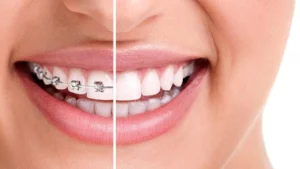
These include conventional metal braces, which remain the most common and are highly effective for bringing teeth together and closing medium to large spaces.
Clear aligners (such as Invisalign) can be used in mild to moderate cases for patients seeking an esthetic, nearly invisible option.
There are also ceramic (tooth‑colored) braces, which blend with the natural tooth shade, and lingual braces, which are bonded to the inner (tongue‑side) surfaces of the teeth and therefore do not show when smiling.
The choice of appliance for space closure depends on the extent and distribution of the gaps, the bite pattern (occlusion), the patient’s age, budget, and esthetic expectations.
Cases in Which Orthodontics Is Recommended
Orthodontic space closure is recommended when gaps are due to malalignment of the teeth or jaw relationship problems, and not solely the result of a missing tooth.
Common situations include a gap between the two upper front teeth (diastema), or generalized spacing when tooth size is relatively small compared with the size of the jaw.
Orthodontic treatment is also advised when dental spaces cause difficulty chewing, frequent food impaction between teeth, or affect pronunciation of certain sounds.
In cases of tooth loss, the dentist may sometimes use orthodontics to move adjacent teeth and reduce the size of the edentulous space before placing a dental implant or fixed bridge, which can improve both esthetic and functional outcomes.
Advantages of Orthodontics in Treating the Underlying Cause
One of the main advantages of closing dental gaps with orthodontic treatment is that it not only improves the appearance of the smile, but also addresses the underlying cause of the spacing.
Orthodontics corrects tooth alignment and jaw relationships, helping prevent the gaps from reopening in the future and improving chewing efficiency and force distribution on the teeth.
Instead of simply masking the space with veneers or cosmetic fillings, orthodontic treatment redistributes the teeth properly within the dental arches so that the gaps close naturally.
This reduces the risk of tooth wear and periodontal problems such as gingivitis or periodontitis that can result from chronic food trapping in the spaces, and provides a more stable, healthier smile in the long term.
Closing Tooth Gaps with Veneers: When Is It Appropriate?
Small gaps between the front teeth
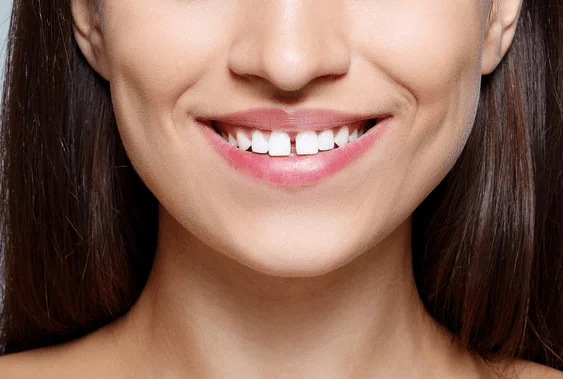
In cases of small diastemas between the front teeth, dental veneers are often a suitable and safe option to close these spaces and enhance the appearance of the smile.
The dentist’s decision depends on the size of the gap, tooth alignment, and the health of the gums and enamel.
If the gaps are minor and not associated with malocclusion or severe crowding, porcelain veneers can be used to fill the space harmoniously without the need for long-term orthodontic treatment.
In such cases, veneers allow for closing the gaps while preserving as much natural tooth structure as possible, with a quick and aesthetically pleasing result for the patient.
They are therefore appropriate when the main goal is cosmetic improvement rather than correcting complex bite problems.
Improving shape and color while closing gaps
When veneers are used to close gaps, the benefit is not limited to filling the space; they also improve the shape and color of the front teeth at the same time.
The dentist can select the contour and dimensions of the veneers to make the teeth more harmonious and slightly longer, while correcting chipped or uneven incisal edges.
The shade of the veneers can also be adjusted to match the natural teeth or to brighten the smile in a controlled way, especially in cases of discoloration or yellowing that does not respond well to conventional teeth whitening.
In this way, veneers achieve multiple goals in a single step: closing the gaps, enhancing the smile, and improving color and shape in harmony with the patient’s facial features and smile line.
When veneers are an effective cosmetic option
Using veneers to close gaps is an effective cosmetic solution when the spaces are small to moderate and the teeth are free from extensive decay or deep fractures.
Veneers are suitable for people seeking a fast cosmetic correction of anterior gaps along with an improved smile design, without committing to long-term orthodontic treatment.
They are also appropriate when the patient’s primary concern is aesthetics rather than correcting a crossbite, severe crowding, or significant skeletal problems.
In these situations, veneers help re-contour the front teeth, close the spaces, and create a more harmonious smile within a limited number of dental visits.
However, clinical examination and radiographic assessment remain essential to ensure that veneers are indeed the best option, and that no orthodontic or other restorative treatment is required.
Limitations of veneers in larger gaps
Despite their effectiveness in managing many types of spacing, veneers have clear limitations when it comes to large gaps between the front teeth.
If the diastema is too wide, attempting to close it entirely with veneers may result in teeth that look overly wide and disproportionate to the rest of the dentition, which can negatively affect the aesthetics of the smile.
In such cases, the dentist may recommend combining orthodontic treatment to reduce the spaces first, followed by veneers as a final cosmetic refinement.
Veneers may also be unsuitable if the distribution of gaps is related to an underlying jawbone discrepancy or a significant malocclusion.
Therefore, when considering veneers to close dental gaps, it is important to discuss their limitations with the dentist and determine whether the existing spaces can be managed with veneers alone, or whether the case requires a more comprehensive treatment plan.
Teeth Gaps: Braces or Veneers?
Comparison in Terms of Results
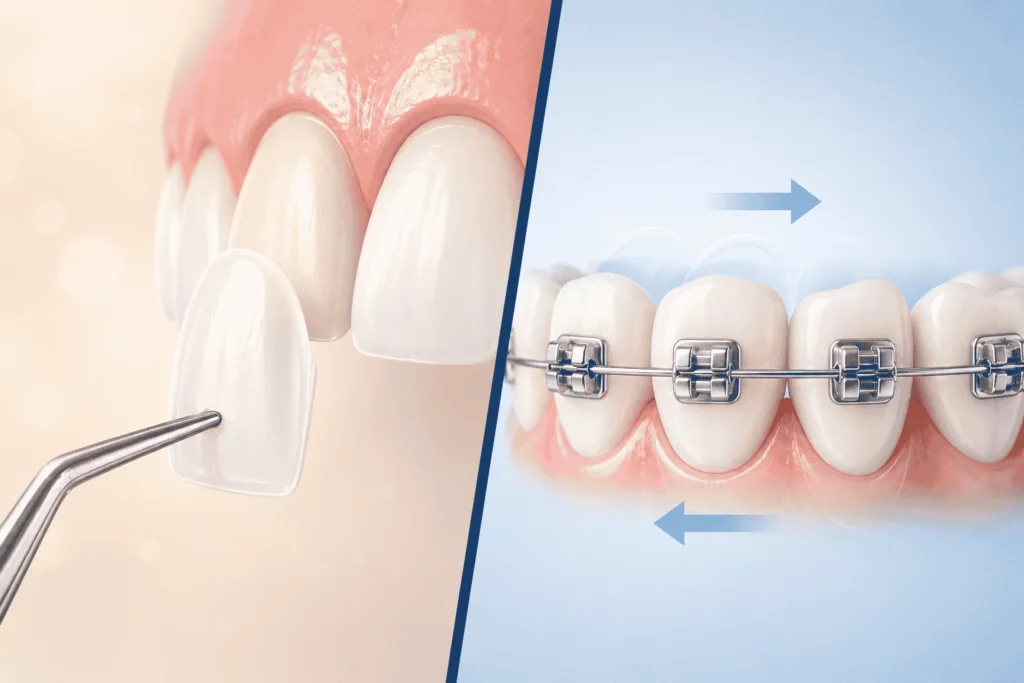
When closing gaps between teeth with orthodontic treatment, the main outcome is the natural movement of the teeth to close the spaces and redistribute them properly within the upper and lower jaws.
This leads to an improved smile while fully preserving the natural tooth structure, and often helps correct other issues at the same time, such as dental crowding or malocclusion.
By contrast, when treating gaps with dental veneers, the spaces are masked by placing cosmetic shells on the front surface of the teeth. This creates a uniform, whiter smile in a short time, but without any real change in the actual position of the teeth within the mouth.
Orthodontic results are generally more conservative and long‑lasting, provided that retainers are used as instructed after treatment. Veneer results, on the other hand, depend on the quality of the material and the level of care, with a likelihood that they will need to be replaced in the future.
Comparison in Terms of Treatment Duration
Treating gaps with orthodontics usually takes longer than veneers. Orthodontic treatment may require several months to a year or more, depending on the size of the gaps and the overall occlusal condition.
This option suits those who want a comprehensive, corrective solution that addresses the overall position of the teeth, even if it takes more time.
Veneers, in contrast, are known for their rapid results. In many cases, gaps can be closed in just two or three visits to the dentist, after planning, taking impressions, and fabricating the veneers.
For this reason, veneers are considered an appealing option for people who wish to close gaps and enhance their smile in a short period, while accepting some irreversible changes to the tooth surface and the possibility of future maintenance or replacement.
When Is Orthodontic Treatment Better than Veneers?
In cases of dental spacing, orthodontic treatment is often a better option than veneers when the issue stems from misalignment of the teeth or an improper relationship between the upper and lower jaws, rather than being limited to minor defects in tooth shape or color.
Braces or clear aligners are particularly preferable when there is crowding or protrusion of the front teeth, or when there are wide gaps caused by small tooth size or tilted teeth. Orthodontic treatment addresses the root cause of the problem by moving the teeth back into their correct positions, instead of simply masking the defect with a cosmetic layer.
Orthodontics is also recommended over veneers for younger patients, and for those with weak enamel or existing tooth wear, since veneers usually require removing a thin layer of natural tooth structure, whereas orthodontic treatment only repositions the teeth without sacrificing tooth tissue.
When gaps between teeth are accompanied by malocclusion (an abnormal bite) or temporomandibular joint (TMJ) pain, orthodontic treatment becomes essential to achieve a healthy bite and a balanced distribution of chewing forces—something veneers alone cannot provide.
When Are Veneers a Better Option Than Braces?
Veneers can be a better choice than orthodontic treatment in cases of mild to moderate spacing between teeth, especially when there are no significant problems with the bite (occlusion) or functional jaw issues.
In such situations, veneers can close gaps quickly—often in one or two appointments—while simultaneously improving the color and shape of the teeth, instead of waiting months or even years with traditional braces.
They are particularly suitable for adults who are bothered by the appearance of gaps in their front teeth and want a fast cosmetic solution before an important event such as a wedding or media appearance, provided that the teeth and gums are in good health.
However, if the spacing is caused by severe crowding, malocclusion, or a pronounced jaw discrepancy, then therapeutic orthodontics is usually the more medically accurate choice. In these cases, veneers may be considered as a final cosmetic step after completing the orthodontic treatment plan.
How does the dentist determine the best treatment for closing tooth gaps?
Choosing the most suitable treatment to close tooth gaps starts with a thorough clinical examination and a comprehensive assessment of the patient’s occlusion (bite) and jaw function, supported by radiographic imaging and an evaluation of the shape of the teeth, jawbone, and gums.
The dentist asks about the medical and dental history of the case: when the gaps first appeared, and whether they are associated with other symptoms such as tooth sensitivity, speech difficulties, or problems with chewing. The underlying cause of the spacing is then evaluated: whether it is genetic, due to tooth loss, small tooth size (microdontia), or oral habits such as thumb sucking or tongue thrusting.
Based on this information, the dentist determines whether the patient needs orthodontic treatment, cosmetic fillings (composite bonding), dental veneers, or fixed prosthetic restorations such as crowns or bridges, taking into account the patient’s age, periodontal health, enamel thickness, and desired aesthetic outcome.
The dentist also considers treatment duration, cost, and how much natural tooth structure can be preserved, then explains the available options, expected results, and potential risks. This helps select the safest, most effective treatment plan for closing tooth gaps in line with the patient’s needs and expectations.
Book a Consultation with Dr. Amir Al-Zahrawi to Find the Best Way to Close Teeth Gaps
Schedule a consultation with Dr. Amir Al-Zahrawi if you’re looking for the safest and most effective way to close gaps between your teeth in a way that suits your specific dental condition.
During the consultation, the doctor will carefully examine your teeth and gums and identify the underlying cause of the spacing—whether it’s due to small tooth size, bite problems (malocclusion), or the loss of one or more teeth. He will then walk you through the available treatment options, such as clear or fixed orthodontic braces, cosmetic fillings (composite resin), dental veneers including porcelain veneers and Lumineers, or dental implants when gaps are caused by tooth extraction.
This specialized consultation helps you choose the most suitable treatment plan in terms of cosmetic outcome, preservation of oral health, expected treatment duration, and overall cost. Every step is explained in clear, simple language so that you can make an informed decision with confidence.
In this way, your search for a “solution to teeth gaps” moves beyond generic online information to a personalized treatment plan based on an accurate clinical assessment and solid hands-on experience.