Orthodontic Treatment vs. Jaw Surgery: What’s the Difference?
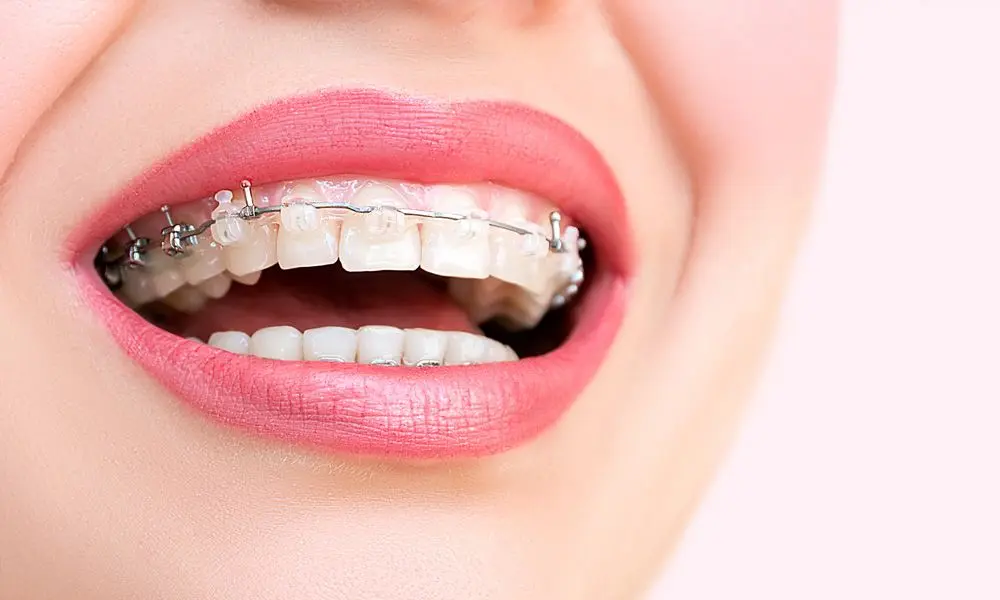
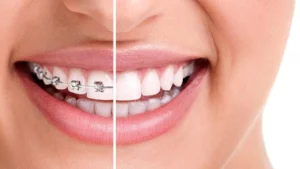
Orthodontic treatment focuses on correcting the alignment of the teeth and improving the bite and smile using appliances such as braces or clear aligners. It is a gradual, non-surgical approach that is suitable for most mild to moderate cases of dental crowding or misalignment.
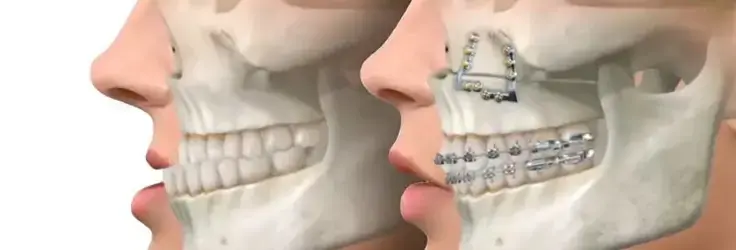
Orthognathic surgery (corrective jaw surgery), on the other hand, targets structural problems in the upper or lower jaw bones, such as jaw protrusion, retrusion, or facial asymmetry. It is often combined with orthodontic treatment in more severe cases to achieve better functional and aesthetic balance.
In essence, orthodontics corrects the position of the teeth within the mouth, while jaw surgery corrects the position and size of the jaw bones themselves. The most appropriate treatment option is determined jointly by the orthodontist and the maxillofacial surgeon after a thorough clinical examination and radiographic imaging to assess whether the problem lies in the teeth alone or also in the jaw skeleton.
What’s the Difference Between Dental Problems and Jaw Problems?
The distinction between dental problems and jaw problems is what determines whether a patient needs orthodontic treatment alone or orthognathic (jaw) surgery as well.
Dental problems relate to the position and shape of the teeth themselves—for example: crowding, spacing, crooked teeth, or protruding front teeth. These issues are usually managed with conventional braces or clear aligners without the need for surgery.
Jaw problems, on the other hand, involve the upper or lower jaw bones, such as: jaw protrusion, jaw retrusion, mismatch between the upper and lower jaws, or jaw deviation to one side. These conditions can affect facial appearance, chewing function, and speech, and often require jaw surgery (orthognathic surgery) with or without orthodontic treatment.
Understanding this difference helps the patient know whether their case is relatively simple and can be treated with orthodontic appliances alone, or more complex and requires a combined treatment plan involving both orthodontics and jaw surgery to achieve stable functional and aesthetic results.
When is orthodontic treatment alone enough?
Cases of Dental Crowding
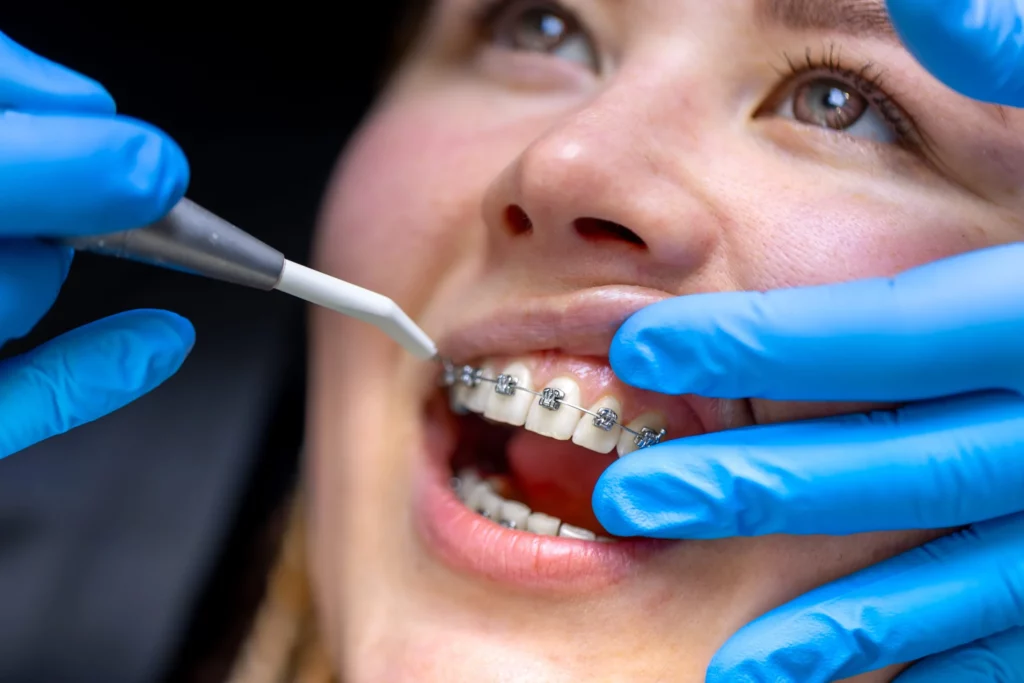
In many mild to moderate cases of dental crowding, orthodontic treatment alone is sufficient to correct the problem without the need for orthognathic (jaw) surgery.
This depends on the jaw size, the degree of tooth rotation, and whether the dental arch can be expanded or certain teeth can be extracted if necessary.
Clear aligners or conventional metal braces can reposition the teeth into their proper alignment, improving both the bite (occlusion) and the smile, provided there is no severe maxillary or mandibular constriction or obvious skeletal deformity.
Accordingly, if the crowding is caused purely by tooth malposition and not by an underlying jawbone problem, orthodontic treatment is usually enough to resolve the issue and achieve good functional and aesthetic results.
Spacing Between Teeth
Diastemas and generalized spacing are among the conditions most amenable to complete correction with orthodontics alone, particularly when they result from small tooth size or naturally existing spaces between premolars and canines.
Orthodontic treatment gradually moves the teeth closer together to close these gaps, improve occlusion, and enhance the appearance of the smile, while preserving the health of the gums and supporting bone.
In such cases, jaw surgery is not required, because jaw position is typically normal and the problem is limited to tooth spacing and distribution.
Therefore, when the main complaint is gaps between the front teeth or spacing between teeth in general, braces or clear aligners are usually sufficient to treat the problem and create a harmonious smile.
Tipped and Misaligned Teeth
Tipping and misalignment of teeth are among the most common reasons for seeking orthodontic treatment, and they can often be corrected with braces alone if the jawbones are normally positioned.
In these cases, orthodontics works to rotate teeth, correct their angulation, and guide them back into their proper position along the dental arch, simultaneously improving appearance and the way the teeth fit together.
When is orthodontic treatment alone enough? When the problem lies within the teeth themselves rather than the jawbones, and there is no marked protrusion of the upper or lower jaw and no obvious discrepancy in the skeletal relationship between the jaws.
In such situations, orthodontics is the treatment of choice, without the need for any surgical intervention on the jawbones.
Certain Mild to Moderate Malocclusions
There are many mild to moderate malocclusions that can be managed with orthodontics alone, such as a mild deep bite, a slight open bite, or a minor discrepancy in the relationship between the upper and lower jaws.
In these cases, orthodontic treatment helps redistribute the teeth and improve the way the upper and lower jaws come together, which enhances chewing efficiency, speech, and reduces long‑term tooth wear.
When is orthodontic treatment sufficient? When the occlusal problem is due to tooth position rather than a major skeletal deformity or a pronounced discrepancy in jaw size.
Here, braces (or aligners) represent a safe and effective option without the need for jaw surgery, especially if treatment is started at an appropriate age and supervised by a qualified orthodontist.
Cases That Can Be Corrected Without Surgery
In general, orthodontic treatment alone is adequate when jaw size and position are close to normal, and the main issues involve tooth alignment, spacing, or a mild to moderate degree of malocclusion.
Conditions that can usually be corrected without surgery include most cases of dental crowding, spacing, tooth misalignment, and certain bite problems that are not associated with marked jaw protrusion or significant retrusion.
In these situations, the clinician’s goal is to make full use of the existing jawbone structure and move the teeth within it in a controlled, planned way, without altering the shape or position of the jaw surgically.
Thus, the choice between orthodontic treatment and jaw surgery depends on a thorough assessment of the skeletal base and dental alignment, and in many cases, orthodontics alone is sufficient when the problem is primarily dental rather than skeletal.
When Does Jaw Surgery Become Necessary?
Severe Protrusion of the Upper or Lower Jaw
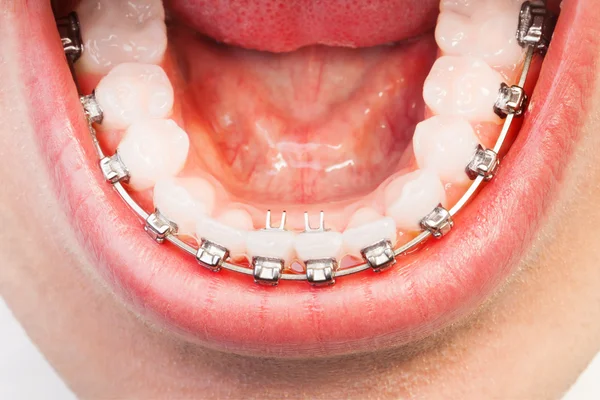
In cases of marked maxillary or mandibular protrusion, orthodontic treatment alone may not be sufficient to restore teeth to their ideal position.
When the problem lies in the jaw bones themselves rather than just in the position of the teeth, orthognathic surgery becomes necessary to reposition the upper and/or lower jaw and achieve a proper bite (occlusion).
Such skeletal deformities can cause difficulty in chewing, facial asymmetry, and sometimes problems with speech or lip closure. In these situations, the orthodontist works in collaboration with an oral and maxillofacial surgeon to develop a treatment plan that includes orthodontic treatment before and after jaw surgery, in order to achieve a stable, functional, and aesthetically pleasing result.
Jaw Retrusion and Its Impact on the Bite
Jaw retrusion, particularly mandibular retrusion, is one of the common reasons that make jaw surgery necessary rather than relying on orthodontics alone.
If the jaw is significantly retruded, the upper front teeth appear excessively prominent, and the patient may suffer from a deep bite and difficulty biting into food, in addition to a small or receding chin appearance.
In these cases, orthodontic treatment alone can align the teeth, but it cannot bring a retruded jaw forward. The optimal solution is therefore a combination of mandibular advancement surgery and orthodontics to harmonize the jaws and improve occlusion, function, and the facial profile.
Marked Jaw Asymmetry
When there is clear asymmetry between the jaws—such as deviation of the lower jaw to one side, or a noticeable difference in jaw length or width—jaw surgery becomes a primary option to correct this discrepancy.
Asymmetry may lead to uneven occlusion between the two sides, uneven tooth wear, and can also affect facial appearance and the patient’s smile.
In such situations, orthodontics alone cannot correct skeletal jaw deviation, so the treatment plan is directed toward orthognathic surgery to reposition the jaw bones, combined with pre- or postoperative orthodontic treatment to fine‑tune tooth positions after the skeletal foundation has been corrected.
Problems Affecting Chewing, Breathing, or Speech
When does jaw surgery become functionally necessary?
If jaw problems interfere with essential functions such as chewing, breathing, or speech, surgical intervention is more than just a cosmetic option.
Certain forms of severe malocclusion, jaw protrusion, or maxillary constriction can result in difficulty chewing food, nasal breathing problems, association with snoring or obstructive sleep apnea, as well as articulation disorders affecting certain speech sounds.
In these cases, the clinician evaluates whether orthodontic treatment alone can improve function. If there is an underlying skeletal discrepancy in the jaws, orthognathic surgery is used to widen or reposition the jaws in a way that improves chewing, breathing, and speech simultaneously.
Cases Where Orthodontics Alone Does Not Achieve the Desired Outcome
Orthodontic treatment is the first step in managing most occlusal problems, but in some severe skeletal cases, braces alone cannot deliver the desired outcome. This raises the question: when does jaw surgery become necessary?
If there is a major discrepancy in the length, width, or position of the maxilla or mandible, or if a significant malocclusion persists despite adequate orthodontic treatment, this indicates the need for surgery to correct the jaw bones.
Typically, orthodontic treatment is used before jaw surgery to align and decompensate the teeth, followed by surgery to reposition the jaws. Orthodontic treatment is then continued for a short period afterward to achieve a precise and stable final occlusion.
How does the doctor decide between braces and jaw surgery?
The choice between orthodontic treatment and orthognathic (jaw) surgery is based on a comprehensive assessment that starts with a thorough clinical examination, panoramic X‑rays, 3D imaging, and a detailed analysis of the bite and the relationship between the upper and lower jaws.
If the issue is limited to dental alignment—such as crowding, spacing, or minor tilting of the teeth—orthodontic treatment (braces or clear aligners) is usually sufficient to improve the smile and chewing function.
However, if the problem stems from a skeletal discrepancy in the jaws—such as an excessively protruding upper or lower jaw, jaw deviation to one side, difficulty closing the mouth, or an open bite—the doctor may recommend orthognathic surgery in collaboration with an orthodontist. This combined approach aims to harmonize facial proportions and improve speech, chewing, and breathing.
The doctor also considers the patient’s age, the severity of the deformity, its impact on appearance and function, and the patient’s expectations. Based on this, they clearly explain the available treatment options so the patient can choose the most suitable plan—whether orthodontics alone, jaw surgery alone, or a combination of both.
Can Braces Replace Jaw Surgery?
In many cases, orthodontic treatment can significantly improve how the teeth bite together and their alignment without the need for jaw (orthognathic) surgery—especially when the main issue is dental crowding or mild tooth misalignment rather than a problem in the jawbones themselves.
However, when there is a clear skeletal discrepancy in the jaws—such as a pronounced overgrowth of the upper or lower jaw, or asymmetry between the right and left sides of the jaw—orthodontic treatment alone is usually not sufficient. In these situations, jaw surgery is combined with orthodontics to achieve a proper bite, enhance facial aesthetics, and improve chewing and breathing functions.
Therefore, braces cannot completely substitute for jaw surgery in all cases. The decision depends on an accurate diagnosis of the patient’s condition using radiographic imaging and clinical examination. Based on this assessment, the orthodontist and maxillofacial surgeon determine whether the treatment plan will rely on orthodontics alone or a combination of orthodontic treatment and jaw (orthognathic) surgery to achieve the best long-term functional and aesthetic outcome.
What Is the Role of Orthodontics Before and After Jaw Surgery?
Before orthognathic (jaw) surgery, orthodontic treatment plays a critical role in preparing the teeth for their position relative to the new jaw alignment. The orthodontist repositions and aligns the teeth, resolving crowding or incorrect angulation, in order to reveal the true skeletal discrepancy between the jaws and enable the maxillofacial surgeon to operate with greater precision.
After jaw surgery, orthodontic treatment continues for an additional period to fine‑tune the final occlusion, optimize the smile aesthetics, and stabilize the outcome over the long term.
The combination of orthodontics and jaw surgery helps correct open bite, jaw protrusion, skeletal jaw discrepancies, and malocclusion, while improving chewing, speech, and breathing, and creating a more balanced facial profile.
Orthodontics and jaw surgery are therefore not competing alternatives, but rather complementary components of a comprehensive treatment plan, in which orthodontic appliances are used both before and after surgery to achieve the best possible functional and aesthetic result.
Book a Consultation with Dr. Amir Al‑Zahrawi to Determine Whether You Need Orthodontics or Jaw Surgery
Schedule a consultation with Dr. Amir Al‑Zahrawi for an accurate assessment to determine whether your condition can be treated with orthodontics alone or requires orthognathic (jaw) surgery as a definitive solution.
During this visit, the doctor will perform a comprehensive clinical examination, review 2D and 3D radiographic imaging, and analyze the relationship between the jaws, teeth, and facial structures as a whole.
This specialized evaluation helps you understand the underlying cause of your jaw prominence, dental crowding, or difficulty in chewing or speaking, and whether braces alone are sufficient or jaw surgery is necessary to correct your bite and enhance facial harmony.
With a single consultation by a specialist in orthodontics and orthognathic surgery like Dr. Amir Al‑Zahrawi, you will receive a clear treatment plan, realistic expectations of the outcome, and an estimate of the treatment cost and duration—saving you time and uncertainty when choosing between orthodontic treatment and jaw surgery.