When Is Full-Mouth Reconstruction Needed?
Severe Dental Erosion
Severe dental erosion is one of the main reasons that lead a dentist to consider full-mouth reconstruction.
When a patient loses a significant portion of the enamel and dentin due to acids, poor dietary habits, or gastroesophageal reflux disease (GERD), the teeth become noticeably shorter, weaker, and chronically sensitive.
In such cases, conventional fillings or treating a single tooth are not sufficient. The patient needs a comprehensive treatment plan to restore the vertical dimension and proper occlusion using crowns, bridges, or full-arch prostheses that recreate the natural appearance of the smile and restore chewing efficiency.
Here, full-mouth reconstruction aims to protect the remaining tooth structure, prevent future fractures, and improve aesthetics as well as comfort during eating and speaking.
Loss of Multiple Teeth
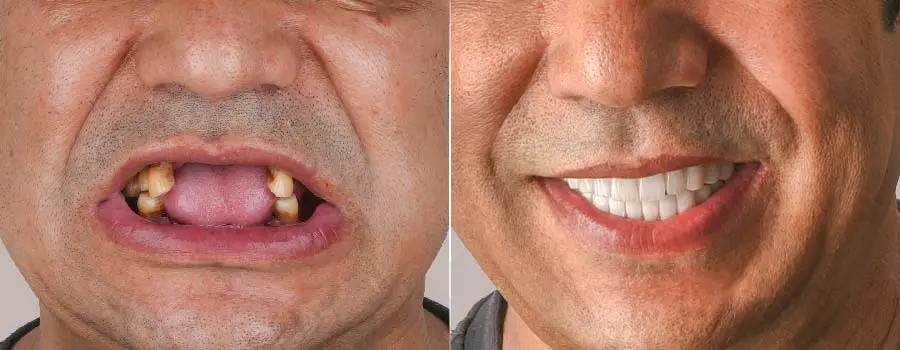
When a large number of teeth are lost, especially in both jaws, the patient loses proper occlusal support and begins to experience difficulty in chewing, changes in facial profile, and possible drifting and tipping of the remaining teeth into the edentulous spaces.
In these situations, replacing just one or two teeth is inadequate; the most appropriate solution is full-mouth reconstruction using dental implants, fixed and removable dentures, or implant-supported prostheses.
In this context, reconstruction is not merely about filling gaps, but about redistributing occlusal forces in a balanced way, preserving the supporting bone, and preventing further tooth loss.
Extensive Fractures and Tooth Damage
When a patient suffers from multiple fractures or extensive damage affecting several teeth due to trauma, neglected caries, or incomplete previous treatments, the dental structure becomes unstable and unable to function properly.
If the majority of teeth require crowns or large restorations, or if only the roots are salvageable, the dentist resorts to a full-mouth reconstruction plan aimed at rebuilding the tooth from root to crown.
This type of reconstruction allows for correcting the occlusion, protecting the roots with root canal treatment when indicated, and placing harmonized crowns and bridges that restore confident chewing and reduce the risk of recurrent fractures.
Chronic Occlusal and Chewing Problems
Long-standing occlusal problems, such as jaw discrepancies or unbalanced tooth contacts, can cause temporomandibular joint (TMJ) pain, recurrent headaches, and abnormal tooth wear.
When the problem is generalized and involves most of the teeth, adjusting one or two teeth is not enough. The patient requires full-mouth reconstruction to increase or decrease the vertical dimension of occlusion and correct jaw relationships.
The treatment plan usually includes redesigning tooth height using precisely planned crowns or full-arch restorations, which helps redistribute chewing forces correctly, relieve pain, and improve chewing efficiency and overall quality of life.
Damage Caused by Bruxism
Nighttime teeth grinding or excessive clenching (bruxism) can, over time, lead to severe wear, microcracks, and fractures at the incisal edges and cusps of the teeth, in addition to muscle and joint pain.
In advanced cases, most teeth become short, worn, and unable to withstand normal masticatory forces, making full-mouth reconstruction necessary to restore normal tooth length and functional bite strength.
Treatment is based on reshaping the teeth and placing protective crowns or prosthetic restorations, combined with the use of a night guard and addressing the underlying causes of bruxism as much as possible, to maintain the long-term stability of the reconstruction results.
What are the signs that you might need dental reconstruction?

You may need dental reconstruction when you start to notice a cluster of worrying symptoms that can’t be resolved with a simple filling or routine treatment.
You might experience recurrent pain in a tooth when chewing, or sensitivity to hot and cold foods and drinks. You may also see visible cracks or fractures that make the tooth surface uneven or leave sharp edges.
Another key sign is significant enamel loss, whether due to advanced tooth decay or bruxism (teeth grinding), which can make the teeth look shorter, misshapen, or uneven.
If you have large, old restorations that are starting to break down or discolor, or a tooth that has previously undergone root canal treatment and has become fragile and prone to fracture, it may be time to consider rebuilding the tooth using options such as dental crowns, veneers, or advanced cosmetic restorations.
Difficulty chewing, changes in your bite (occlusion), or a feeling of discomfort when you close your mouth are also important indicators. These signs should prompt a visit to your dentist to assess whether you need dental reconstruction to restore proper function, improve aesthetics, and protect the remaining teeth from further damage.
How Is the Need for Dental Reconstruction Assessed?
Evaluating the need for dental reconstruction starts with a comprehensive clinical examination performed by the dentist. During this exam, the dentist assesses the tooth’s shape, color, and function, and examines the gums and supporting bone to detect any deep caries, fractures, or wear affecting the enamel and dentin.
Digital dental X‑rays are used to determine how much tooth structure has been lost, measure the depth of decay, and evaluate the roots and surrounding bone. This helps the dentist decide whether the case can be managed with simple fillings, or whether it requires crowns, bone grafting, or dental implants as part of a full reconstruction plan.
The dentist also evaluates the patient’s occlusion (how the upper and lower teeth come together) to identify any temporomandibular joint (TMJ) disorders or malocclusion problems that could cause further wear or lead to fracture of future restorations.
In many cases, clinical photographs and 3D digital scans are taken to plan treatment precisely and anticipate the final outcome. These are complemented by a detailed review of the patient’s medical history and daily habits—such as bruxism (teeth grinding) or smoking—to develop a dental reconstruction plan that is comprehensive, safe, and tailored to each patient’s individual needs.
What treatment options are used for full‑mouth dental reconstruction?
Dental Crowns
Dental crowns are among the most important options for full-mouth reconstruction, especially when the natural tooth structure is weak or severely fractured.
A crown is custom-made to fully cover the tooth from all sides, restoring its strength, protection, and natural appearance.
Crowns are indicated in cases of extensive caries, after root canal treatment, or when teeth are worn down by heavy biting forces or bruxism. They are a cornerstone in comprehensive oral rehabilitation plans.
Crowns are fabricated from different materials such as zirconia, porcelain, or porcelain-fused-to-metal (PFM). The dentist selects the most suitable type based on the oral condition, tooth position, and desired esthetic outcome.
Incorporating crowns into a full-mouth reconstruction plan helps restore chewing efficiency, improve the smile’s appearance, and protect teeth from further damage.
Fixed Dental Bridges
Fixed bridges are a common option in full-mouth reconstruction to replace one or more missing teeth when the adjacent teeth are healthy enough to serve as abutments.
A fixed bridge relies on neighboring teeth that are prepared and covered with crowns, with one or more artificial teeth (pontics) attached between them to fill the gap.
This type of prosthesis restores chewing function, prevents adjacent teeth from drifting into the space, and improves speech and esthetics.
In the context of full-mouth reconstruction, bridges and crowns can be combined to create a comprehensive treatment plan that addresses multiple missing or compromised teeth.
Fixed bridges are often chosen when dental implants are not suitable, or when the patient prefers a faster solution with less surgical intervention.
Dental Implants
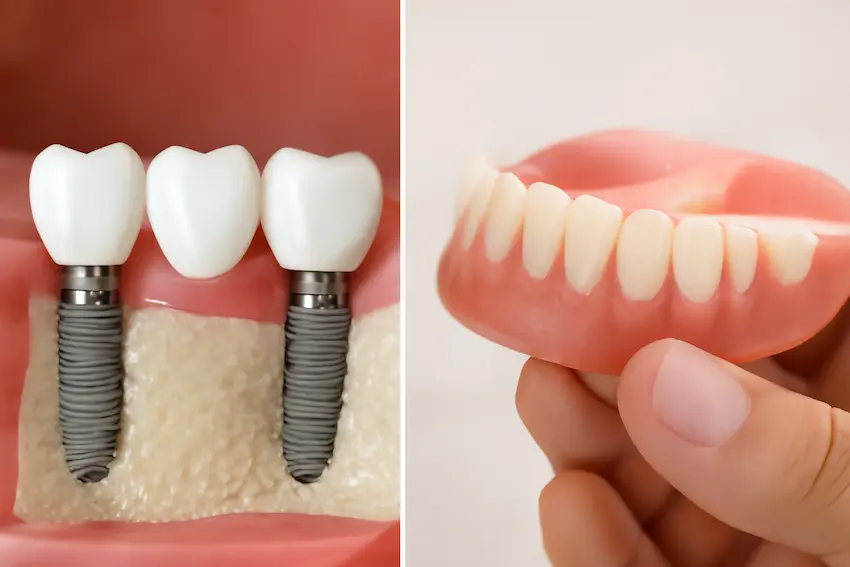
Dental implants are one of the most advanced and effective options for full-mouth reconstruction, particularly in cases of multiple or complete tooth loss.
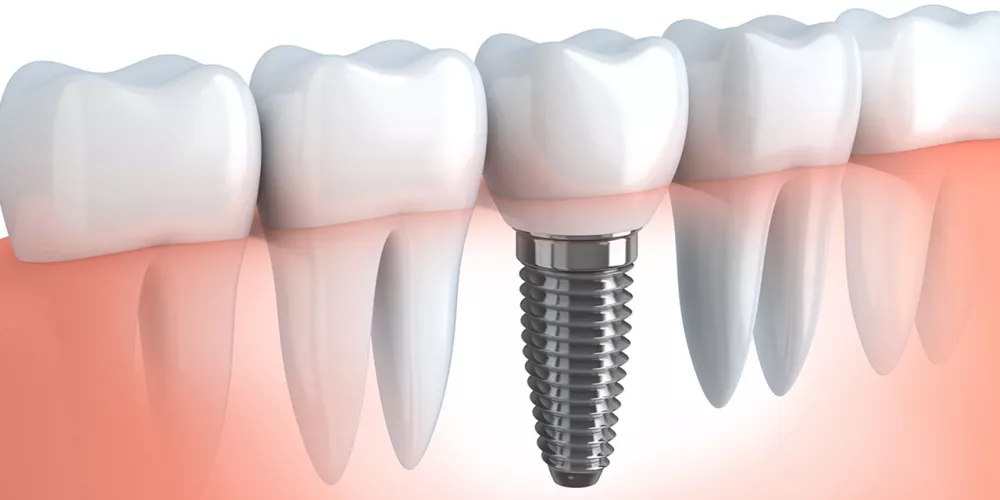
Implant therapy is based on placing a titanium fixture into the jawbone to act as an artificial root, then attaching a crown or bridge over it to function like a natural tooth.
This solution helps preserve jawbone volume, prevent bone resorption over time, and restore chewing function to a level very close to that of natural teeth.
In full-mouth rehabilitation plans, multiple implants can be used to support a full-arch bridge or a fixed implant-supported prosthesis, providing significantly greater stability and comfort than conventional removable dentures.
Dental implants are an ideal choice for patients seeking a long-term, fixed, and highly esthetic solution as part of a comprehensive oral rehabilitation strategy.
Veneers and Esthetic Restorations
Veneers and esthetic restorations play an important role in full-mouth reconstruction, especially when improving the appearance of the smile is a key objective alongside restoring function.
Veneers are thin porcelain shells bonded to the front surface of teeth to enhance color and shape, and to mask imperfections such as minor gaps and fine cracks.
In full-mouth rehabilitation, veneers can be used in combination with crowns and fillings to harmonize tooth color and achieve a fully coordinated smile design.
Esthetic restorations also include tooth-colored composite fillings, all-ceramic crowns, and custom-made restorations for anterior and posterior teeth to enhance both function and appearance.
Veneers and esthetic restorations are selected when the tooth structure is relatively sound and the primary goal is a balance of functional rehabilitation and a naturally attractive, symmetrical smile.
Fillings and Restoration of Damaged Teeth
Fillings and restoring damaged teeth form the foundation of any full-mouth reconstruction plan, as they address decay and fractures before progressing to more extensive prosthetic work.
Tooth-colored composite restorations or indirect restorations (inlays and onlays) are used to repair missing tooth structure while preserving as much healthy tissue as possible.
In cases of more extensive damage, special restorative materials or laboratory-fabricated restorations may be used to rebuild the tooth’s anatomical shape and strength before placing a crown if needed.
Restoring compromised teeth with fillings helps halt the progression of decay, protect the dental pulp, and improve chewing function. It is a critical step before implementing more advanced solutions such as crowns, bridges, or implants.
In this way, fillings become an integral part of the full-mouth reconstruction plan, providing a solid and stable foundation for all subsequent restorative treatments.
How Long Does Full-Mouth Dental Reconstruction Take?
Factors Affecting Treatment Duration
The time required for a full-mouth reconstruction varies from one patient to another, as it depends on a combination of clinical and technical factors.
One of the most important considerations is the number of teeth that need restoration or replacement, along with the condition of the supporting jawbone. A patient with advanced bone resorption will often require bone grafting, which typically extends the overall treatment timeline.
The type of techniques employed in the reconstruction also plays a key role. Implant-based treatments usually involve healing intervals between stages, making them more time-consuming than treatments that rely solely on conventional fixed or removable prostheses.
The patient’s general health status—such as the presence of diabetes, autoimmune disorders, or other systemic diseases—can also influence how quickly tissues heal and how well the body responds to the treatment.
All these factors are carefully assessed at the outset of the full-mouth reconstruction plan, so that the patient receives a clear, approximate estimate of the treatment duration from the very first visit.
Simple Cases vs. Complex Cases
In relatively straightforward cases, where tooth loss is limited and there are no significant problems in the bone or gums, full-mouth reconstruction can often be completed in a shorter period—ranging from several weeks to a few months. This is especially true when treatment is based on fixed restorations, fillings, or crowns without the need for extensive surgical procedures.
In more complex situations—such as the loss of most or all teeth, chronic periodontal disease, or marked jawbone atrophy—full-mouth reconstruction requires a longer timeframe that may extend over several months to more than a year. This is particularly the case when multiple dental implants or full-arch rehabilitation techniques are used.
The more complex the case, the greater the number of treatment phases the patient must go through: periodontal therapy, bone preparation, implant placement, and finally the delivery of the definitive prosthesis. Each additional step directly contributes to lengthening the total treatment time.
The Importance of Phased Treatment Planning
Meticulous, phased planning is the cornerstone in determining how long a full-mouth reconstruction will take, and in ensuring that the time invested results in a stable, functional, and esthetic outcome over the long term.
The dentist designs a stepwise treatment plan that begins with diagnosis and imaging, then moves to periodontal therapy or extraction of non-restorable teeth. This is followed, when indicated, by bone augmentation or implant placement, and subsequently by the provision of temporary restorations, culminating in the final prostheses.
Such structured, phased planning allows the various procedures to be spaced out in a clinically reasonable manner, giving the body adequate time to heal, reducing the risk of complications, and helping the patient clearly understand the timeline of each stage in the full-mouth reconstruction journey.
With this level of organization, patients tend to feel more reassured about the overall treatment duration and are better able to adjust—both psychologically and practically—to the different phases until they achieve the desired final result.
What are the benefits of full‑mouth reconstruction?
Full‑mouth reconstruction provides patients with a new, functional smile by restoring proper chewing and speech, and by reducing jaw pain caused by malocclusion or damaged teeth.
One of its most important advantages is the significant improvement in the appearance of the teeth and gums, which directly enhances self‑confidence and social interactions.
It also helps distribute biting forces evenly across the jaws, which protects the temporomandibular joint (TMJ) and can reduce dental‑related headaches and muscle tension in the jaw and neck.
In addition, this treatment aims to preserve natural teeth whenever possible, and to replace missing teeth with fixed prostheses or dental implants. This prevents adjacent teeth from drifting and helps maintain jawbone volume over the long term.
When full‑mouth reconstruction is properly planned, overall oral health improves and the risk of tooth decay and periodontal disease decreases, thanks to a stable, well-balanced occlusion that is easier to clean and maintain daily.
How can you maintain the results of your dental reconstruction?
To keep the results of dental reconstruction for as long as possible, you need a strict daily oral care routine along with regular follow‑ups with your dentist.
Brush your teeth twice a day using a fluoride toothpaste and a soft‑bristled toothbrush to avoid damaging crowns, fillings, or other restorative work.
Don’t skip interdental cleaning: use dental floss or interdental brushes to remove food debris that accumulates around crowns, bridges, and other prostheses, as this buildup can lead to gingivitis or decay underneath the restorations.
Avoid biting on hard objects such as ice cubes or using your teeth to open packages, as this can cause fractures or cracks in your crowns, veneers, or other restorative materials.
If you suffer from nocturnal bruxism (night‑time teeth grinding), consult your dentist about using a night guard to protect your rebuilt crowns and bridges.
Make sure to see your dentist every six months for a routine check‑up and professional cleaning, and to monitor gum health and rule out any decay developing beneath restorations.
It is also advisable to stop smoking and to limit carbonated and highly pigmented drinks, as they weaken the gums, cause staining of dental restorations, and may compromise the long‑term stability and both the aesthetic and functional quality of your dental reconstruction.
Book a Dental Reconstruction Consultation with Dr. Abeer Zendaqi
Schedule a dental reconstruction consultation with Dr. Abeer Zendaqi to benefit from a personalized treatment plan that restores the health, function, and aesthetics of your smile.
During the consultation, your teeth and gums will be thoroughly assessed through a clinical examination and dental imaging, to determine the extent of tooth wear, fractures, or missing teeth. Based on this evaluation, Dr. Abeer will discuss the most suitable reconstruction options for your case, which may include dental crowns, cosmetic fillings, bridges, dental implants, or fixed and removable prostheses, in line with your needs and budget.
Dr. Abeer is committed to using high‑quality materials and advanced techniques in cosmetic and restorative dentistry, while clearly explaining each step of the treatment, the expected duration, and post‑treatment care instructions to help ensure long‑lasting results.
If you struggle with chewing, suffer from chronic dental pain, or feel dissatisfied with the appearance of your smile, booking a specialized dental reconstruction consultation with Dr. Abeer Zendaqi is the first step toward safe, reliable treatment that restores your confidence.