Emax Veneers vs Porcelain Veneers is one of the most common comparisons in cosmetic dentistry for patients seeking a natural and long-lasting smile. Both types of veneers are widely used to improve the appearance of teeth, correct discoloration, close gaps, and enhance overall smile aesthetics. Understanding the differences between Emax and porcelain veneers helps patients choose the most suitable option based on aesthetics, strength, durability, and long-term results.
Table of Contents
What Are Emax Dental Veneers?
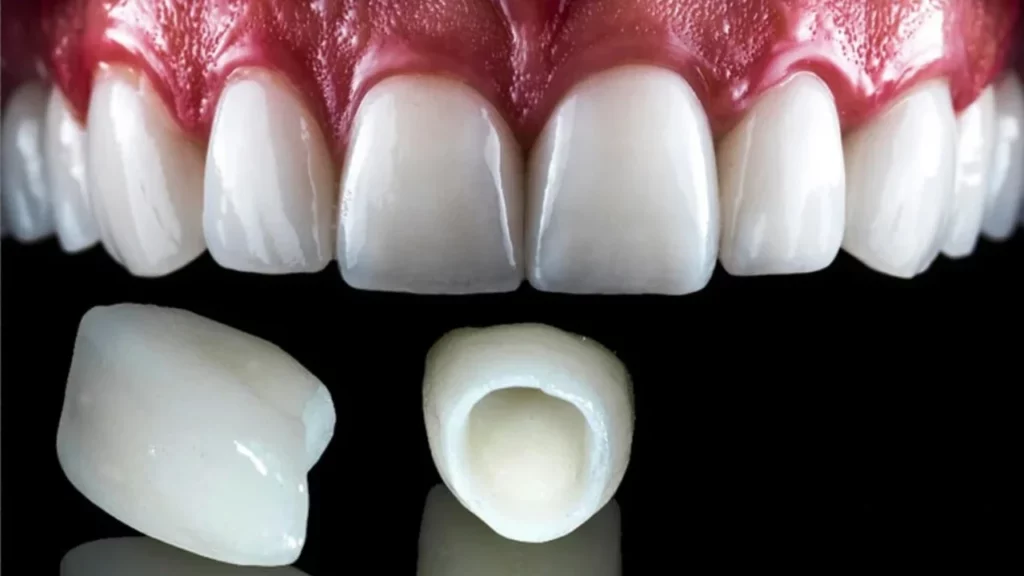
Emax veneers are an advanced type of cosmetic porcelain veneer made from lithium disilicate glass-ceramic, considered one of the best options for enhancing the appearance of front teeth thanks to their natural look and high translucency.
They combine good strength with an ultra‑thin design, which allows the dentist to remove only a very minimal amount of enamel—or in some cases almost no tooth reduction at all—compared with traditional porcelain crowns.
Emax veneers are used to treat severe tooth discoloration, close gaps between teeth (diastemas), correct minor misalignment, and improve the overall shape, size, and color of teeth in harmony with the patient’s facial features and smile.
They are also a popular choice in cosmetic dentistry clinics for patients seeking a natural-looking Hollywood smile that can last for many years with proper care and good oral hygiene.
What Are Porcelain Dental Veneers?
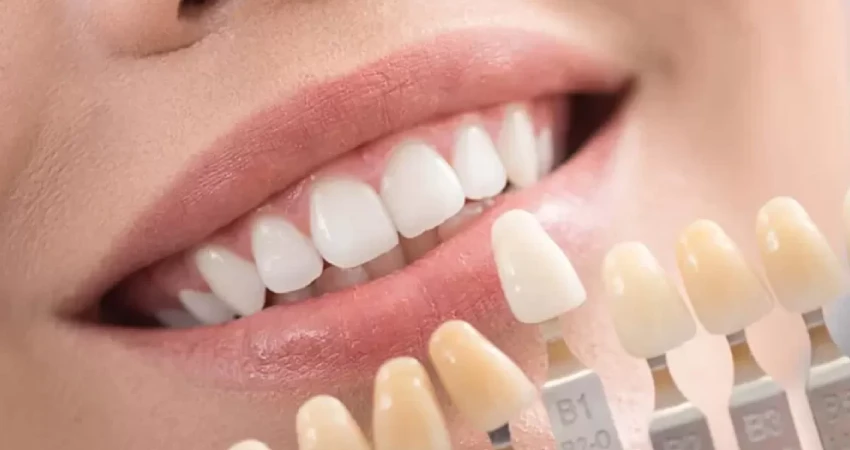
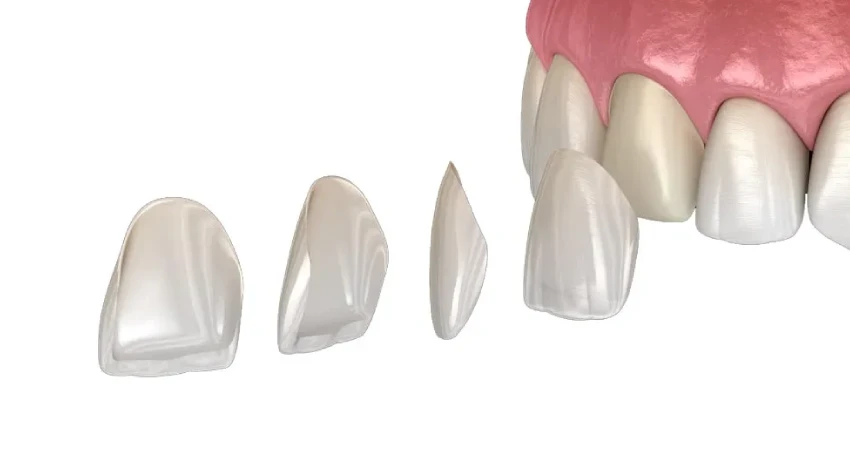
Porcelain dental veneers are ultra‑thin shells made from high‑quality medical‑grade ceramic that are bonded to the front surface of the teeth to enhance their shape, color, and alignment, while preserving as much of the natural tooth structure as possible.
Each veneer is custom‑designed for the individual patient to mask various imperfections, such as deep intrinsic stains, cracks, gaps between teeth (diastemas), and irregularities in tooth shape or length.
Porcelain veneers are renowned for their ability to closely mimic the translucency and natural luster of tooth enamel, which makes them one of the leading options in cosmetic dentistry, alongside materials like E.max and other types of veneers.
They are also known for their favorable durability and long‑term resistance to discoloration, provided that the patient maintains good oral hygiene and follows the dentist’s instructions. This makes porcelain veneers a stable and effective cosmetic solution for enhancing the smile.
The difference between Emax and porcelain in terms of appearance and translucency
Emax restorations are known for their high translucency and a natural-looking luster that closely mimics real teeth, giving them a superior aesthetic result—especially in the front teeth, where a high level of cosmetic perfection is required.
This translucency allows light to pass through in a way that is very similar to natural enamel, helping to create a smile that looks realistic rather than artificial, which makes Emax a preferred option for cosmetic dentistry and for fabricating aesthetic veneers.
Conventional porcelain restorations, on the other hand, tend to be less translucent and usually thicker. As a result, they can sometimes look more opaque and less “lifelike” compared to Emax. However, they can be very suitable in cases where there are severe discolorations that need masking, or for posterior restorations where subtle differences in translucency are not as noticeable.
Overall, when the primary goal is to achieve maximum aesthetics and highly natural translucency, Emax is often the better choice. Traditional porcelain can still provide a good cosmetic result, but with lower translucency and a less refined luster than Emax.
Comparison in Terms of Strength and Longevity
Durability and lifespan are among the most important differences between E.max and porcelain in dental restorations such as crowns, veneers, and overlays.
E.max, made from lithium disilicate glass‑ceramic, is characterized by high flexural strength and excellent resistance to fracture and wear. This makes it a preferred option for both anterior and posterior teeth, with a service life that can exceed 10–15 years when combined with good oral hygiene and regular dental check‑ups.
Conventional dental porcelain, on the other hand, offers good aesthetics but is less durable than E.max and more prone to chipping or fracture—especially under heavy occlusal forces or in patients with bruxism. This can shorten its functional lifespan compared with E.max.
Overall, clinical studies show that E.max restorations demonstrate greater long‑term stability and lower failure rates than conventional porcelain in fixed prosthodontics. For this reason, E.max is often recommended for patients seeking an optimal balance of esthetics, strength, and longevity in both cosmetic and functional dental restorations.
Cost: Which Option Is More Economical Long-Term?
When comparing the cost of E-max versus conventional porcelain, it’s important to look beyond the initial price and consider the lifespan of the restoration, its functional performance, and aesthetic quality together—not just the cost of placement.
E-max restorations usually have a higher upfront cost because of their advanced manufacturing technology and the superior properties of lithium disilicate. However, they are highly durable, color-stable, and resistant to staining, which reduces the likelihood of frequent repairs or replacements over the years.
In contrast, traditional porcelain crowns and bridges may appear more affordable at the time of placement, but they are more prone to chipping, wear, and discoloration—especially in smokers and heavy consumers of coffee or tea—which increases the chance that they will need to be replaced sooner.
Taking into account the number of follow-up visits, expected lifespan, and cosmetic outcome, E-max restorations are, in many cases, a more cost-effective investment over the long term—particularly for individuals seeking long-lasting, natural-looking restorations that are relatively easy to maintain.
Who is E-max suitable for, and who is porcelain best for?
E-max is an excellent choice for people seeking a highly natural-looking smile, with translucency and gloss that closely resemble natural teeth—especially in the front teeth, where aesthetics are most critical.
It is particularly suitable for cases of mild to moderate tooth fractures, discoloration that does not respond well to whitening, and for fabricating ceramic veneers and crowns on teeth that have a solid core and a healthy root.
E-max is also preferred for patients who do not exert excessive biting forces on their teeth, such as those without severe bruxism, since it is thinner and requires only minimal removal of the enamel.
Conventional porcelain (such as porcelain-fused-to-metal or reinforced zirconia-based ceramics) is more suitable in situations that demand higher strength and durability—like crowns on back molars, long-span bridges, and cases of advanced tooth wear—where it can withstand heavy biting forces over long periods.
Porcelain is generally recommended for patients with large fillings, structurally weakened teeth, or those who need to replace multiple adjacent teeth in the same area, bearing in mind that its esthetics—particularly in the front teeth—might be slightly less translucent than E-max.
Ultimately, a specialist dentist determines whether E-max or porcelain is more appropriate after a thorough clinical evaluation of the teeth, the patient’s bite, and the overall smile, to achieve the best balance between esthetics, strength, and longevity.
Dentists’ Tips for Choosing the Type of Veneers
Dentists consistently advise against choosing between E-max and porcelain veneers based solely on price or appearance. The decision should be made according to the condition of the teeth and the findings of the clinical examination and radiographs.
E-max veneers are often recommended when patients are seeking the highest level of aesthetics and translucency, particularly for the front teeth. Conventional porcelain veneers, on the other hand, can be more suitable for teeth that require greater strength or extensive coverage of discoloration and major shape defects.
The cosmetic dentist focuses on factors such as the remaining thickness of enamel, the occlusion (bite), and the presence of issues like bruxism (teeth grinding) or surface wear, since these directly affect the longevity and stability of the veneers.
Dentists also stress the importance of working with a reliable dental laboratory and using high-quality, original materials—whether E-max or porcelain—to ensure long-term color stability and resistance to fracture.
One of the key recommendations before fitting any type of dental veneer is to treat dental caries, manage gum inflammation, and perform teeth whitening if needed, in order to achieve a harmonized final shade.
Cosmetic dentists further emphasize the need to follow post-placement care instructions, such as avoiding biting on hard objects, maintaining excellent oral hygiene, and attending regular follow-up visits, to ensure the best possible outcome regardless of whether E-max or porcelain veneers are used.
Dr. Abeer’s Services in Choosing the Ideal Veneers for Your Smile
Dr. Abeer begins your smile makeover journey with a comprehensive assessment of your teeth and gums, then carefully compares E.max veneers with conventional porcelain veneers to determine the safest and most suitable option for your aesthetic and functional needs.
Her choice of veneer type is based on several precise clinical criteria, including the degree of tooth discoloration, enamel thickness, occlusion (how your upper and lower teeth come together), the presence of wear or cracks, and the dynamics of your smile. This ensures long‑lasting veneers with a bright, natural appearance.
Dr. Abeer explains the differences between E.max and porcelain veneers in terms of strength, translucency, stain resistance, and the amount of tooth preparation required, so you can make an informed, confident decision.
She also uses digital X‑rays, pre‑ and post‑treatment smile photography, and Digital Smile Design (DSD) technologies to preview your final smile before any tooth preparation or veneer placement begins.
Thanks to this meticulous, evidence‑based approach and her expertise in cosmetic dentistry, Dr. Abeer helps you select the veneers that best suit your smile—whether E.max or porcelain—while preserving as much natural tooth structure as possible and achieving an attractive, healthy smile that lasts for years.
Frequently Asked Questions About Emax and Porcelain Veneers
What are Emax dental veneers?
Emax veneers are ultra-thin ceramic veneers made from lithium disilicate glass-ceramic. They are known for their high translucency, natural appearance, and excellent durability, making them a popular option in cosmetic dentistry.
What is the difference between Emax veneers and porcelain veneers?
The main difference lies in translucency, strength, and thickness. Emax veneers are thinner and more translucent, giving a more natural appearance, while traditional porcelain veneers may be slightly thicker and less translucent but can be suitable for masking severe discoloration.
Which is better: Emax or porcelain veneers?
Emax veneers are often preferred for front teeth because of their superior aesthetics and natural translucency. Porcelain veneers may be more suitable for cases requiring additional strength or coverage of severe discoloration.
How long do Emax veneers last?
Emax veneers can last 10 to 15 years or longer when properly cared for with good oral hygiene and regular dental visits.
Are Emax veneers stronger than porcelain veneers?
Yes. Emax veneers are generally stronger due to the lithium disilicate material used in their fabrication, which offers high resistance to fractures and wear.
Are Emax veneers suitable for everyone?
Emax veneers are ideal for patients who want highly aesthetic results and have healthy teeth with sufficient enamel. However, patients with severe teeth grinding or very damaged teeth may require different restorative options.
Do Emax veneers stain over time?
Emax veneers are highly resistant to staining due to their ceramic composition. With proper oral hygiene and avoiding excessive consumption of staining foods or smoking, they maintain their brightness for many years.
How much do Emax veneers cost?
The cost of Emax veneers depends on factors such as the dentist’s expertise, the number of teeth treated, and the complexity of the smile design. They are generally more expensive than traditional porcelain veneers due to their advanced materials and aesthetics.