Table of Contents
What is deep dental caries?
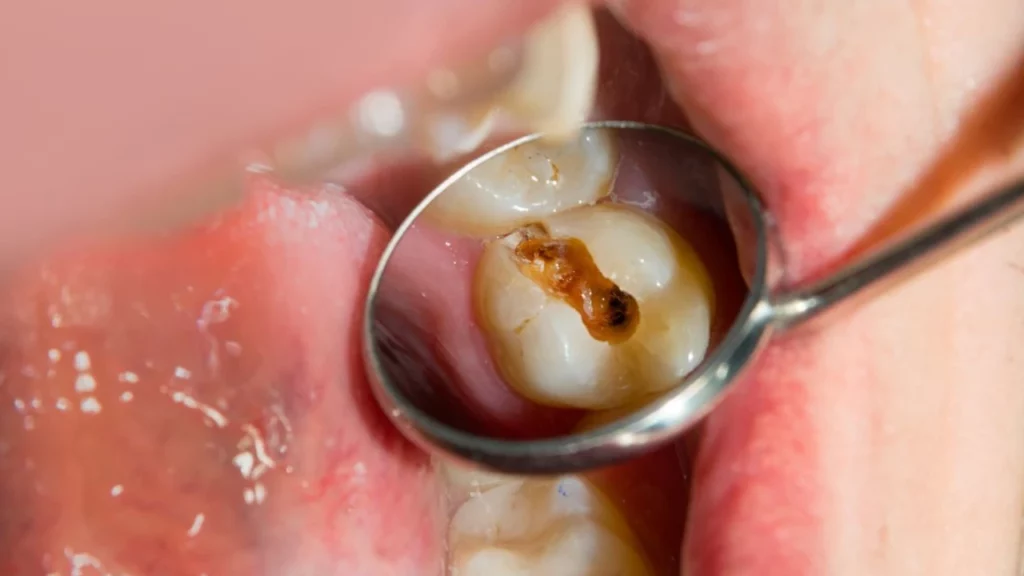
Deep dental caries is an advanced stage of tooth decay in which the lesion extends into the inner structures of the tooth, particularly the dentin and the dental pulp, which contains nerves and blood vessels. At this point, it often causes sharp pain and pronounced sensitivity when consuming hot or cold food and drinks.
Deep caries typically develops when early, superficial decay is left untreated and dental plaque and bacteria accumulate over a long period. This leads to gradual destruction of the enamel layer and eventually penetration into the deeper layers of the tooth.
In this stage, symptoms may include persistent toothache, bad breath, discoloration of the affected tooth, and in some cases swelling of the gums or face if the infection reaches the tooth roots.
Managing deep dental caries requires urgent intervention by a dentist, usually through extensive fillings or root canal treatment. In more advanced cases, the tooth may need to be crowned or even extracted to preserve oral health and prevent the spread of infection to neighboring teeth.
Main Causes of Deep Dental Caries
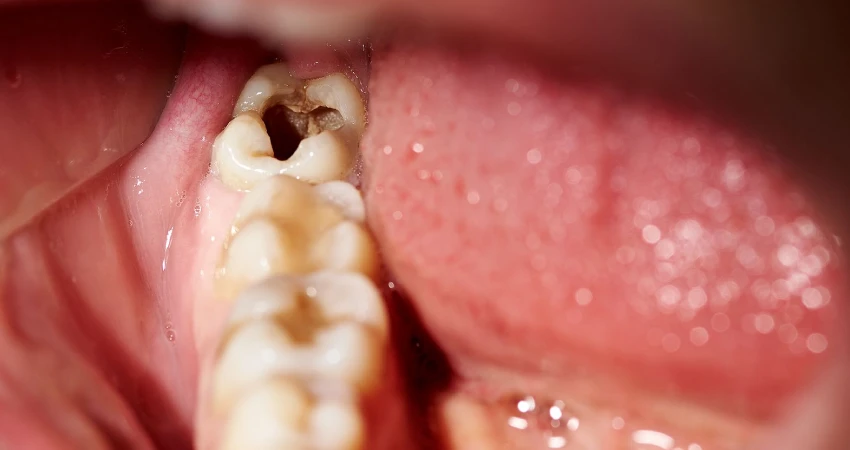
Deep dental caries develop as a result of a complex interaction between oral bacteria and food debris rich in sugars and starches. These bacteria produce strong acids that gradually demineralize the enamel and eventually penetrate deeper layers such as dentin and the dental pulp.
Key contributing factors include poor oral hygiene, such as not brushing twice daily with a fluoride-containing toothpaste and neglecting to use dental floss to remove food particles lodged between teeth.
Excessive consumption of sweets, carbonated soft drinks, sugary juices, and frequent snacking throughout the day significantly increases the risk of deep caries, especially when not followed by drinking water or cleaning the mouth.
Xerostomia (dry mouth), whether caused by certain medications or chronic systemic diseases, reduces salivary flow. Since saliva is a primary natural defense against oral bacteria, its reduction heightens the likelihood of developing advanced carious lesions.
In addition, old defective restorations, cracked teeth, and malocclusion create niches that trap plaque and bacteria and are difficult to clean effectively. This accelerates the progression of dental caries from a superficial lesion into a deep, painful cavity that may require root canal therapy or other advanced dental interventions.

Symptoms Indicating Progression of Tooth Decay
As deep dental caries progress, symptoms become more evident, shifting from mild discomfort to persistent, troublesome pain.
One of the main warning signs is sharp or throbbing toothache, especially when consuming cold, hot, or sugary foods and drinks, with the pain sometimes continuing even after the stimulus is removed.
Patients may also notice increased tooth sensitivity, visible pits or cavities in the affected tooth or molar, and discoloration that may turn brown or even black.
In more advanced stages, pain may occur when biting or chewing due to pressure on the tooth, along with swelling and redness of the surrounding gum tissue, and potentially bad breath caused by bacterial buildup within the deep carious lesion.
Ignoring these symptoms can allow the decay to reach the dental pulp, leading to an abscess in the gum or jaw, which often requires urgent treatment such as root canal therapy or, in severe cases, tooth extraction.
Therefore, noticing any of these signs should prompt an early visit to the dentist to diagnose and treat deep dental caries before serious complications develop.
Risks of Leaving Deep Tooth Decay Untreated
Neglecting the treatment of deep dental caries can trigger a chain of serious complications that go far beyond toothache and may threaten both oral and general health.
When decay penetrates the tooth layers and reaches the dental pulp (tooth nerve), the pain typically becomes intense and may progress to pulpitis and the formation of a dental abscess filled with pus.
This abscess can spread to the surrounding bone and gum tissue, leading to facial swelling and difficulty chewing or swallowing. In severe cases, the infection may extend to other areas of the body.
Leaving deep decay untreated can also destroy a large portion of the tooth structure, forcing the dentist to extract the tooth instead of saving it with root canal treatment and a crown.
Persistent pain may negatively affect sleep quality and eating habits, and increase the risk of chronic bad breath and long-standing gum disease.
Prompt treatment of deep caries by a dentist helps prevent these complications, preserves the health of teeth and gums, and reduces the need for complex and costly dental procedures in the future.
Treatment Options for Deep Dental Caries
Treating deep tooth decay differs from managing superficial cavities, as it requires more precise intervention to preserve the tooth and prevent its loss.
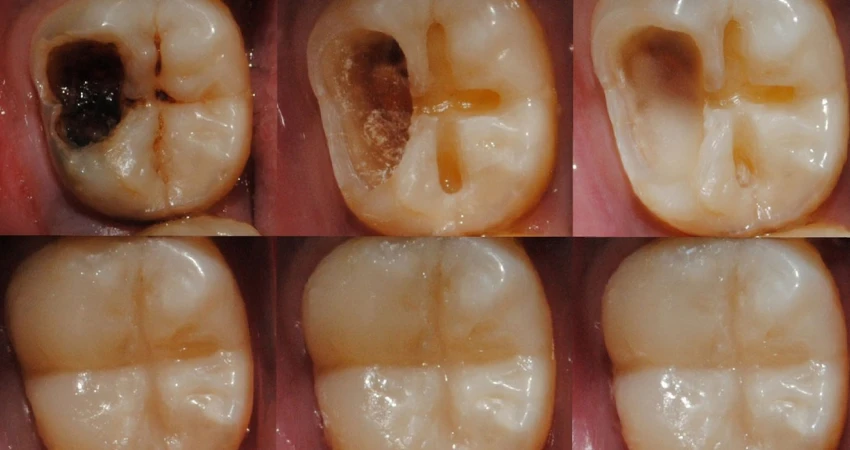
The dentist typically begins by removing the decayed portion of the tooth using specialized instruments, then thoroughly cleaning the cavity to eliminate bacteria and food debris responsible for pain and inflammation.
The tooth is then restored with a suitable filling material—either tooth-colored (composite resin) or metallic—to rebuild its normal structure and reinforce its walls. If the decay has reached the dental pulp (tooth nerve), root canal treatment is required, which involves cleaning and disinfecting the root canals and then sealing them tightly.
In many advanced cases of deep decay, the dentist may recommend placing a dental crown over the affected tooth to protect it from fracture and to restore its appearance and function.
Early intervention and proper treatment play a crucial role in saving the tooth, relieving pain, and preventing complications such as dental abscesses and gingival inflammation. For this reason, it is advisable to see a dentist promptly if you experience marked sensitivity or deep, persistent pain in a molar.
The Latest Technologies in Treating Tooth Decay and Preserving Teeth
Techniques for managing advanced dental caries have evolved significantly, making it possible in many cases to save the tooth instead of extracting it.
Today, dentists increasingly rely on dental lasers to remove decay with high precision and minimal discomfort, while preserving as much healthy tooth structure as possible.
Modern metal-free aesthetic restorations have also emerged, characterized by strong bonding to tooth surfaces and excellent shade matching, allowing effective treatment of deep cavities without compromising the natural appearance of the smile.
In root canal treatment (endodontic therapy), operating microscopes and high‑magnification loupes are used to locate and thoroughly clean even the finest root canals. This greatly improves the success rate of treating deep decay that has reached the pulp and helps prolong the life of the tooth.
Furthermore, three-dimensional imaging using Cone Beam Computed Tomography (CBCT) provides highly detailed views of the tooth roots and surrounding bone, enabling dentists to develop accurate, individualized treatment plans for advanced carious lesions.
Computer-Aided Design and Computer-Aided Manufacturing (CAD/CAM) systems also make it possible to fabricate highly precise crowns and other restorations in a single visit. This supports long-term tooth preservation after managing deep decay and reduces the risk of fractures or recurrent caries.
Thanks to these advances, the treatment of deep dental caries has become safer and more effective, with greatly improved chances of maintaining natural teeth for as long as possible.
Tips to Prevent Future Deep Tooth Decay
To prevent deep dental caries and maintain long‑term oral health, it is recommended to brush your teeth at least twice daily using a fluoride‑containing toothpaste, making sure to clean all tooth surfaces gently for a full two minutes each time.
Daily use of dental floss or interdental brushes is also essential to remove food debris and plaque from areas a toothbrush cannot reach, helping to stop early carious lesions from progressing into deep decay.
Limit your intake of sugars, soft drinks, and sticky snacks between meals, and opt instead for healthier choices such as unsalted nuts, or fresh vegetables and fruits.
Ideally, you should visit your dentist every six months for routine check‑ups, so that any initial carious lesions can be detected and managed before they advance to deep decay requiring root canal treatment (endodontic therapy).
Your dentist may also apply topical fluoride or place preventive sealants (pit and fissure sealants) on the posterior teeth, particularly in children and adolescents, to provide an extra protective barrier against deep caries.
Maintaining good oral hydration by drinking adequate amounts of water, and chewing sugar‑free gum after meals, helps stimulate natural salivary flow, which acts as a key line of defense against the bacteria responsible for deep tooth decay.
Deep Dental Caries Treatment with Dr. Abeer’s Expertise
Managing deep dental caries is a delicate procedure that demands a high level of clinical skill to preserve the tooth and prevent its loss. This is precisely where Dr. Abeer excels, applying modern, evidence-based treatment protocols.
The treatment journey begins with a comprehensive clinical examination supported by digital radiographs to assess the extent of decay, determine whether it has reached the pulp (nerve), and evaluate the depth of damage in the enamel and dentin.
In cases of deep caries, Dr. Abeer performs root canal treatment using precision instruments and advanced magnification systems, allowing thorough cleaning of the root canals from bacteria and inflamed tissue with exceptional accuracy.
The canals are then disinfected and filled with biocompatible materials, followed by restoring the tooth using a high-quality aesthetic filling or a dental crown, ensuring strength, durability, and protection against fracture.
Dr. Abeer also focuses on relieving pain associated with deep caries and controlling inflammation through an individualized medication plan when needed, in addition to educating patients on proper oral hygiene practices to help prevent recurrence of deep decay.
Through this comprehensive approach, patients receive safe and effective deep caries management that preserves the natural tooth for as long as possible while delivering excellent functional and aesthetic outcomes.
Frequently Asked Questions About Deep Dental Caries
What is deep dental caries?
Deep dental caries is an advanced stage of tooth decay in which the damage extends beyond the enamel into the dentin and sometimes the dental pulp, causing significant pain and sensitivity.
What causes deep tooth decay?
Deep dental caries usually develop due to plaque buildup, poor oral hygiene, frequent consumption of sugary foods and drinks, dry mouth, and untreated early cavities.
What are the symptoms of deep dental caries?
Persistent toothache
Sensitivity to hot, cold, or sweet foods
Visible cavities or dark spots on the tooth
Pain when chewing
Bad breath
Can deep dental caries be treated without root canal therapy?
If the decay has not reached the tooth pulp, the dentist may treat it with a deep filling. However, once the pulp becomes infected, root canal treatment is usually required.
What happens if deep dental caries are left untreated?
Untreated deep caries can lead to severe infection, dental abscess formation, bone damage, and eventually tooth loss.
How do dentists treat deep dental caries?
Treatment may include:
Removal of decayed tooth structure
Dental fillings
Root canal therapy
Placement of a dental crown
The choice of treatment depends on how deep the decay has progressed.
Can deep tooth decay be prevented?
Yes. Prevention includes brushing twice daily with fluoride toothpaste, flossing regularly, limiting sugary foods, drinking water frequently, and visiting the dentist for regular check-ups.