Noticing a fine line on a front tooth can be unsettling, especially if it appears after an injury or biting something hard. When there is no pain, it can be difficult to tell whether the line is a minor cosmetic concern or damage that needs treatment.
Cracked front teeth vary in depth and severity. Some lines affect only the outer enamel, while deeper cracks can weaken the tooth or affect the tissue inside it. Choosing the right treatment starts with identifying the damage rather than judging it by appearance or pain alone.
Table of Contents
What Is the Difference Between a Cracked and a Chipped Tooth?
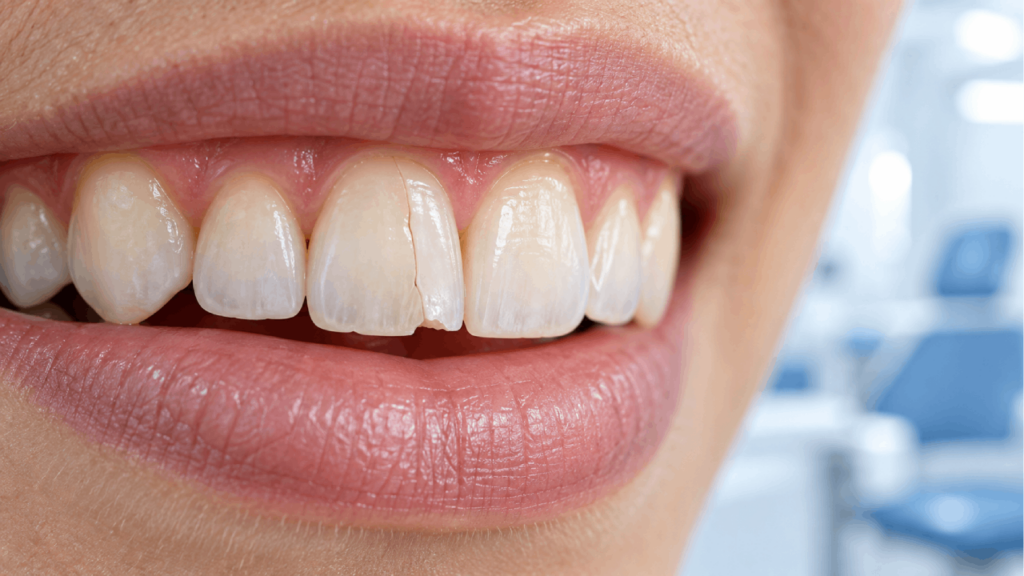
A crack usually describes a fracture within the tooth without an obvious piece breaking away. A chipped or broken tooth typically has a missing section, often along the biting edge. These terms can overlap clinically, but the depth and location of the damage matter more than the label.
Teeth consist of an outer enamel layer, the dentin beneath it, and an inner pulp containing nerves and blood vessels. Damage may remain within the enamel or extend into deeper tissues.
| Type of Damage | What You Might Notice | What It May Mean |
| Superficial enamel lines | Fine lines with no missing tooth structure | Monitoring may be sufficient once their superficial nature is confirmed |
| A deeper crack | A visible or hard-to-see line, with or without discomfort | An examination is needed to assess its extent and effect on the tooth |
| A chipped or broken tooth | A missing piece or an uneven edge | Treatment depends on the size of the fracture, pulp health, and remaining tooth structure |
The length or colour of a visible line does not reliably show how deep it is. A small surface mark may conceal more extensive damage.

What Causes Cracked Front Teeth?
A front tooth may crack following a sudden injury or repeated stress over time. Identifying the cause helps guide treatment and reduce the risk of further damage.
Accidents and injuries: Falls, sports injuries, or a direct blow can crack a tooth or break off a piece. Internal tissues may also be affected, even when the visible damage seems minor.
Teeth grinding and clenching: Repeated pressure places stress on teeth and may contribute to damage. Grinding during sleep can go unnoticed until symptoms or signs of wear develop.
Biting hard objects: Chewing ice or pens, opening packaging with your teeth, and similar habits can overload the biting edges of front teeth.
Weakened tooth structure: A tooth that has lost substantial structure through decay or large restorations may be more vulnerable, depending on how much healthy tissue remains and the forces it carries.
Having one of these risk factors does not mean a tooth will necessarily crack. However, a new line or discomfort when biting should be assessed.
Is a Cracked Tooth Without Pain Harmless?
A painless line may be a superficial enamel crack, often called a craze line. However, the absence of pain does not confirm that the tooth is healthy. Some injuries produce few symptoms initially, and their effects may become apparent later.
If an examination confirms that the lines are confined to enamel and do not affect the tooth’s integrity or function, treatment may not be necessary. If their appearance bothers you, conservative cosmetic options can be discussed.
A line that appears after an injury, or accompanies a change in tooth colour or shape, should be checked even if it does not hurt. Avoid testing it by biting something hard or pressing it with an object. This cannot establish its depth and may cause further damage.
When Is a Cracked Front Tooth Serious?
The seriousness of a crack depends on its depth, location, effect on the pulp, and whether the tooth can be restored. A superficial enamel line is different from a fracture that weakens the tooth or allows irritation and infection to develop inside it.
Arrange a dental assessment if you notice:
- Pain when biting or releasing biting pressure.
- Persistent or recurring sensitivity to hot or cold.
- A change in tooth colour, particularly after an injury.
- Swelling or discharge around the gum.
- Unusual tooth movement or a change in how your teeth meet.
Pain can come and go, so temporary relief does not necessarily mean the problem has resolved. A true tooth fracture does not heal like a broken bone, and toothpaste or home remedies cannot fuse the fractured structure back together.
A significant injury, severe pain, or facial swelling requires urgent assessment. Swelling accompanied by difficulty breathing or swallowing requires immediate emergency care.
How Is a Front Tooth Crack Diagnosed?
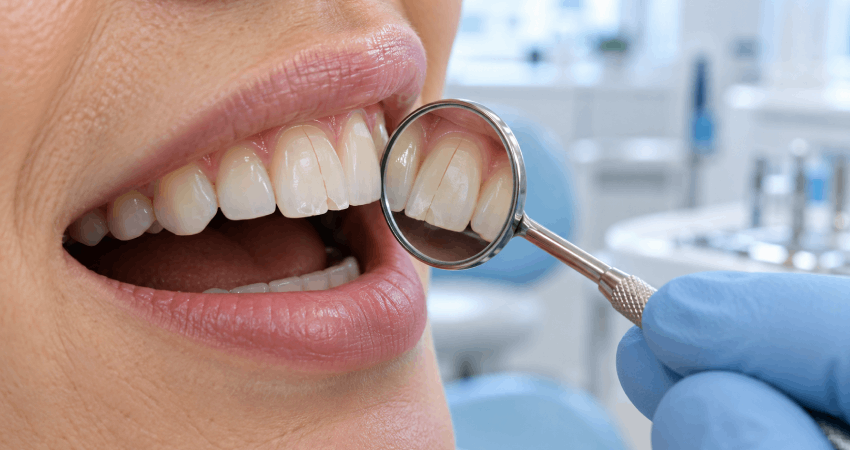
Diagnosis begins with questions about when the line appeared, any previous injury, and the pattern of pain or sensitivity. The dentist then examines the tooth surface, edges, and surrounding gums. Special lighting or magnification may help distinguish superficial lines from deeper damage.
The assessment may include checking your bite, testing the pulp’s response to cold or other stimuli, and examining tooth mobility and the supporting tissues.
Dental X-rays may be needed to evaluate the root, surrounding bone, or consequences of an injury. However, the crack itself may not be visible. X-rays are therefore interpreted alongside the examination and other tests rather than used alone to rule out a fracture.
Treatment Options for Cracked Front Teeth
Cracked front tooth treatment depends on the extent of the damage, pulp health, and the strength of the remaining tooth. Options may range from monitoring to cosmetic repair or crown protection, with root canal treatment when clinically necessary.
Dental Bonding for Cracked Front Teeth
Tooth-coloured composite resin can repair limited defects and replace small pieces missing from a front tooth’s edge. The material is shaped and colour-matched to blend with neighbouring teeth.
Bonding may be suitable when the damage is limited and enough healthy tooth structure remains. In some cases, a broken fragment can be reattached if it is available and suitable.
However, bonding is not appropriate for every crack and cannot guarantee that a fracture will stop progressing. A more extensively damaged tooth may need greater protection.
Veneers for Cracked Front Teeth
Veneers may improve the appearance of selected superficial defects by covering the front surface of a tooth with a thin cosmetic shell.
Before recommending veneers, the dentist assesses tooth and gum health, bite alignment, and any grinding or clenching. Suitability depends on the condition of the tooth and the forces acting on it, as well as the desired appearance.
A veneer does not treat a deep crack or damaged pulp. It also cannot replace protective treatment when the tooth needs additional structural support. Underlying dental problems should be addressed before a cosmetic defect is concealed.
When Is a Crown or Root Canal Needed?
A crown may be recommended when substantial damage means the tooth needs more coverage and protection than bonding can provide. The decision depends on the remaining structure, crack location, and bite.
Root canal treatment may be necessary when examination reveals pulp inflammation or damage that requires it. The procedure treats the tissue inside the tooth but does not join the crack together. An appropriate restoration is still needed afterwards.
Not every cracked front tooth requires a crown or root canal. Conversely, some fractures are too extensive for the tooth to be preserved. Early assessment helps establish the available options before further damage develops, although saving every tooth is not always possible.
How to Reduce the Risk of Further Damage
If you notice a new crack, avoid putting unnecessary pressure on the tooth until it has been examined. Do not use it to bite hard foods.
To help protect your teeth:
- Avoid opening packaging or chewing hard objects with your teeth.
- Seek an assessment for grinding or clenching, and use a night guard if prescribed.
- Wear a suitable mouthguard during sports that carry a risk of dental injury.
- Maintain good oral hygiene and regular dental appointments.
- Never file the tooth yourself or use household adhesives to repair it.
These measures can reduce avoidable stress and injury, but they do not repair an existing crack. Follow-up appointments remain important after treatment to check the tooth, restoration, and bite.
Restore Your Smile with Dr. Abeer Zindaki
If you have noticed a new line or crack in a front tooth, a dental assessment can help clarify the damage before you choose a treatment. Book a consultation with Dr. Abeer Zindaki to discuss options that support your tooth’s health, function, and appearance. Monitoring or cosmetic repair may be appropriate, while other cases may require crown protection or referral for root canal treatment. Understanding the condition of your tooth is the first step towards a treatment plan suited to your needs.