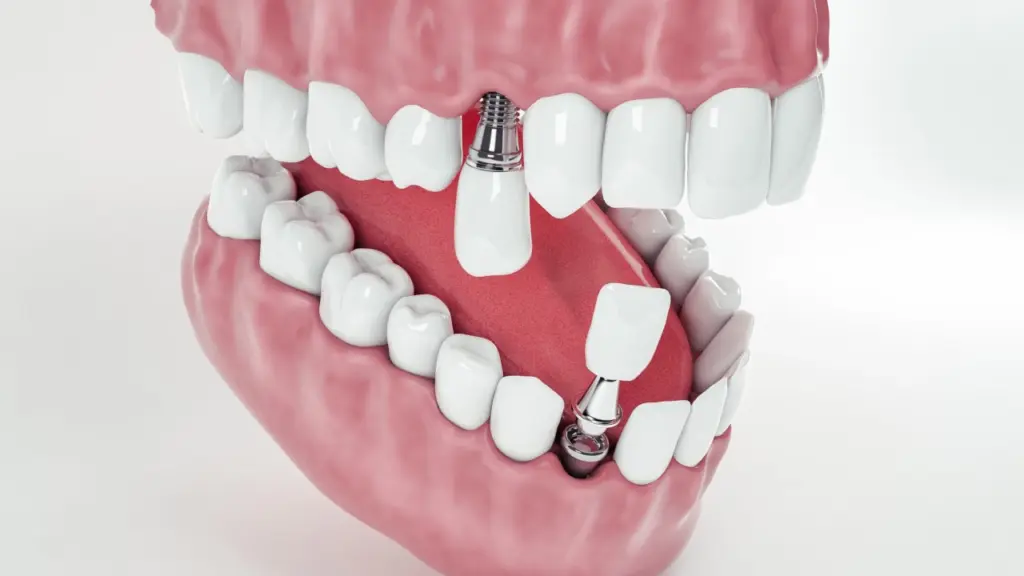
A front tooth dental implant does more than replace a missing tooth. Because front teeth are highly visible when smiling and speaking, treatment must restore both function and appearance.
Table of Contents
Achieving a natural result depends on several factors, including implant position, available bone, gum shape, and the color and proportions of the final crown. Careful planning is therefore particularly important when replacing a tooth in the smile zone.
What Makes a Front Tooth Dental Implant Different?
Dental implants in the back of the mouth primarily need to restore chewing function and withstand biting forces. With front teeth, aesthetics become equally important.
A successful front tooth implant should:
- Match the size and shape of neighboring teeth.
- Blend with their color and translucency.
- Maintain a natural-looking gumline.
- Be positioned at the correct angle and depth.
- Fit naturally within the overall smile.
Some patients may also require bone or gum grafting to create sufficient support around the implant before the final crown is placed.

When Is a Front Tooth Implant a Suitable Option?
A front tooth implant may be considered when a tooth is missing or cannot be predictably restored.
Common situations include:
- Tooth loss following trauma or severe decay.
- A fractured or damaged tooth that cannot be restored.
- A congenitally missing front tooth in selected cases.
- Replacing a missing tooth without preparing healthy neighboring teeth for a traditional bridge.
However, not everyone is immediately ready for implant placement. The dentist must evaluate the available bone, gum health, neighboring teeth, oral hygiene, and overall health before recommending treatment.
If bone or gum tissue is insufficient, additional treatment may be required before or during implant placement.
Read More : Dental implant treatment
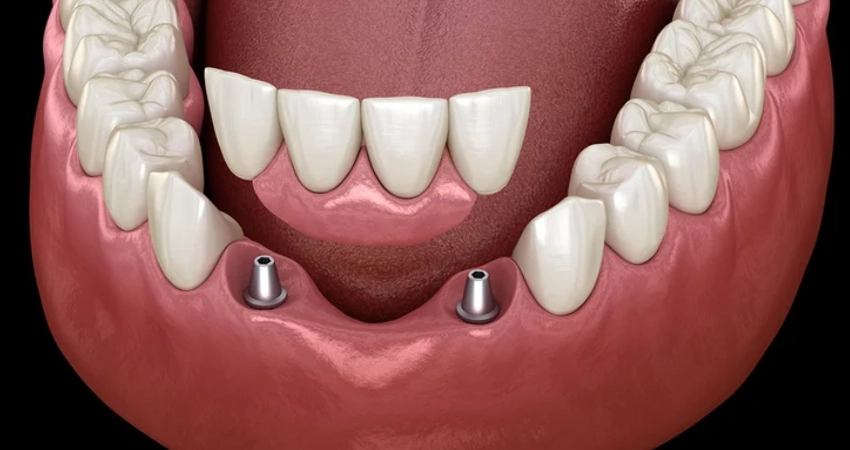
What Makes a Front Tooth Implant Look Natural?
A natural-looking result depends on much more than the visible crown. The implant, bone, gums, and surrounding teeth must all work together.
Implant Position and Angle
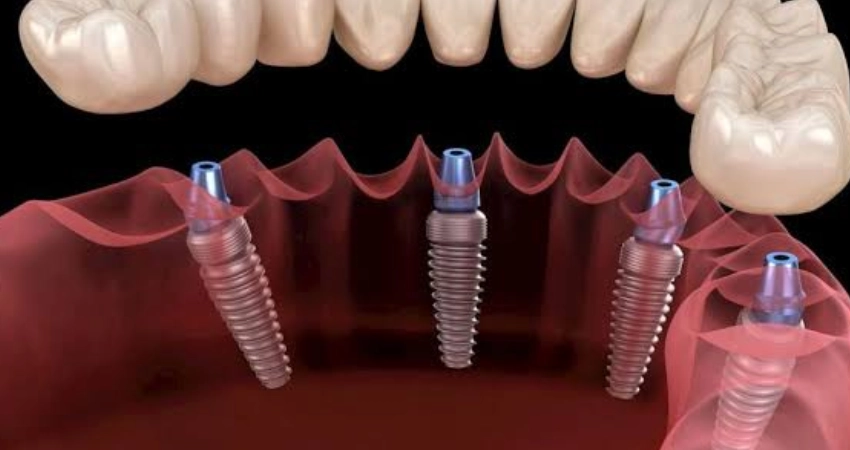
The implant should be positioned to resemble the natural root of the missing tooth as closely as possible.
Proper positioning allows the crown to align with neighboring teeth while also supporting a natural gum contour and appropriate bite.
Three-dimensional imaging, such as CBCT scans, and digital planning may be used to evaluate the bone and determine an appropriate implant position.
Bone and Gum Support
Bone provides the foundation for the implant, while the gums frame the visible crown.
In the front of the mouth, adequate bone thickness is particularly important because it supports the gum tissue and helps maintain the natural contour of the smile.
The dentist also considers the level and thickness of the gums and the small areas of gum tissue between the teeth. Insufficient tissue or gum recession can make an otherwise well-designed crown appear less natural.
Crown Shape and Color
The crown is the visible part of the dental implant and must blend with the natural teeth around it.
Its design takes into account:
- Tooth length and width.
- Shape of neighboring teeth.
- Natural tooth shade.
- Translucency near the biting edge.
- Smile line and lip position.
- Bite and contact with opposing teeth.
The crown material, such as ceramic or zirconia, is selected according to the clinical and aesthetic requirements of the individual case.
Read More : Dental Crowns: The Ideal Solution to Restore and Protect Your Teeth with Advanced Techniques
What If There Is Not Enough Bone for a Front Tooth Implant?
Insufficient bone does not necessarily mean that a front tooth implant is impossible.
Bone can decrease after tooth loss, trauma, or infection. Before implant placement, the dentist may use clinical examination and 3D imaging to assess the height, width, and quality of the remaining bone.
If additional support is needed, bone grafting or bone regeneration procedures may be recommended. Depending on the amount of bone loss, grafting may be performed before implant placement or, in selected cases, during the same procedure.
Sometimes the bone is adequate but the gum tissue is thin or recessed. Soft tissue grafting may then be considered to improve gum thickness and create a more natural contour around the future crown.
When implant treatment or bone reconstruction is not appropriate, alternatives such as a dental bridge may also be discussed.
Read About: When does a patient need a complete dental reconstruction?
How Is the Shape and Color of the Implant Crown Chosen?
Matching a single front tooth can be one of the most detailed parts of implant treatment because even small differences can be noticeable.
Rather than simply selecting a shade of white, the dentist evaluates the color gradients and translucency of the surrounding natural teeth. A professional shade guide and clinical photographs may be used to communicate these details to the dental laboratory.
The shape of the crown is also customized according to the neighboring teeth, facial proportions, smile line, gumline, and bite.
If a patient plans to whiten their natural teeth, whitening may sometimes be completed before selecting the final crown shade because the implant crown itself will not whiten in the same way as natural teeth.
A provisional crown or trial stage may also be used in certain cases to evaluate shape and gum contour before the final restoration is completed.
How Long Does a Front Tooth Dental Implant Take?
The total treatment time varies according to the condition of the bone and gums and whether additional procedures are required.
Treatment generally involves:
- Examination and planning: The dentist evaluates the mouth and uses appropriate imaging to plan implant placement.
- Implant placement: The implant is surgically positioned in the jawbone.
- Healing: Time is allowed for the implant to integrate with the surrounding bone.
- Crown preparation: Once the implant is stable, digital scans or impressions are taken to design the final crown.
- Final crown placement: The crown is fitted and adjusted to match the surrounding teeth.
The entire process commonly takes several months, although the exact timeline varies considerably between patients. Bone grafting or additional gum procedures may extend the treatment period.
For a missing front tooth, a temporary cosmetic replacement may sometimes be provided during healing so that the patient does not have to remain with a visible gap.
Why Might a Front Tooth Implant Look Unnatural?
A dental implant can be successful from a functional perspective but still look different from the surrounding teeth.
Common reasons include:
- Implant placement at an unsuitable position or angle.
- Bone loss or gum recession around the implant.
- An uneven gumline.
- A crown that is too long, short, wide, or narrow.
- Poor color or translucency matching.
- Visible spaces between the implant crown and neighboring teeth.
Some aesthetic concerns can be improved by adjusting or replacing the crown or treating the surrounding gum tissue. More complex cases may require additional treatment.
This is why aesthetic planning should begin before implant placement, rather than waiting until the final crown is being designed.
Restore Your Smile With Dr. Abeer Zendaqi
Front tooth implant treatment requires careful attention to both function and aesthetics. The condition of the bone and gums, implant position, and final crown design all contribute to how naturally the replacement tooth blends into the smile.
At Dr. Abeer Zendaqi’s clinic, the treatment process begins with an assessment of the gums, bone, neighboring teeth, and overall smile. Appropriate imaging is used to plan the implant position, while the final crown is designed with the surrounding teeth and gumline in mind.
If you are considering a front tooth dental implant, you can schedule a consultation to determine whether implant treatment is suitable for your case, whether bone or gum preparation is required, and what steps may help achieve a natural and harmonious result.