Is Orthodontic Treatment Sometimes Necessary Before Getting Veneers?
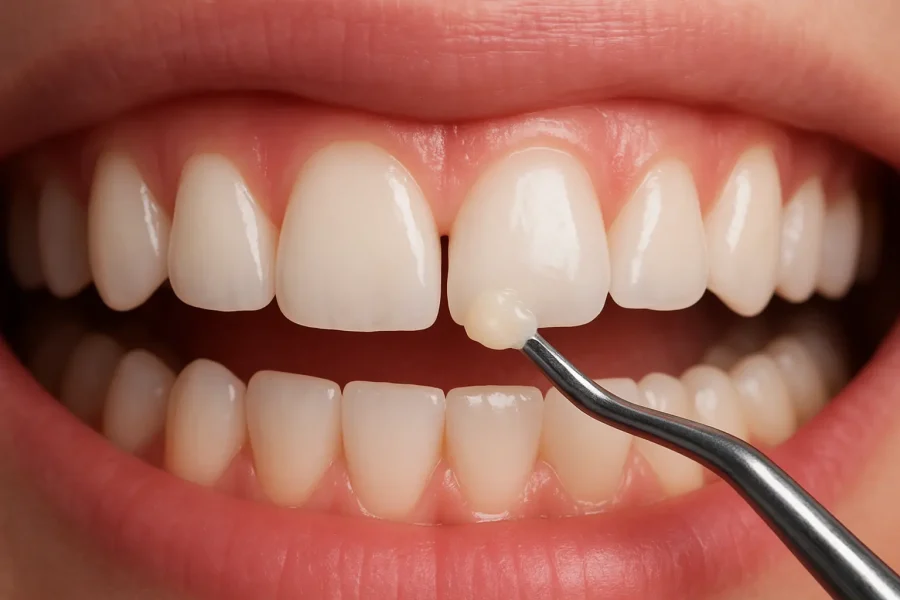
In certain cases, undergoing orthodontic treatment before veneers is an essential step to achieving a beautiful, healthy smile that lasts.
When teeth are severely crowded or rotated, or when there is a pronounced overbite, underbite, or jaw misalignment, placing veneers directly may force the dentist to remove excessive amounts of enamel or result in an uneven appearance and unstable outcome.
Here, orthodontic treatment prior to veneers plays a key role: it realigns the teeth, corrects the bite (occlusion), and optimizes space distribution, so the teeth are in an ideal position to receive veneers with minimal preparation.
This approach helps preserve as much natural tooth structure as possible, improves the stability and natural look of the veneers, and reduces the risk of fractures or recurrent decay in the future.
For this reason, the dentist carefully evaluates each case and may recommend clear aligners or traditional braces for a specific period before veneer placement, to achieve both an aesthetically pleasing result and proper function.
Cases That Require Orthodontic Treatment Before Veneers
Crowding of the front teeth
Crowding of the anterior teeth is one of the main indications for orthodontic treatment before veneers. When the front teeth are misaligned, tooth reduction and veneer placement become less stable and more prone to fracture or shifting over time.
In cases of severe crowding, the dentist may be forced to remove a large amount of enamel to create enough space for veneers, which is unhealthy in the long term.
By starting with orthodontic treatment, the front teeth can be moved back into their proper positions. Veneers can then be used to refine the color and final shape in a conservative and safe way, giving more stable and natural‑looking esthetic results.
Rotated or significantly tilted teeth
When the front teeth are rotated around their axis or noticeably inclined, this is one of the clearest situations where an orthodontic phase before veneers is preferred.
If veneers are placed directly on a rotated or markedly tilted tooth, the esthetic result may look asymmetric, and the veneer itself may protrude at an awkward angle that interferes with speech and chewing.
Orthodontic treatment realigns the teeth along a correct axis and proper angulation, allowing the cosmetic dentist to place veneers with uniform thickness and a harmonious contour that blends naturally with the rest of the teeth and the smile as a whole.
Large gaps between the teeth
Large diastemas between the front teeth are a common reason patients seek veneers, but in some cases orthodontics before veneers is essential to achieve a healthy and natural outcome.
If wide spaces are closed using veneers alone, the dentist may be forced to make the teeth disproportionately wide, which creates an unbalanced appearance and disrupts the harmony of the smile with the patient’s facial features.
Orthodontic treatment allows the teeth to be brought closer together and the gaps to be reduced to a reasonable size. Veneers can then be used to fine‑tune color and correct minor details with precision and balance.
Bite problems that affect the final outcome
Malocclusion problems such as deep bite, open bite, or significant maxillary or mandibular protrusion are key indications for orthodontic treatment before veneers.
If veneers are placed without first correcting the bite, the porcelain laminates may be subjected to excessive occlusal forces during chewing, increasing the risk of wear or fracture, while underlying temporomandibular joint issues and muscle‑related headaches persist.
The primary goal of orthodontic treatment is to establish a balanced occlusion between the upper and lower jaws. Once the bite is stable, the cosmetic dentist can design veneers that preserve the health of the teeth and gums and provide an esthetic result that is durable and comfortable over the long term.
What are the benefits of orthodontic treatment before getting veneers?
Preserving as much natural tooth structure as possible
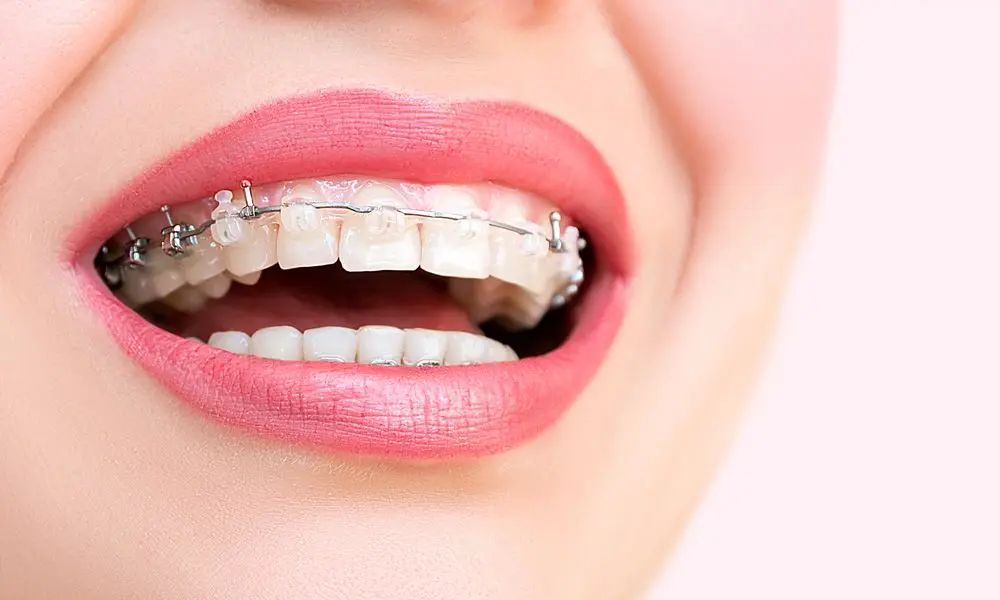
When orthodontic treatment is done before placing veneers, dental crowding and protrusion are corrected as much as possible. This significantly reduces the need to remove large amounts of enamel later on.
This stepwise approach helps preserve the greatest possible amount of natural tooth structure, which is crucial for long‑term dental health.
The closer the teeth are to an ideal position before veneer placement, the thinner and more conservative the veneers can be. As a result, the teeth remain stronger and more resistant to decay and sensitivity, while still achieving a beautiful, harmonious smile.
Minimizing the need for tooth reduction
One of the key advantages of orthodontics before veneers is the clear reduction in the amount of tooth reduction (or reshaping) needed to create adequate space for the veneers.
When teeth are properly aligned and their angulation is corrected with braces or clear aligners, the dentist may only need minimal reshaping—or in some cases, no reduction at all—instead of removing substantial layers of enamel to compensate for crowding or rotated teeth.
This minimizes the risk of tooth sensitivity and makes veneer treatment safer and more conservative, preserving the natural tooth structure while still delivering excellent aesthetic results.
Achieving more natural and harmonious results
Orthodontic treatment before veneers helps correct tooth alignment and jaw relationships, creating an ideal foundation for placing aesthetic veneers.
When teeth are correctly aligned, veneer thickness becomes more uniform, and the smile line appears smoother and better harmonized with the shape of the face and lips.
This leads to a final result that looks natural rather than artificial or excessively prominent.
Orthodontic correction also allows the dentist to design veneers with precise dimensions, without overextending their length or width to compensate for underlying positional problems, resulting in a balanced, realistic smile.
Enhancing long‑term stability of results
Orthodontics before veneers is not only about improving appearance; it also contributes to the stability and longevity of the outcome.
By first correcting the bite (occlusion) and tooth positions, excessive or unbalanced forces on the veneers are reduced, which lowers the risk of chipping, debonding, or early wear.
In addition, orthodontic treatment helps distribute chewing forces evenly across all teeth, supporting the health of the gums and underlying bone and making your post‑veneer smile more durable over time.
In this way, veneers become part of a comprehensive plan to correct and rehabilitate the smile, rather than serving as a short‑term cosmetic fix only.
What happens if veneers are placed without orthodontic treatment in unsuitable cases?
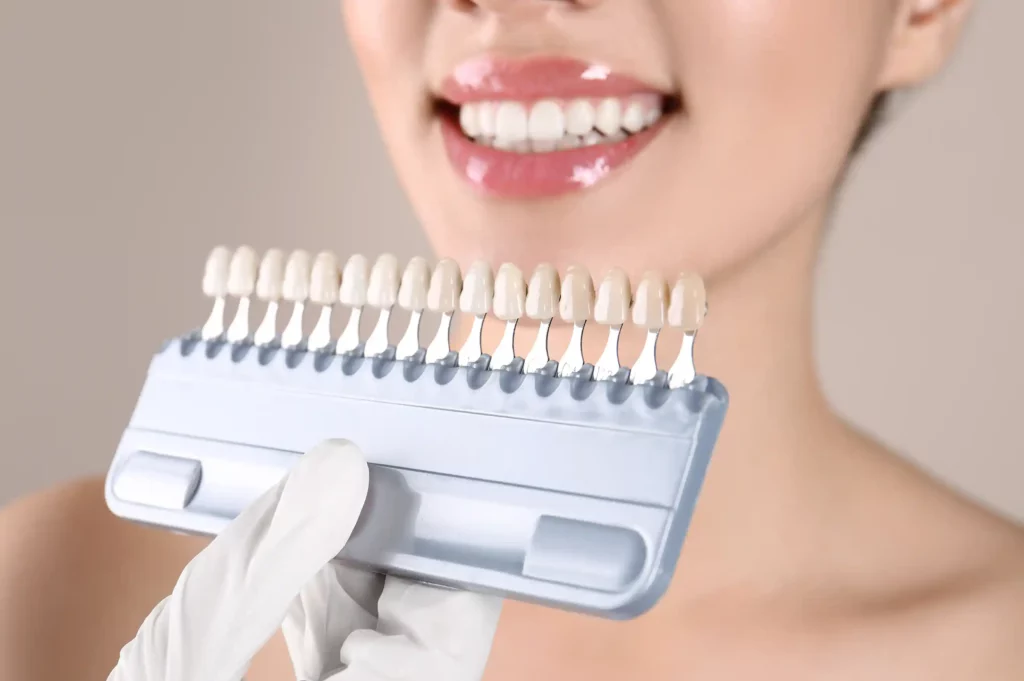
Placing veneers without prior orthodontic correction in cases that actually require braces or aligners can lead to both functional and aesthetic problems over time.
Instead of properly addressing crowding or protruding teeth, the dentist is often forced to remove more enamel than usual to fit the veneers, which compromises the tooth structure and increases sensitivity.
If malocclusion (the way the upper and lower teeth meet) is not corrected before veneer placement, this can cause chipping and wear along the veneer edges, as well as frequent fractures or debonding due to uneven bite forces.
On top of that, the underlying alignment issues remain masked rather than treated. This may result in an unharmonious smile line or uneven gum levels, particularly in cases of severe protrusion or significant tooth rotation.
In such situations, orthodontic treatment before veneers is the safer, more conservative approach: it establishes a healthy bite and properly aligned teeth first, then veneers are used to refine the color and final shape. This preserves as much natural enamel as possible and helps ensure long‑term stability of the results.
Can Clear Aligners Be Used Before Veneers?
Yes, clear aligners can be used before veneers in many cases. In fact, cosmetic dentists often prefer to start with clear orthodontic aligners to achieve proper tooth alignment before placing veneers.
Clear aligners help correct crowding, protrusion, and spacing issues, which in turn reduces the amount of tooth reduction needed when preparing teeth for veneers and preserves as much natural tooth structure as possible.
Aligning the teeth prior to veneer placement also improves the bite (occlusion) and the way chewing forces are distributed. This enhances the stability and longevity of the veneers and lowers the risk of chipping, fracture, or marginal leakage around the restorations.
The decision to use clear aligners before veneers depends on the severity of the malalignment, as well as the condition of the gums and underlying bone. Your dentist will determine the most suitable treatment plan after a comprehensive clinical examination and digital radiographic imaging.
By following this sequence, the patient can achieve a naturally harmonious smile with a cosmetic result that is both safer and more durable.
How does the dentist determine if orthodontic treatment is needed before veneers?
Before planning veneers, the dentist performs a comprehensive assessment of the teeth and the bite to decide whether the patient needs orthodontic treatment first, or if veneers alone are sufficient.
They evaluate the degree of crowding, protrusion of the teeth, the presence of wide gaps or noticeable rotations, as well as the relationship between the upper and lower jaws and how the upper teeth occlude with the lower teeth.
If the misalignment is mild, it can often be corrected cosmetically with veneers. However, in cases of severe crowding, marked protrusion, deep bite, or crossbite, the dentist will usually recommend orthodontic treatment before veneers. This helps ensure proper distribution of chewing forces and protects the veneers from fracture or debonding.
The decision also takes into account enamel thickness, gum health, smile width, and radiographic findings that show the condition of the tooth roots and jawbone. All of this allows the dentist to plan a result that is safe, long‑lasting, and delivers the best possible improvement in the smile.
Which is better: veneers directly, or orthodontic treatment followed by veneers?
In most cases, having orthodontic treatment before veneers is the healthier and more aesthetic long‑term option. Braces or clear aligners address the underlying causes—such as crowding, protrusion, or tooth overlap—while veneers provide the final cosmetic refinement.
When veneers are placed directly on misaligned teeth, the dentist may need to remove more enamel to mask the defects, which can increase the risk of tooth sensitivity and future gum problems. By straightening the teeth first, orthodontic treatment allows for a naturally aligned smile and minimizes the amount of enamel reduction needed for veneers.
With modern clear aligner systems, orthodontic treatment has become faster and more comfortable, making the combination of aligners plus veneers an integrated solution for those seeking a “Hollywood smile” that is not only beautiful, but also biologically sound rather than just a temporary cosmetic cover‑up.
Choosing between immediate veneers and orthodontics followed by veneers depends on factors such as the severity of malalignment, enamel thickness, and jaw relationship (occlusion). A joint evaluation by a cosmetic dentist and an orthodontist is always recommended to design a personalized treatment plan that achieves the best aesthetic outcome while preserving the health of the teeth and gums.
Consult Dr. Amir Al-Zahrawi to determine whether orthodontic treatment is needed before veneers
Booking a consultation with Dr. Amir Al-Zahrawi is a crucial step before deciding on dental veneers, especially if you have crowding, spacing, or protruding teeth that may require orthodontic correction first.
Through a thorough clinical examination and digital radiographs, Dr. Amir evaluates whether you need orthodontic treatment prior to veneers. This helps ensure proper bite alignment, longer-lasting veneer restorations, and a natural-looking smile that harmonizes with your facial features.
Dr. Amir will explain the pros and cons of each option—whether to proceed directly with veneers or to combine treatment with clear aligners or fixed braces beforehand—depending on the severity of the malalignment, enamel thickness, and your overall aesthetic treatment plan.
This specialized consultation not only enhances the cosmetic outcome of your “Hollywood smile,” but also reduces the risk of future tooth wear or veneer fractures, helping you achieve a smile that is both attractive and healthy.