What causes an overgrown upper jaw (maxillary protrusion) in children?
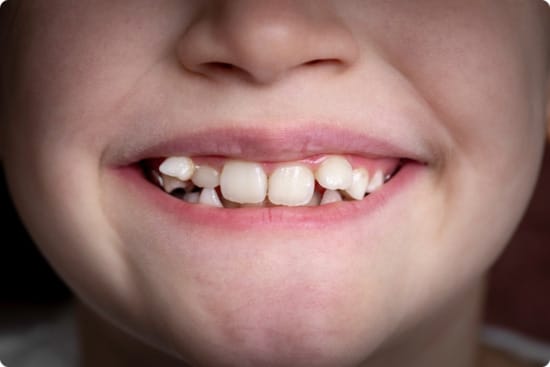
Upper jaw protrusion in children usually results from a combination of factors, most notably genetics. If one of the parents has protruding front teeth or a forward-positioned upper jaw, the child is more likely to inherit this pattern.
Harmful oral habits are also among the leading causes of maxillary protrusion, such as prolonged thumb sucking, using a pacifier beyond the age of two, or tongue thrusting during swallowing or speaking. Over time, these habits push the upper teeth forward and alter normal jaw growth.
Chronic mouth breathing, often due to adenoid hypertrophy or allergic rhinitis, can also change the position of the tongue and jaws, thereby increasing the risk of upper jaw protrusion in children.
In some cases, the problem is related to a mismatch between the size of the upper and lower jaws, or to the premature loss of primary (baby) teeth without proper space maintenance. This allows the remaining teeth to drift forward.
Recognizing the causes of upper jaw protrusion early on enables parents to seek timely evaluation by a dentist or orthodontist so that an effective treatment plan can be established.
How can an overjet (protruding upper jaw) be detected early?
An overjet in the upper jaw can often be identified early by observing a child’s or teenager’s smile and dental alignment. The upper jaw appears positioned further forward than the lower jaw, and the upper front teeth may look markedly prominent when the mouth is closed or during smiling.
Caregivers may also notice difficulty achieving normal bite closure, a visible gap between the upper and lower teeth when biting, or uneven tooth wear on certain teeth as a result of a malocclusion.
In some cases, an overjet becomes apparent through changes in the facial profile, such as a more prominent upper lip or a relatively receded chin, which can create an impression of facial imbalance.
It is advisable to visit a dentist or an orthodontist if any of these signs are noticed. Early diagnosis of an overjet makes orthodontic treatment easier and more effective, and can reduce the likelihood that surgical intervention will be needed later on.
Can an Overjet (Protruding Upper Jaw) Be Corrected Without Surgery?
In many cases, an overjet or protruding upper jaw can be treated without surgery, especially when the primary cause is related to the position of the teeth rather than the jawbone itself, or when the problem is detected early during the growth phase.
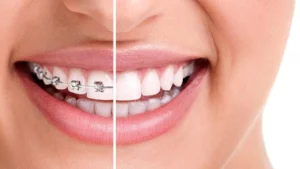
Orthodontists often use fixed or removable appliances—such as traditional braces or clear aligners like Invisalign—to realign the teeth and gradually reduce the prominence of the upper jaw.
During childhood and adolescence, functional orthodontic appliances can be particularly effective. These devices help guide jaw growth, encouraging the lower jaw to move forward and improving the relationship between the upper and lower jaws, which can lessen the appearance of an overjet without the need for surgery.
However, in severe cases, or when there is a significant skeletal deformity in the jaw in adult patients, non-surgical methods alone may not be sufficient. In such situations, the specialist evaluates the need for orthognathic (corrective jaw) surgery as part of a comprehensive treatment plan combined with orthodontic therapy.
Ultimately, whether an overjet can be treated without surgery depends on the severity of the condition, the patient’s age, and the underlying cause. This is determined by the dentist or orthodontist after a thorough clinical examination and detailed radiographic evaluation.
What Devices Are Used to Treat Upper Jaw Protrusion in Children?
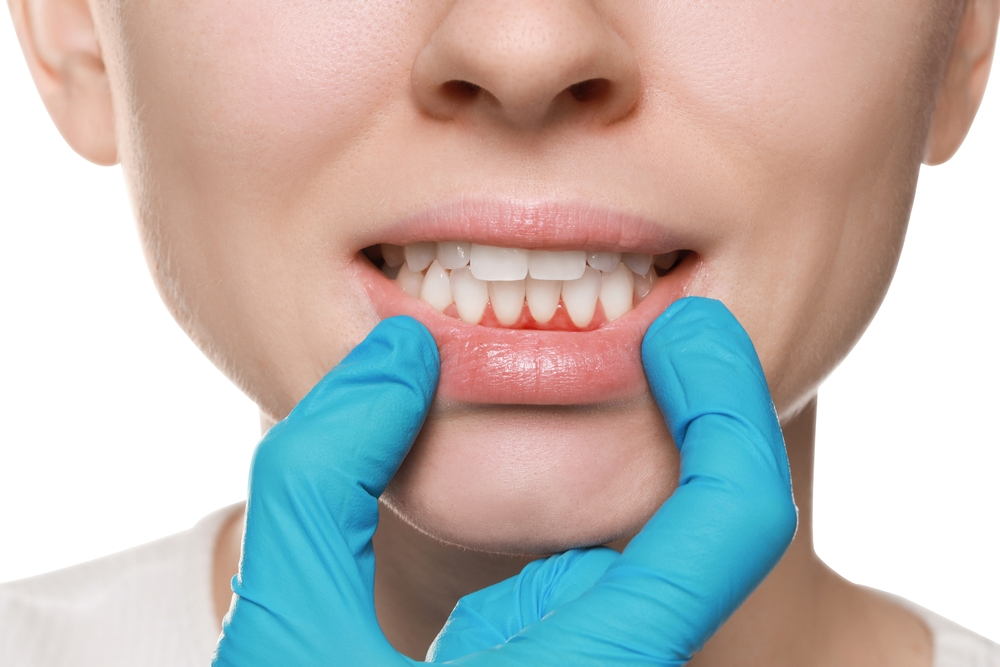
The appliances used to correct upper jaw protrusion in children vary according to the underlying cause and the child’s stage of growth. The orthodontist selects the most suitable option after a thorough clinical and radiographic assessment.
In many cases, fixed or removable orthodontic appliances are used to widen the upper jaw and guide its growth properly. These include palatal expanders that are attached to the roof of the mouth to correct maxillary constriction and improve the relationship between the upper and lower jaws.
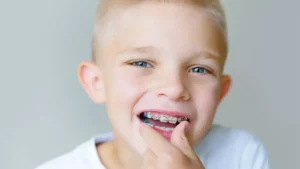
Functional appliances specifically designed for growing children are also commonly used. These devices help stimulate forward growth of the lower jaw or reposition a protrusive upper jaw, gradually reducing the degree of maxillary protrusion.
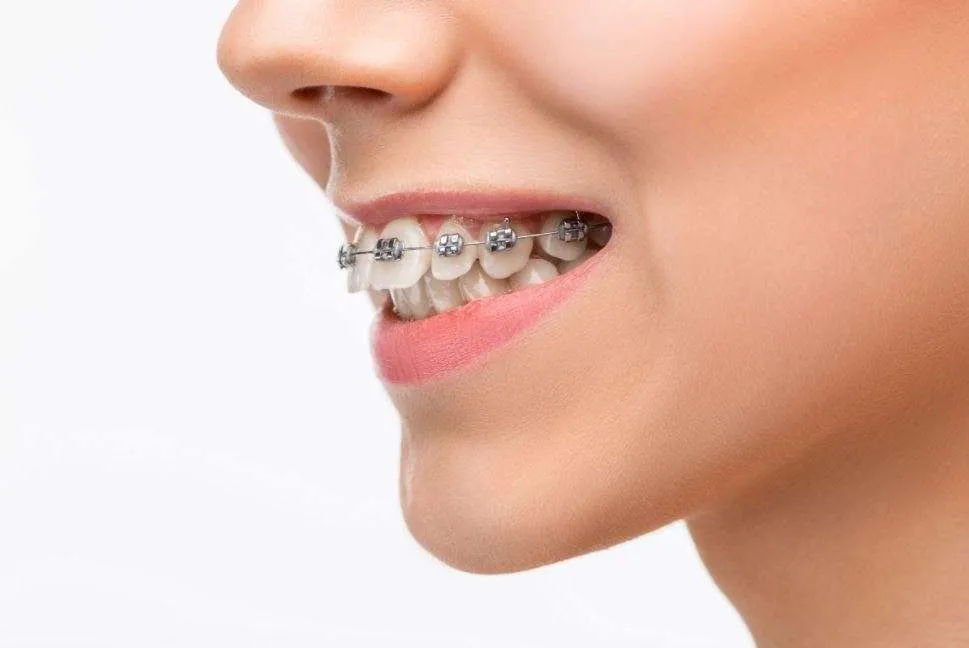
If the problem is limited to protruding front teeth rather than the jaw itself, the orthodontist may recommend fixed orthodontic treatment (brackets and archwires, either metal or clear) to retract the protrusive teeth and improve the bite.
Choosing the appropriate appliance to treat upper jaw protrusion in children depends on the child’s age, the severity of the protrusion, and oral habits such as thumb sucking or tongue thrusting. Early diagnosis and regular follow‑up are therefore crucial for successful treatment.
When Is Surgery Necessary to Treat Maxillary Protrusion (Overjet)?
Surgery becomes necessary to treat maxillary protrusion when the problem lies in the jawbone itself rather than just in the position of the teeth, or when orthodontic treatment alone fails to improve the bite, facial profile, chewing efficiency, and breathing.
In more advanced cases of maxillary protrusion, patients may experience difficulty closing their lips, repeated trauma or wear to the upper front teeth, temporomandibular joint (TMJ) pain, or noticeable changes in facial appearance that affect self-confidence. In such situations, an oral and maxillofacial surgeon will usually recommend orthognathic surgery (jaw surgery) to reposition the upper jaw so that it harmonizes with the lower jaw and the rest of the facial features.
This surgery is typically performed after facial skeletal growth is complete, and is usually combined with orthodontic treatment before and after the operation to ensure stable results and to correct the protrusion of the upper jaw in a functional and aesthetically lasting way.
What are the benefits of treating upper jaw protrusion at an early age?
Treating maxillary prognathism (upper jaw protrusion) early in life is a key step in improving long‑term oral health and dental function.
When upper jaw protrusion is detected in the early stages of a child’s growth, the orthodontist can intervene using relatively simple appliances and at a lower overall cost, before skeletal growth is complete.
Early intervention helps guide the growth of both the maxilla and mandible in a more harmonious way, which contributes to correcting the bite (occlusion) and improving chewing efficiency, speech, and breathing — particularly in children who tend to mouth‑breathe.
Early correction of upper jaw protrusion also reduces the likelihood of needing complex orthodontic treatment or orthognathic surgery later in life, and it protects protruding teeth from fractures and trauma caused by falls or accidents.
In addition, addressing upper jaw protrusion can significantly boost a child’s self‑confidence and enhance the appearance of the smile and facial profile as a whole, which positively influences social interaction and overall quality of life.
For these reasons, dentists and orthodontic specialists recommend early assessment of children as soon as any signs of upper jaw protrusion are noticed, so that an appropriate treatment plan can be implemented at the optimal time.
How long does it take to treat maxillary protrusion in children?
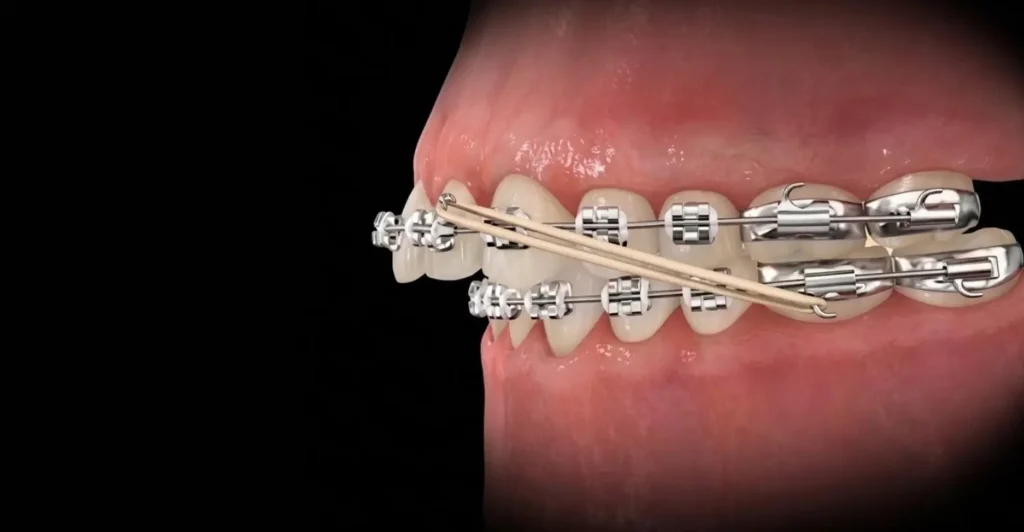
The duration of treatment for maxillary protrusion (protruding upper jaw) in children varies according to the severity of the case, the child’s age, and the orthodontic treatment plan prescribed by the specialist.
In mild cases, correcting upper jaw protrusion may take about 6–12 months using simple orthodontic appliances or functional appliances designed to guide and modify jaw growth.
In moderate to severe cases, treatment may extend from one to three years, especially when maxillary protrusion is associated with mandibular growth problems or significant dental crowding and malalignment.
Specialists emphasize that initiating treatment at an early age—typically between 7 and 12 years—helps shorten the overall treatment time and improves outcomes, since the jawbones are still developing and can be more easily guided and remodeled.
The child’s adherence to the orthodontist’s instructions—such as wearing appliances as directed and attending regular follow‑up visits—is also crucial in reducing treatment duration and achieving a harmonious smile with proper chewing function.
Book a Consultation to Assess Your Child’s Upper Jaw Protrusion with Dr. Amir Al-Zahrawi
Schedule a consultation with Dr. Amir Al‑Zahrawi to evaluate your child’s upper jaw protrusion at an early stage, as early diagnosis helps prevent more complex jaw and dental growth problems in the future.
During the visit, the doctor performs a thorough clinical examination of your child’s teeth and jaws, assessing the relationship between the upper and lower jaws, and may request X‑rays or additional diagnostic tests when needed to accurately identify the cause of the maxillary protrusion.
Based on this comprehensive assessment, the doctor designs a treatment plan tailored to your child’s age and the severity of the condition. This may include early orthodontic appliances, guidance on proper oral habits, or planning treatment for the most suitable growth period.
A specialized consultation with an expert in pediatric maxillary protrusion allows you to clearly understand your child’s condition and choose the best therapeutic option to preserve facial harmony, dental health, and your child’s self‑confidence in the future.