What Is a Maxillary Expansion Appliance?
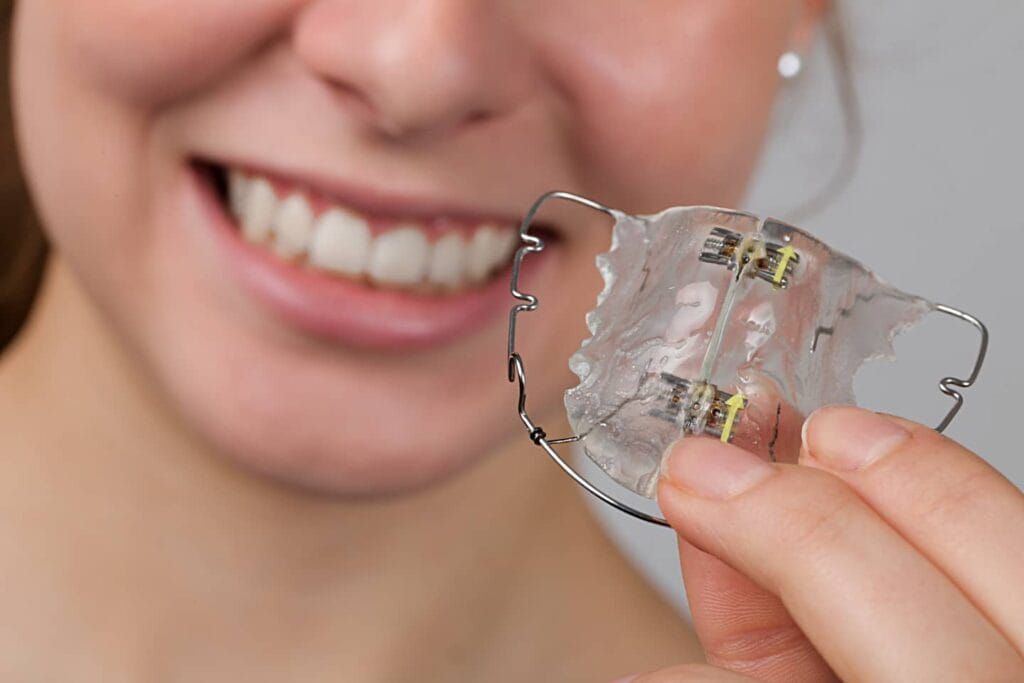
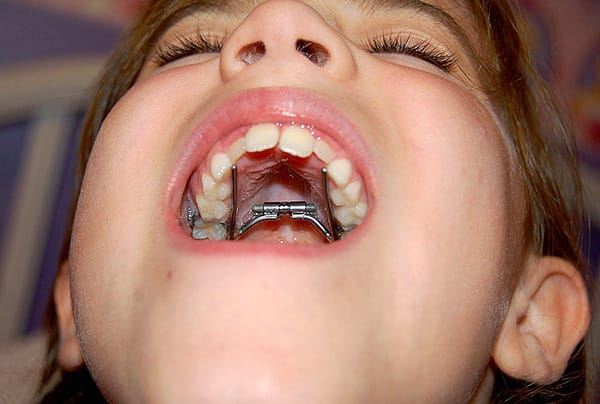
A maxillary expansion appliance is a fixed or removable orthodontic device that is usually attached to the palate to gradually widen the upper jaw (maxilla) when it is too narrow or not well aligned with the lower jaw.
It works by applying gentle, continuous pressure to the bones and cartilage of the palate, stimulating bone growth and separation of the midpalatal suture in children and adolescents. This creates additional space, improves the way the upper and lower teeth fit together (occlusion), and allows the teeth to be aligned properly.
Maxillary expanders are commonly used to manage dental crowding, correct anterior or posterior crossbite, and in some cases improve nasal airflow.
They are considered an important component of comprehensive orthodontic treatment, helping to optimize both the form and function of the upper jaw, which in turn enhances the smile’s appearance and supports long‑term oral health.
Why might a child need maxillary expansion?
Maxillary Constriction and Its Impact on Dental Development
When a child has a narrow upper jaw (maxillary constriction), both primary and permanent teeth lack sufficient space to erupt in their proper positions. This often leads to dental crowding, protruding teeth, or teeth erupting out of alignment.
A constricted maxilla can also disrupt the relationship between the upper and lower jaws, resulting in malocclusion, such as crossbite or anterior/posterior crossbite.
These issues are not only cosmetic; they can affect chewing efficiency, articulation of certain sounds, and oral hygiene, increasing the risk of dental caries and periodontal (gum) disease.
For these reasons, an orthodontist may recommend early maxillary expansion to guide the growth of the jaw and teeth, helping them develop harmoniously before all the permanent teeth erupt.
Creating Adequate Space for Permanent Teeth
One of the main reasons a child might need maxillary expansion is to ensure there is enough room for the permanent teeth to erupt straight and in proper alignment.
If the upper jaw is too small relative to the size of the teeth, permanent teeth may emerge tilted, rotated, or remain impacted within the bone due to lack of space.
Expanding the upper jaw during the growth period widens the dental arch and creates planned spaces that allow permanent teeth to align correctly, reducing the need for more complex orthodontic interventions later on.
In this way, maxillary expansion supports a healthy bite (functional occlusion), an aesthetically pleasing smile, better oral function, and long-term health of the teeth and gums.
What are the signs that indicate the need for a maxillary expander?
Early crowding of the teeth
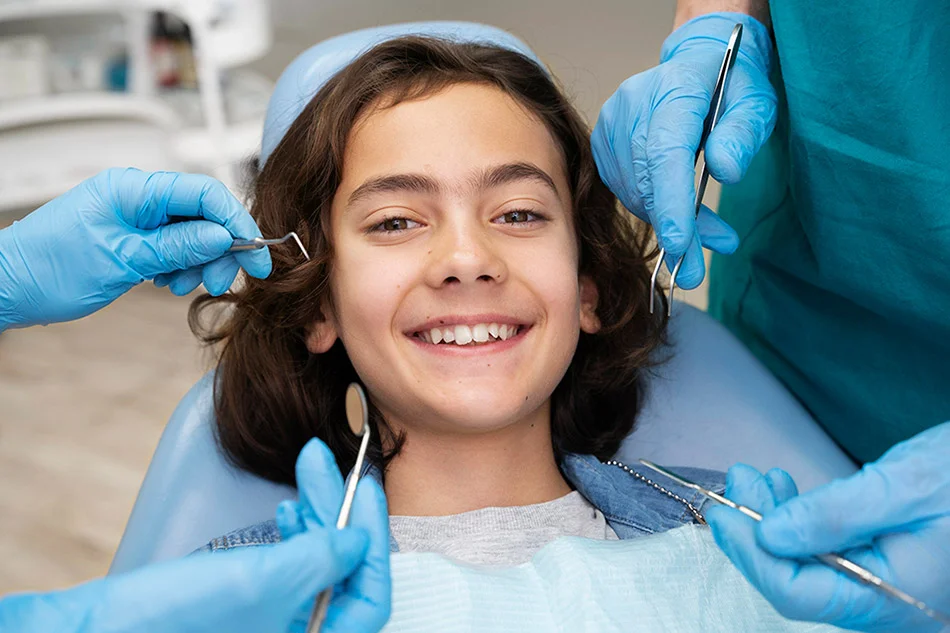
Early dental crowding in children is one of the clearest signs that a palatal expander (maxillary expansion appliance) may be needed.
When there isn’t enough space in the upper jaw for the primary or permanent teeth to erupt in a straight alignment, the teeth begin to twist, overlap, or erupt on top of each other.
In such cases, maxillary expansion helps increase the width of the upper jaw and create adequate space for proper alignment of the teeth, which later reduces the need for extractions or more complex orthodontic treatment.
Noticing tooth crowding at an early age and consulting an orthodontist is an important step to determine whether a palatal expander is the most appropriate treatment option.
Permanent teeth erupting outside their normal position
When permanent teeth erupt outside the normal dental arch—such as teeth protruding too far outward or inward, or emerging very high in the gum—this may indicate a constricted upper jaw.
Because of this constriction, the teeth cannot take their proper position and some of them are forced to erupt in abnormal locations.
Using a palatal expander at this stage helps widen the maxillary arch and guide permanent teeth into a more natural path of eruption, which improves the bite and smile aesthetics and can lessen future orthodontic complications.
Presence of a crossbite
A transverse crossbite—when the upper teeth bite inside the lower teeth instead of overlapping them from the outside—is a common sign that maxillary expansion is needed.
This problem often results from an upper jaw that is too narrow relative to the lower jaw and may lead over time to tooth wear and imbalance in the jaw muscles.
A palatal expander helps redirect jaw growth and correct the crossbite at an early age, which improves chewing function and protects the temporomandibular joint from chronic overload.
Narrow palate
A narrow hard palate, or a high, constricted “arched palate,” is a strong indicator that a palatal expander may be required.
This narrowing affects not only tooth alignment but can also reduce the space of the upper airway and influence speech patterns.
With maxillary expansion, the palate gradually widens, providing better space for the teeth and tongue and improving the harmony of the upper jaw with the rest of the oral structures.
Assessing the shape of the palate by an orthodontist helps determine the optimal timing to start expansion, particularly during the active growth phase of the bones.
Difficulty breathing through the nose in some cases
In some children, a narrow upper jaw and constricted palate are associated with difficulty breathing through the nose, leading to a persistent mouth-breathing pattern.
This type of breathing may be a sign of reduced upper airway space, and one of the contributing factors can be a small transverse width of the upper jaw.
Using a palatal expander may help improve nasal airflow in some cases, after a thorough evaluation by an orthodontist in collaboration with an ENT (ear, nose, and throat) specialist.
For this reason, nasal breathing difficulties—especially during sleep—are considered warning signs that warrant detailed assessment to determine whether maxillary expansion should be part of the overall treatment plan.
What Is the Ideal Age for Maxillary Expansion?
The optimal time to perform maxillary expansion (upper jaw expansion) is during late childhood and early adolescence, typically between the ages of 8 and 14. At this stage, the maxilla is still growing and the midpalatal suture in the roof of the mouth has not yet fully fused, which allows the upper jaw to be widened more easily, more effectively, and with less force.
During this period, the bone responds quickly to a rapid palatal expander (RPE) or other maxillary expansion appliances, which helps to:
- Correct maxillary constriction (narrow upper jaw)
- Create sufficient space for the permanent teeth
- Improve the bite (occlusion) and the width of the smile
- In some cases, enhance nasal airflow and breathing
After roughly 16–18 years of age, maxillary expansion becomes more challenging and may require surgical assistance, such as surgically assisted rapid palatal expansion (SARPE) in certain cases.
For this reason, it is advisable to visit an orthodontist early to assess maxillary growth and determine the most appropriate timing for starting expansion treatment based on each child’s or adolescent’s individual condition.
How is the need for maxillary expansion diagnosed?
Assessing whether a patient needs maxillary expansion starts with a thorough clinical examination by a dentist or orthodontist. During this exam, the clinician evaluates facial symmetry, tooth alignment, and the way the upper and lower teeth come together (occlusion), while checking for a narrow upper jaw, dental crowding, or the presence of a posterior crossbite.
The next step usually involves imaging studies such as cephalometric radiographs and panoramic X‑rays, and in some cases cone-beam computed tomography (CBCT). These images help accurately assess the transverse width of the maxilla and its relationship to the cranial base and the mandible.
Impressions or digital scans of the upper arch are also taken to create a three-dimensional model. This model shows the degree of maxillary constriction and the space available for tooth movement during orthodontic treatment.
The clinician will also ask about accompanying symptoms such as difficulty chewing, mouth breathing, snoring, and temporomandibular joint (TMJ) disorders, as these can indicate that maxillary constriction is affecting function and airway patency.
By integrating all this information, the orthodontist can establish an accurate diagnosis and determine whether the patient requires maxillary expansion alone or a combined orthodontic–surgical approach, as well as select the optimal timing for treatment based on the patient’s age and craniofacial growth.
What are the benefits of a palatal expander for children?
A palatal expander is one of the most important preventive orthodontic appliances used to correct a narrow upper jaw early, before the problem becomes more complex.
It gradually widens the upper jaw (maxilla), creating enough space for the permanent teeth to erupt in better alignment, and reducing the likelihood of needing tooth extractions or complex orthodontic treatment later on.
It also helps improve how the upper and lower teeth fit together (the bite), which can reduce chewing difficulties, dental crowding, and uneven tooth wear over time.
An additional key benefit is improving the airway in some children whose narrow upper jaw is associated with a constricted nasal passage. This can have a positive impact on breathing and sleep quality, especially at night.
Moreover, a palatal expander supports harmonious facial growth by guiding the development of the upper jaw bones, which can enhance facial balance, improve the smile, and boost a child’s self‑confidence in the long term.
All these advantages make early treatment with a palatal expander an important option that many orthodontists recommend during childhood.
Is a Rapid Palatal Expander (RPE) painful?
Discomfort from a rapid palatal expander is usually mild, short‑lived, and far less intense than many people expect.
In the first few days after the appliance is fitted, patients may feel pressure or a tightening sensation in the upper jaw, teeth, and sometimes around the nose. This feeling is caused by the gentle force the expander applies to gradually separate the midpalatal suture and widen the upper jaw.
This discomfort typically settles within minutes to a few hours after turning the expander screw, and the body adapts to the new position over the course of a few days.
The orthodontist can recommend simple analgesics when needed and will show the patient or parents how to activate the key correctly and how often to turn it, in order to minimize any pain or sensitivity.
If the pain becomes severe, persists, or is accompanied by swelling, or difficulty chewing or speaking, the orthodontist should be contacted immediately to check that the appliance is in the correct position and adjust it if necessary.
With proper adjustment and follow‑up, treatment with a rapid palatal expander is generally well tolerated and can achieve the desired orthodontic results with minimal discomfort.
How long does treatment with a maxillary expansion appliance take?
Treatment with a maxillary expansion appliance (upper jaw expansion) typically requires about 3 to 6 months for the active expansion phase, followed by an additional 3 to 6 months of retention to allow the upper jaw to stabilize in its new position.
The exact duration depends on the patient’s age. Children and adolescents usually respond more quickly because the bones of the maxilla are more malleable, whereas adults often need a longer treatment period and may require surgically assisted maxillary expansion in combination with the appliance.
In most cases, the orthodontist activates the maxillary expander gradually over the first few weeks, then leaves it in place as a passive retainer to support the formation and stabilization of new bone.
Regular follow‑up visits are essential throughout maxillary expansion therapy to monitor progress, ensure that the expansion is occurring safely and correctly, and adjust the treatment plan when necessary.
Active Expansion Phase
The active maxillary expansion phase usually lasts about 2 to 4 weeks. During this period, the palatal expander is activated daily or according to the orthodontist’s instructions.
Throughout this time, the midpalatal suture begins to respond to the gradual orthopedic forces, which leads to an increase in the transverse width of the maxilla and improves the space available for proper tooth alignment.
The duration of this phase within a maxillary expansion treatment plan may be slightly shorter or longer depending on the patient’s age, the severity of maxillary constriction, and the type of expansion appliance being used.
Strict adherence to the orthodontist’s instructions during these weeks is crucial, as this is the key period in which the desired amount of maxillary expansion is achieved within the overall treatment timeframe.
Retention and Stabilization Phase
Once active expansion is completed, the retention phase begins. This is typically the longest part of maxillary expansion therapy and often lasts around 3 to 6 months.
In this stage, the palatal expander is left in place without further activations, allowing the bone and surrounding tissues sufficient time to heal, remodel, and adapt to the new maxillary width.
Neglecting the retention phase or shortening its duration may result in partial relapse of the maxilla toward its original position. For this reason, clinicians consider compliance with this phase to be a major determinant of long‑term treatment success.
During this period, the retention phase is often combined with the initiation of conventional orthodontic treatment (braces or aligners), taking advantage of the now‑stabilized maxillary expansion to achieve better dental alignment.
Factors Affecting Treatment Duration
The length of maxillary expansion treatment varies between individuals, and several key factors influence how long therapy will take.
Age is one of the most important factors: children and adolescents generally respond more quickly because their maxillary sutures and bones are more adaptable, whereas adults usually require a longer treatment time and may need adjunctive or surgically assisted approaches.
The degree of maxillary constriction and the type of malocclusion also play a critical role. The more severe the transverse deficiency, the longer both the expansion and retention phases needed to achieve a stable result.
In addition, the type of maxillary expansion appliance used—such as a conventional rapid palatal expander, slow expansion device, or surgically assisted expander—affects overall treatment time, as does the patient’s compliance with instructions and regular follow‑up visits.
Taken together, these factors explain why some patients complete maxillary expansion in just a few months, while for others it becomes part of a longer, comprehensive orthodontic treatment plan.
What happens if a narrow upper jaw is not treated early?
Failing to treat maxillary constriction (narrow upper jaw) at the right time can trigger a chain of progressive problems that affect oral health, facial structures, and overall wellbeing.
As a person grows, dental crowding tends to worsen and teeth become harder to clean effectively. This increases the risk of dental caries, gingivitis, periodontitis, and ultimately tooth loss in advanced stages.
A narrow upper jaw also leads to malocclusion and an imbalanced bite, which can cause chronic temporomandibular joint (TMJ) pain, recurrent headaches, and difficulty with chewing and clear speech.
In many cases, maxillary constriction is associated with breathing problems, such as mouth breathing, snoring, and sleep-disordered breathing, particularly in children. These issues may negatively impact general growth, concentration, and school performance.
Over time, facial esthetic changes may develop, including a constricted smile and a relatively prominent lower jaw. These skeletal and dental discrepancies become harder to correct later in life and may require more complex and costly orthodontic and/or orthognathic surgical treatments.
Early intervention to expand the upper jaw and align the teeth is therefore essential to prevent these complications and to establish a healthy, stable occlusion and optimal oral function in the long term.
Book a Consultation with Dr. Amir Al-Zahrawi to Evaluate the Need for a Maxillary Expansion Appliance
Schedule a consultation with Dr. Amir Al-Zahrawi to assess whether you need a maxillary expansion appliance and to determine if this treatment is the most suitable option for your case.
During the visit, the doctor will examine your upper jaw and teeth, analyze your bite, and review symptoms such as a narrow upper jaw, dental crowding, difficulty chewing, or mouth breathing.
Dr. Amir relies on 3D radiographic imaging and a precise evaluation of the maxillary bone to determine the degree of maxillary constriction and whether you would benefit more from a maxillary expansion device or from alternative treatment options.
This consultation will help you understand the proposed treatment plan, the expected duration of appliance use, and the potential impact on your smile aesthetics and temporomandibular joint (TMJ) health.
If you suffer from crowded teeth or bite problems, booking a specialized consultation is the first step to finding out whether a maxillary expansion appliance is right for you and to improving the long-term health and function of your upper jaw.