Table of Contents
What is lingual orthodontics and how does it work?
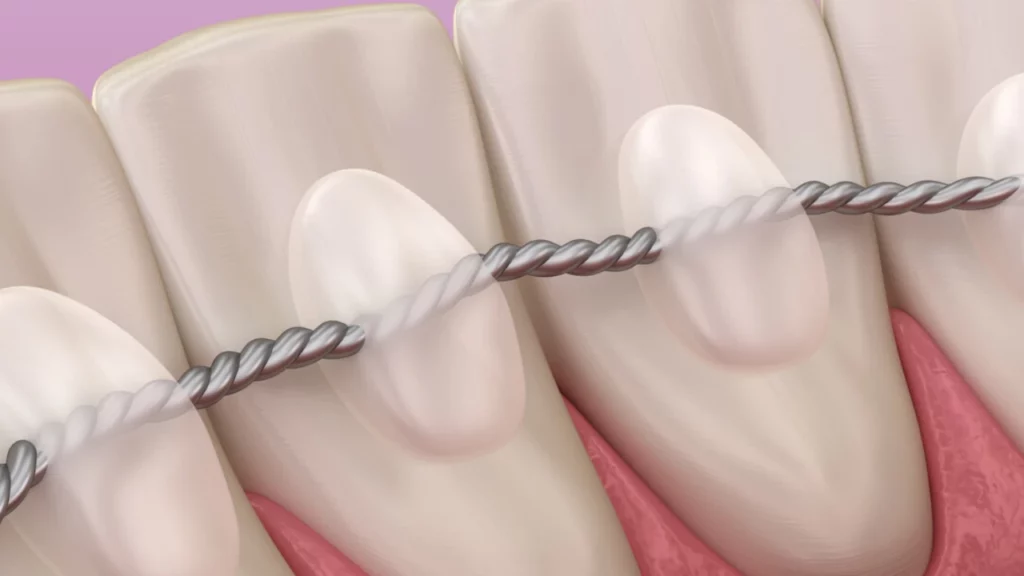
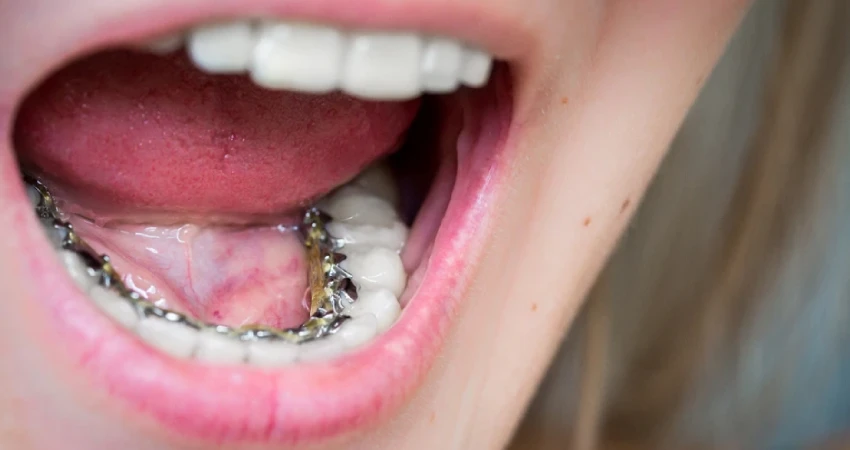
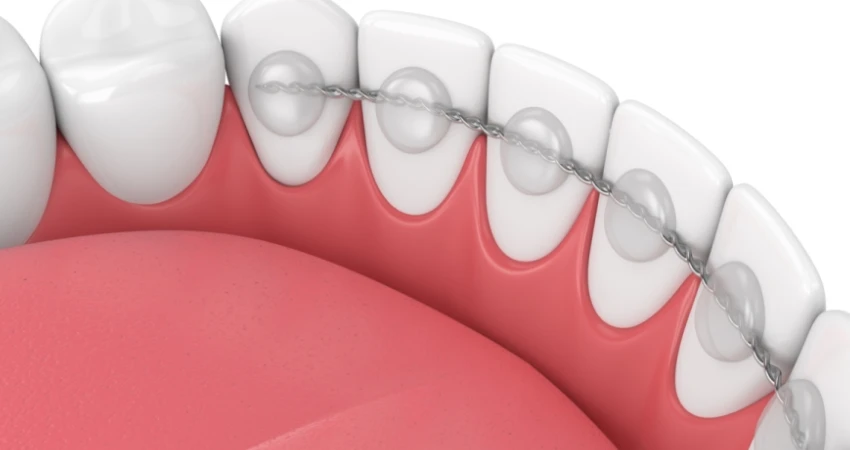
Lingual braces are a type of fixed orthodontic appliance in which the brackets and archwires are bonded to the inner (lingual) surfaces of the teeth, facing the tongue, instead of the outer (labial) surfaces. This positioning makes them virtually invisible when speaking or smiling.
Lingual orthodontics relies on the same biomechanical principles as conventional braces: teeth are gradually moved within the jawbone into their correct positions through gentle, controlled forces exerted by the archwire attached to the lingual brackets.
The process begins with the orthodontist taking impressions or a digital scan of the teeth. Custom-made lingual brackets are then fabricated to fit precisely on the inner surface of each tooth and are bonded using a special dental adhesive.
Subsequently, archwires are placed and periodically adjusted during follow-up visits to progressively align the teeth, close spaces, resolve crowding, and correct malocclusions (bite problems) in a gradual and safe manner.
Lingual braces are particularly suitable for patients who want a highly discreet orthodontic option for aesthetic or professional reasons, while still achieving treatment outcomes comparable to those of conventional labial braces.
What Is Conventional (External) Braces?
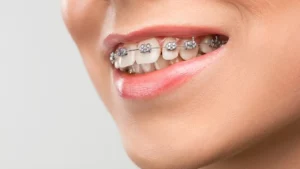
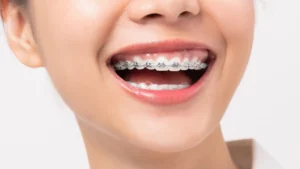
Conventional braces – often called external braces – are the traditional and most widely used type of orthodontic treatment. In this system, metal or ceramic brackets are bonded to the visible outer surface of the teeth and connected with special orthodontic wires to gradually correct the alignment of the teeth and jaws.
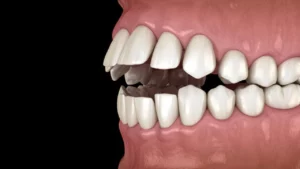
External braces are used to treat dental crowding, protruding jaws, gaps between teeth, and malocclusion (such as overbite, underbite, and crossbite). They are considered the first-line option in most orthodontic cases for both children and adults because of their high effectiveness and the ease of monitoring progress by the orthodontist.
One of the advantages of this system is the possibility of using tooth‑colored or ceramic brackets to make the braces less noticeable. It also allows the orthodontist direct access for regular adjustments, which often makes it faster in achieving results compared with some other systems, such as lingual braces (placed on the inner surface of the teeth) or clear aligners, in many clinical situations.
Understanding what conventional (external) braces are is a key step before comparing them with lingual braces and deciding, together with your orthodontist, which type of treatment is most suitable for your specific case.
Advantages and Disadvantages of Each Type of Orthodontic Braces
When comparing lingual braces (placed on the inner surface of the teeth) with conventional labial braces (placed on the outer surface), each option has specific advantages and limitations that should be understood before choosing what best suits your case.
Lingual braces are an excellent aesthetic option, as they are completely concealed and do not show when you smile or speak. This makes them particularly suitable for adults who place a high value on appearance in professional settings or social events.
They are also effective in correcting dental crowding, spacing, and malocclusion problems. However, they are usually more expensive than conventional braces, require an orthodontist with specialized training and experience, and may initially cause slight speech difficulties and tongue irritation until the patient adapts to them.
On the other hand, conventional braces—whether metal or ceramic—are the most widely used and readily available. They are generally less expensive and highly effective in treating most types of malocclusion and dental crowding, and they are relatively easier to monitor and clean during treatment.
Their main drawback is that they are clearly visible on the teeth, which can be a source of embarrassment for some patients, particularly adults. They may also cause mild irritation of the lips and cheeks at the beginning of treatment.
Ultimately, the choice between lingual and conventional braces depends on your priorities regarding aesthetics, cost, the complexity of your case, and expected treatment duration, and should be made in consultation with a qualified orthodontic specialist.
Difference in Appearance and Visibility
The distinction between lingual braces and conventional (labial) braces is most evident in how they look in the mouth and how visible they are, which is a key factor for patients who prioritize aesthetics during treatment.
Conventional braces are applied to the outer (labial) surface of the teeth, so they are clearly visible when speaking or smiling. Even with more aesthetic options such as clear braces or ceramic brackets, which reduce how noticeable the appliance is, they do not make it completely invisible.
Lingual braces, on the other hand, are fixed to the inner (lingual) surface of the teeth facing the tongue. This makes them almost invisible to others, and they are often preferred by individuals seeking a “hidden” orthodontic appliance or something “invisible in appearance,” so that their smile looks unchanged in photos or professional settings.
Although lingual braces offer a significant advantage in terms of discretion, conventional braces remain more widely used and commonly prescribed. They are easier to assess and adjust during follow‑up visits, which contributes to their continued popularity despite their more visible impact on appearance.
Difference in Cost and Treatment Duration
Cost and treatment duration are among the most important factors when comparing lingual braces (internal) with conventional braces (external). In most cases, conventional braces—whether metal or clear brackets fixed to the outer surface of the teeth—are the more affordable option, as they are easier to place and adjust, and are technically less complex for the orthodontist.
By contrast, lingual braces, which are fixed to the inner (tongue-side) surfaces of the teeth, are usually significantly more expensive. They are custom-made for each patient to fit the internal surfaces of the teeth and require a higher level of expertise, as well as more time for planning, placement, and follow-up adjustments.
In terms of overall treatment time, the duration with both lingual and conventional braces is often similar, typically averaging between 18 and 24 months. However, in some cases, lingual treatment may take slightly longer because it is more challenging to control very fine tooth movements and the orthodontist’s field of vision is more limited.
Patients with lingual braces may also need more frequent follow‑up visits to closely monitor tooth movement and make precise adjustments to the archwires and brackets, which can further increase the total cost of treatment over time.
Therefore, when comparing internal and external braces in terms of cost and treatment duration, it is essential to consult a certified orthodontist. They can assess your dental condition and the complexity of your case, then provide an accurate estimate of the expected treatment timeline and overall cost.
Who is a candidate for lingual braces, and who is better suited for traditional braces?
Lingual (internal) braces are generally suitable for adults and older teens who want an orthodontic option that is almost invisible. They are particularly favored by individuals who are frequently on camera, work in client‑facing or professional settings, or are highly concerned about dental aesthetics—provided that their dental and jaw condition (from moderate to complex cases) can be effectively managed with this type of appliance.
Lingual braces are also a good option for people who feel self‑conscious about the appearance of external wires and brackets, or whose lifestyle requires a consistently professional look. However, they must be placed and monitored by an experienced orthodontist, and they are usually more expensive than conventional braces.
Conventional (external) braces, on the other hand, are suitable for children, adolescents, and adults who do not mind having visible brackets on their teeth. They remain the most common and, in many cases, the most effective option for correcting various types of malocclusion, including dental crowding and jaw protrusion, with lower cost and, often, greater control over tooth movement.
The choice between lingual and traditional braces should be made after a thorough orthodontic assessment that takes into account jaw anatomy, the severity of crowding or misalignment, speech characteristics, and budget in order to achieve the best possible functional and aesthetic outcome.
Orthodontist tips for choosing what works best for you
When comparing lingual braces (placed on the inside surface of the teeth) with traditional labial braces (placed on the front of the teeth), dentists emphasize that the decision isn’t just about appearance. It should be based on an accurate assessment of the teeth, the bite, and the patient’s daily needs.
The orthodontist starts with a detailed clinical examination of the teeth and jaws, along with radiographic imaging, to determine the severity of malalignment and the exact nature of the problem (crowding, spacing, protrusion, or occlusal/bite disorders). The doctor then explains the available options—lingual braces versus labial braces—clarifying the advantages and limitations of each type, and how suitable they are in terms of the patient’s age, type of work, and how important appearance is to them.
In many complex cases, or when maximum control over tooth movement is required, conventional labial braces are often recommended. Lingual braces, on the other hand, may be a good option for adults who place a high value on aesthetics and prefer an almost invisible treatment.
The orthodontist will also factor in the cost difference between lingual and labial braces, the expected treatment duration, and how compliant the patient is likely to be with oral hygiene and care instructions, since lingual appliances generally require more meticulous cleaning.
Ultimately, the best decision is the one reached in consultation with a qualified orthodontist, after fully understanding the differences between lingual and labial braces and choosing a treatment plan that achieves the best functional and aesthetic result with minimal complications, while fitting smoothly into the patient’s lifestyle.
Why Choose Dr. Amir Zahrawi’s Expertise to Find the Most Suitable Orthodontic Treatment for You?
Relying on Dr. Amir Zahrawi’s expertise in orthodontics gives you the opportunity to receive an accurate assessment of your case and to select the most appropriate type of braces for your needs—whether lingual braces (placed on the inner surface of the teeth) or conventional labial braces—based on the latest scientific standards.
Drawing on his specialized experience in the differences between internal (lingual) and external (labial) orthodontic systems, Dr. Amir carefully evaluates your jaw alignment, the degree of dental crowding, your smile line, as well as the nature of your work and lifestyle before recommending a treatment plan.
This means you are not only working toward a harmonious smile, but also toward an orthodontic solution that is comfortable, effective, and closely aligned with your expectations in terms of appearance, treatment duration, and ease of oral hygiene.
Dr. Amir Zahrawi is also committed to clearly explaining the advantages and limitations of each orthodontic option, providing recommendations grounded in robust clinical evidence. This transparency enables you to make an informed and confident choice between discreet lingual braces and highly effective external braces that are generally more affordable.
With this scientific and practical approach, your journey to selecting the right orthodontic treatment becomes a safe and comfortable therapeutic experience—built on trust, expertise, and meticulous planning—to achieve long‑lasting aesthetic and functional results.