
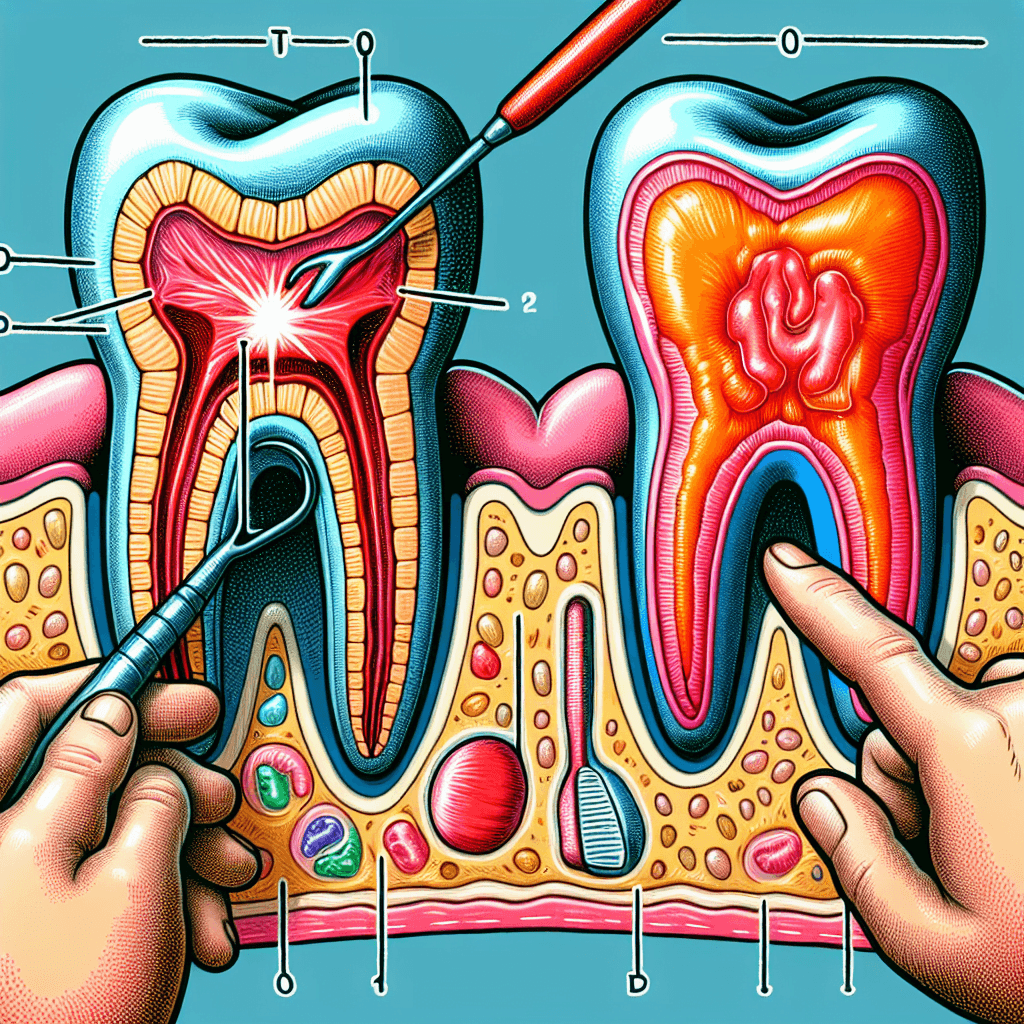
To understand the difference between a gum abscess and a tooth abscess, it helps to first know what a gum abscess is. A gum abscess, also known as a periodontal abscess, is an infection that develops in the gums. It’s usually caused by a buildup of bacteria in periodontal pockets, which are the spaces between the gums and the teeth. This infection can lead to swelling, pain, and general discomfort.There are two main types of abscesses related to the gums and supporting tissues: a gingival abscess and a periodontal abscess.
Table of Contents
What Is a Tooth Abscess?
To understand the difference between a gum abscess and a tooth abscess, you also need to know what a tooth abscess is. A tooth abscess is an infection that results from tooth decay, gum disease, or a crack in the tooth. These problems allow bacteria to enter vulnerable areas inside the tooth, which can lead to the death of the dental pulp (the nerve and blood supply inside the tooth).When pus collects at the tip of the tooth root in the jawbone, it forms a pocket called an abscess. The infection can then spread to the surrounding tissues, causing severe pain and swelling.
Symptoms of a Gum Abscess
Common symptoms of a gum abscess include:
Symptoms of a Tooth Abscess
Common symptoms of a tooth abscess include:
What’s the Difference Between a Gum Abscess and a Tooth Abscess?
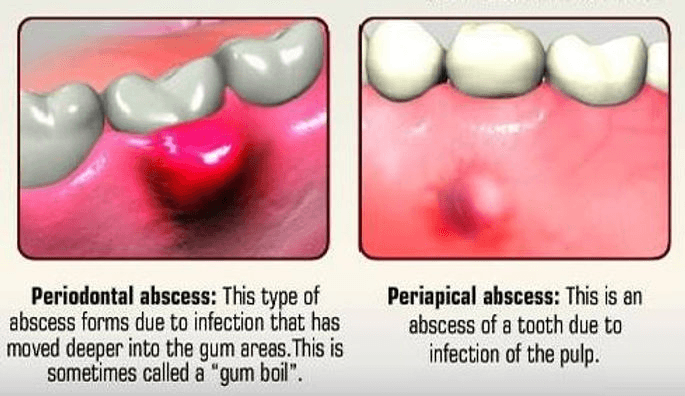
The main differences between a gum abscess and a tooth abscess are:
1. Location:
2. Cause:
3. Symptoms:
4. Complications:
How Is a Gum Abscess Treated?
Treating a gum abscess usually involves draining the abscess and removing the source of the infection. This may include scaling and root planing, which is a deep-cleaning procedure to remove plaque and tartar (calculus). In more severe cases, surgery may be needed to remove diseased tissue. Key treatment steps for a gum abscess include:1. **Draining the abscess:** The dentist or periodontist makes a small incision to allow the pus to drain, which helps relieve pain and pressure.2. **Antibiotics:** Antibiotic medication may be prescribed to control bacterial infection, especially if the infection has spread or if there are signs of systemic involvement such as fever.3. **Warm saltwater rinses:** Rinsing with warm saltwater can help reduce bacteria, soothe the area, and support healing.4. **Professional cleaning:** Deep cleaning procedures like scaling and root planing are performed to remove plaque and tartar from above and below the gumline and to clean the periodontal pockets.5. **Treating underlying causes:** This may include addressing periodontal disease, correcting faulty dental work that traps plaque, and improving daily oral hygiene habits to prevent recurrence.
How Is a Tooth Abscess Treated?
Treating a tooth abscess typically requires draining the pus and eliminating the source of the infection. This is usually done through root canal therapy or by extracting the tooth. Antibiotics are often prescribed to clear the infection and help prevent it from spreading to other parts of the body.1. **Root canal treatment:** The dentist or endodontist removes the infected pulp from inside the tooth, cleans and disinfects the root canals, then fills and seals them. The tooth is usually restored with a crown to protect it and restore function.2. **Tooth extraction:** If the tooth is too damaged to be saved, it may need to be removed. After extraction, the abscess is drained and the area is cleaned. Replacement options such as a dental implant, bridge, or partial denture may be discussed later.3. **Antibiotics:** Antibiotics may be prescribed if the infection is spreading, if there is facial swelling, fever, or if the patient has a weakened immune system.4. **Pain management:** Over-the-counter or prescription pain relievers may be recommended to manage discomfort until definitive treatment is completed and the infection resolves.5. **Follow-up care:** Follow-up visits are important to monitor healing, ensure the infection is fully resolved, and complete any necessary restorative work, such as placing a crown after a root canal.Knowing the difference between a gum abscess and a tooth abscess can help you recognize symptoms early and seek appropriate treatment. Both conditions require professional dental care to prevent further complications and to maintain good oral health. By practicing good oral hygiene and addressing dental issues promptly, you can reduce your risk of abscesses and other dental problems. Prevention is always better than treatment when it comes to your oral health.
Treatment of Gum and Tooth Abscesses in Jeddah

Dr. Abeer offers treatment for gum abscesses and tooth abscesses in Jeddah. She understands that these conditions can be painful and uncomfortable, so she provides prompt care to relieve symptoms and prevent further problems.Dr. Abeer uses effective methods to treat abscesses and focuses on addressing the underlying causes to support long-term oral health. Her goal is to help patients feel better and maintain a healthy mouth. If you are experiencing pain or swelling, contact Dr. Abeer to schedule a consultation today.