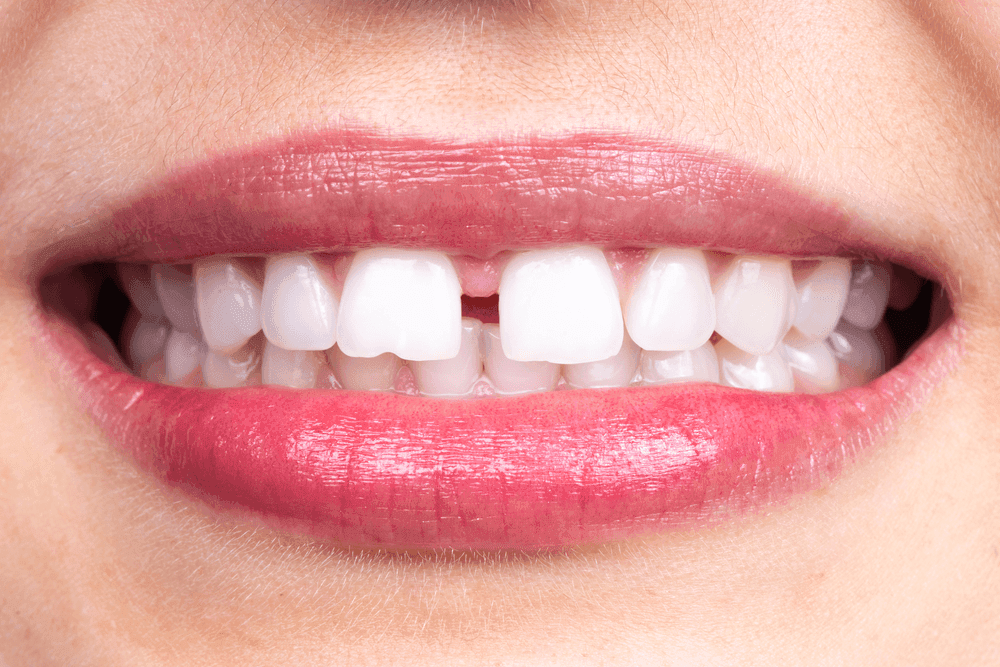
A gap between the teeth, known as diastema, can be a cosmetic concern. While it is considered a sign of beauty in some cultures, many people feel self‑conscious about it and seek different treatment options to close the space.Treatment for gaps between teeth depends on the underlying cause. In some cases, the causes can be prevented, but not always. Having a diastema before the age of 10 is common in children; however, if the gap remains after the permanent teeth come in, you may need professional dental treatment to correct it.
Table of Contents
What Is Diastema?
A gap between the teeth, or diastema, is a space that forms between two teeth, most often the upper front teeth. For some, it’s a cosmetic feature they like; for others, it’s something that affects their confidence.The way diastema is treated depends mainly on why the gap developed in the first place. Certain causes can be addressed early or even prevented, but not all of them. A diastema is very common in children under 10, and it often closes on its own as permanent teeth erupt. If it persists once the permanent teeth are fully in place, professional dental care is usually recommended.
What Causes Diastema?
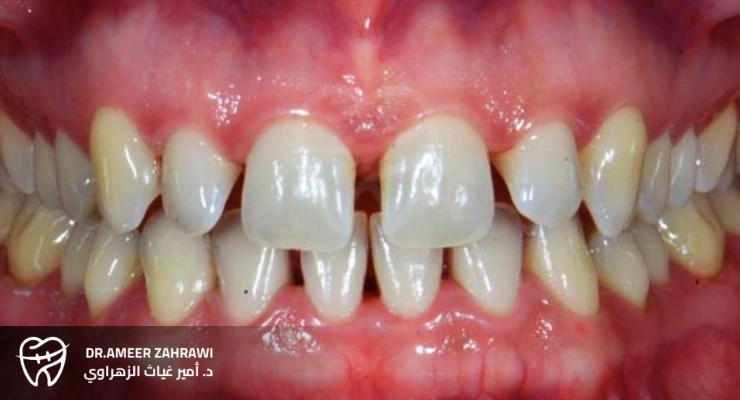
While diastema can sometimes develop due to certain habits, it can also be genetic and unavoidable. You may have a gap between your teeth for one or more of the following reasons:
Mismatch Between Tooth Size and Jaw Size
One common reason some people have spaces between their teeth is a size mismatch between the teeth and the jaw. The jaw may be relatively large compared with the size of the teeth, or the teeth may be smaller than average relative to the jaw. Because this is largely determined by your genes, you may be predisposed to having gaps.
Abnormally Shaped or Malpositioned Teeth
Diastema can develop if you have malocclusion (a bad bite) or if your teeth erupt in an abnormal position or angle. When teeth are crowded, rotated, or not aligned properly, the forces of chewing are not distributed evenly, which can cause some teeth to drift apart and create gaps.
Enlarged Labial Frenum
The labial frenum is the band of soft tissue that connects the inside of the upper lip to the gums above the front teeth. When this frenum is oversized or extends too far down, it can insert between the front teeth and physically push them apart, leading to a visible gap.
Gum Disease
Periodontal disease (gum disease) is another cause of diastema. One of the signs of advanced gum disease is teeth that become loose or start to shift. This happens because the supporting bone that holds the teeth in place gradually breaks down. As the bone and supporting tissues are lost, teeth can move and gaps may form.
Thumb Sucking
Studies have found that diastema is more common in females than males, and two major contributing factors are thumb sucking and congenitally missing lateral incisors. When a child sucks their thumb, the thumb presses against the back of the upper front teeth. Over time, this can push those teeth forward, causing them to flare out and creating a gap between them.
How Is Diastema Treated?
Depending on the underlying cause of the diastema, your dentist may recommend one or more of the following treatment options:
Braces and Clear Aligners
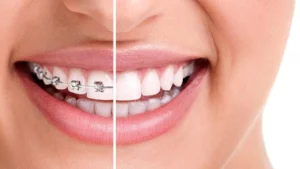
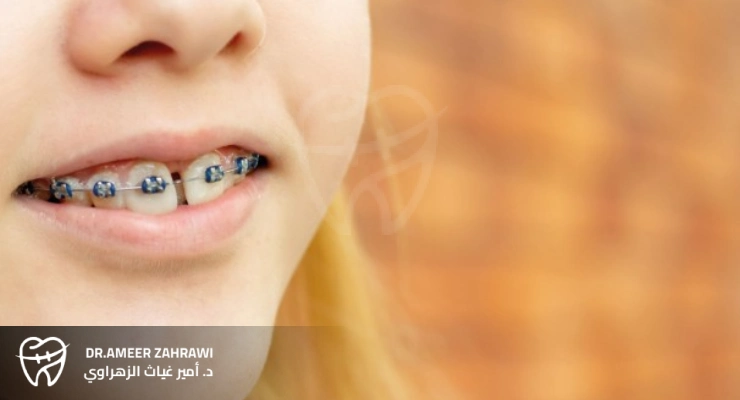
Traditional orthodontic treatment uses metal brackets bonded to the teeth and connected by an archwire. Together, the brackets and wire apply continuous, gentle pressure over time to move the teeth into better alignment and improve the bite. This is a highly effective way to close gaps between teeth.Clear aligners (such as Invisalign and similar systems) can also be used to gradually shift teeth and close spaces. They are often chosen by adults who prefer a more discreet alternative to metal braces.
Dental Bonding
With dental bonding, your dentist uses tooth‑colored composite resin to fill in the gap between teeth. The material is carefully shaped and contoured so it blends naturally with the surrounding teeth. Once the shape is finalized, it is hardened with a special curing light. The results are immediate, and bonding is a good option for closing small to moderate gaps.
Dental Veneers
Veneers are thin shells, usually made of porcelain or high‑quality ceramic, that cover only the front surface of the teeth. After taking impressions, the dentist designs custom veneers to match your smile. In most cases, a small amount of enamel must be removed from the front of the tooth so that the veneer sits flush and does not make the tooth look too thick or bulky. Veneers are more durable and stain‑resistant than composite bonding and can effectively mask gaps, discolorations, and minor shape issues.
Crowns or Bridges
If the gap is due to one or more missing teeth, dental crowns or bridges may be a better solution. A crown is a full‑coverage cap that covers the entire visible portion of a tooth. To replace a missing tooth with a single crown, a dental implant is typically placed first, and the crown is then attached to the implant.If two or three adjacent teeth are missing, your dentist may recommend a dental bridge. A bridge consists of artificial teeth (pontics) anchored to crowns on the neighboring natural teeth or on implants, filling in the space and restoring function and appearance.
Dentures
When multiple teeth are missing and this has led to spacing issues, removable dentures may be considered. Depending on how many teeth are missing and where, you might need a full denture (replacing all teeth in an arch) or a partial denture (replacing several teeth while leaving the remaining natural teeth in place).
Side Effects and Consequences of Diastema
A gap between the front or back teeth can have several potential consequences, including:1. **Cosmetic concerns:** Many people feel embarrassed or unhappy with the appearance of their smile, which can negatively affect their self‑confidence and social interactions.2. **Speech problems:** In some cases, gaps can interfere with proper pronunciation, leading to difficulty articulating certain sounds.3. **Oral health issues:** Spaces between teeth can: – Trap food more easily – Make plaque removal more difficult – Increase the risk of tooth decay and gum disease if oral hygiene is not optimal4. **Bite problems:** Gaps and misalignment can affect how the upper and lower teeth meet (occlusion), potentially leading to malocclusion.5. **Increased wear and tear:** Uneven contact between teeth may cause abnormal or excessive wear on certain teeth, which can contribute to further dental problems over time.
Preventing Diastema
It is not always possible to prevent diastema, especially when it is primarily genetic. However, in some situations, you can reduce the risk or limit its severity by:– Addressing harmful oral habits early in childhood, such as thumb sucking or prolonged pacifier use – Treating gum disease promptly to prevent bone loss and tooth movement – Scheduling regular dental checkups so your dentist can monitor tooth eruption and jaw development in children and recommend early orthodontic intervention when needed
Diastema Treatment in Jeddah

Dr. Abeer offers diastema treatment in Jeddah, helping patients close gaps between their teeth for a more balanced, harmonious smile. Using practical, evidence‑based methods, Dr. Abeer provides personalized treatment plans tailored to each patient’s needs, whether through orthodontics, veneers, bonding, or other options.If you’re looking to treat the gaps between your teeth, Dr. Abeer delivers reliable, professional care. Book a consultation today to explore your options and start your journey toward a more confident smile.